.svg)


Get in Touch
Recent posts


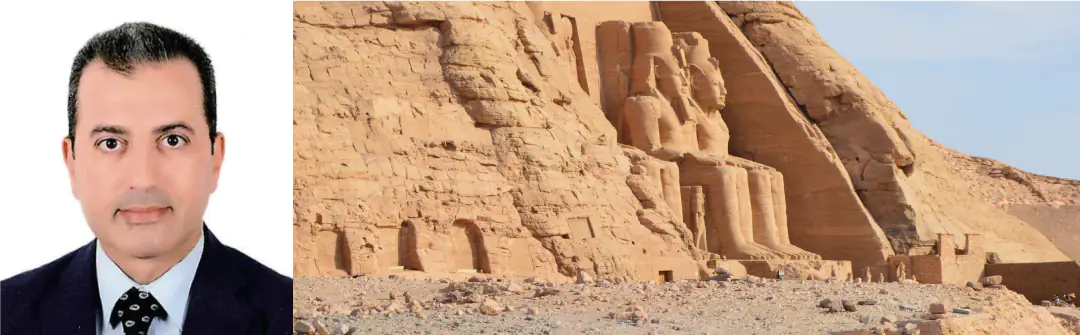
 H.E. Hossam Hussein Ismail, Consul General of the Arab Republic of Egypt in Dubai
The Historical Bond
The Arab Republic of Egypt and The United Arab Emirates share a deep and longstanding bond on both governmental and people’s level. These relations were strengthened by historical ties that go beyond political and economic aspects. Historically, the relations between the two countries embedded in the past were further strengthened with the declaration of the Union in 1971 and the fundamental support of Egypt, through sending teachers, engineers and doctors from Egypt, to support the UAE’s union and its institutions. The UAE in turn provided all forms of support to the Egyptian army and people, supporting Egypt’s efforts in claiming back its occupied territories in the 1973 October war.
UAE’s national anthem “Ishy Bilady”- Live my Country – which was composed by the Egyptian musician Saad Abd Al-Wahhab is perhaps one of the most significant testaments of the ties between the two nations.
The UAE’s late founding father, Sheikh Zayed bin Sultan Al Nahyan, believed in Egypt’s position in the Arab world, and its pivotal and pioneering role regionally. He supported Egypt and Syria in their 1973 war for the liberation of the Arab Occupied Territories by imposing an oil boycott, making his famous declaration: “Arab oil is not dearer than Arab blood.”
Today, around 600,000 Egyptians live in UAE, working in various sectors such as education, construction, health care, administrative and judiciary services, supporting the progress and development in the UAE, while also representing one of the important pillars of the Egyptian economy through annual remittances reaching 2.1 billion dollars in 2022-2023.
On the other hand, Egypt continues to welcome UAE nationals visiting for tourism, as Egypt remains as one of their favorite touristic destinations in the Arab, African and southern Mediterranean regions. It is worth mentioning that the number of visitors to Egypt has increased to 15 million tourists in 2023.
On the political level, continued coordination is taking place between both leaderships as well as exchange of high official visits.
The Economic Ties
Economically, both the Arab Republic of Egypt and the United Arab Emirates are members in the Greater Arab Free Trade Area. The solid trade exchange between the two countries increased during the first 11 months of 2022 by 6.5 % compared to the same period in the previous year (2021) recording 4.6 billion US$; 1.8 billion exports from Egypt in the first 11 months of 2022 compared to 1.4 billion US$ during the same period in 2021 (increase of 14.4%). On other hand, the value of Egypt imports from UAE increased from 2.7 to 2.8 billion US$ in the first 11 months of 2022 (increase of 1.9%), Precious stones, pearls and jewelries are the major exports (799.6 million US$) then tools and electric machineries along with spare parts (219.6 million US$), clothes (164.3 million US$), vegetables and plants (58.7 million US$) and finally furniture and readymade facilities worth 31.7 million US$.
In terms of UAE investments in Egypt, it has witnessed a significant growth up to 5.7 billion US$ during the financial year 2021-2022 compared to 1.4 billion US$ during the same period during 2020-2021, an increase of 300%. The “Ras Al-Hikma” deal also signed between both sides in February 2024 worth 35 billion US$ considered to be the largest direct investment deal in the history of Egypt, confirming Egypt’s position as one of the most attractive destinations for foreign direct investment, and moving the country to the 32 rank worldwide in 2023, after it was ranked 45 in 2014. This progress has been achieved following the Egyptian State’s efforts to encourage foreign investment, as one of the Government’s economic plan priorities.
The increase in foreign investment flow to Egypt is related to many factors, including availability of trained workforce at competitive prices, large consumer market, competitive tax rates, access to global markets and diversified economy, in addition to a general atmosphere that encourages and attracts investment.
FDI Support
In more details, the legislative system in Egypt provides several forms that are compatible with the needs of each investor, including:
Free Zones System
Projects operating under the Free Zones System enjoy many incentives, guarantees and exemptions granted through Investment Law No. 72 of 2017, and the most important of which are:
- Profits of companies and their subsidiaries subject to the free zone systems are exempted from the tax on revenues from commercial and industrial activities and dividend income tax.
- Capital assets and production requisites necessary for practicing the project’s activity are exempted from the value added tax.
- Domestic components are exempted from the custom duties in case these goods are sold inside the domestic markets.
- All imports and exports of companies operating under the Free Zone System are exempted from custom duties and taxes.
- The projects operating under the Free Zones System and its profits are not subject to laws and regulations of taxes and customs applied in Egypt, these projects are subject to:
– 2% of the value of goods upon entry (CIF) in respect of storage projects, and 1% of the value of goods upon exit (FOB) in respect of manufacturing and assembly projects, and direct transit goods consigned to specific destination are exempted from paying such fee.
– 1% of the total revenue generated by projects maintaining activities which require no entry or exit of goods, based on financial statements approved by legal accountants.
– 1% of the total revenue generated by manufacturing and assembly projects upon exportation of commodities abroad, and 2% of the total revenue generated thereby upon entry of commodities into the country, and direct transit goods consigned to specific destinations are exempted from paying the fees.
– 2% of the total revenue generated, regarding any other projects aforementioned in the previous provision.
Investment Zones System
Investment Zone is a specific area designated for some developers to establish investment activities, and its borders shall be established by virtue of decree of Prime Minister, and the developer is responsible for carrying out the establishment, development and implementing the infrastructure of the zone, the developer can be a private company or government agency.
According to Investment Law No. 17 of 2017, investment zones are established as follows:
- By virtue of decree of the Prime Minister upon a proposal of GAFI BoD, Appropriate Minister and the Minister concerned, it is permissible to establish investmentzones specialized in various fields of investment, including logistic, agriculture and industrial investment zones, provided that the decree shall include the location, nature of activities permitted to operate and the schedule for establishment, in addition to any general conditions related to such activities.
- The developer, who is in charge of the investment zone, shall take the necessary procedures for carrying out the construction works in accordance with the schedule stated in the license.
- It is permissible, upon the decision of the Prime Minister or a delegate thereof, to grant the licensee an additional period in light of the justifications presented by the developer, subject to GAFI BoD approval.
Technological Zones System
Investment projects established within Technological Zones are projects operating in the fields of communications and information technology, including industrial activities, electronics design and development, data centers, outsourcing activities, software development and technology education. Also, all machinery and tools required by projects operating within Technological Zones may not be subject to taxes and custom duties within Egypt, and these projects enjoy special investment incentives permitted by Investment Law No. 17 of 2017.
Economic Zones System
One of the most important zones in Egypt is the Special Economic Zones in the Northwest of Suez Canal, offering a number of benefits to the projects located there, as part of the Zone management’s vision to provide factors that guarantee lowest cost of production for projects operating therein. These advantages include:
- 10% of the unified income tax within the Zone (versus 20% outside) applicable on the profit of the capital companies and on income on natural persons and on revenues derived from land and non-residential buildings.
- 5% of the income tax (versus 10% outside the Zone).
- A one-stop shop that provides the investor with single- point authority over other government agencies in core areas.
- The Economic Zone has a supreme committee that supervises the taxation system.
- The Economic Zone has a special customs service specialized to serve the Zone.
- Allowing access to the domestic markets, duties on sales to domestic market will be assessed on the value of imported inputs only.
Golden License
The golden license is a comprehensive approval on the set up, operation and management of a project, including building licenses of such project and the allocation of the real property required therefor. It may be granted to companies upon a decree of the Council of Ministers. This approval may also include providing incentives, and is valid on its own without the need to take any other action.
The total number of projects that have been granted the Golden License has reached 29 (March 2024) since the launch of this license in 2022, with a value of about 10 billion US$.
These efforts are part of Egyptian government’s ongoing efforts to encourage the foreign direct investment flows.
More information
More information about the advantage of investing in Egypt can be found on the website of the General Authority for Investment and Free Zones: www.gafi.gov.eg
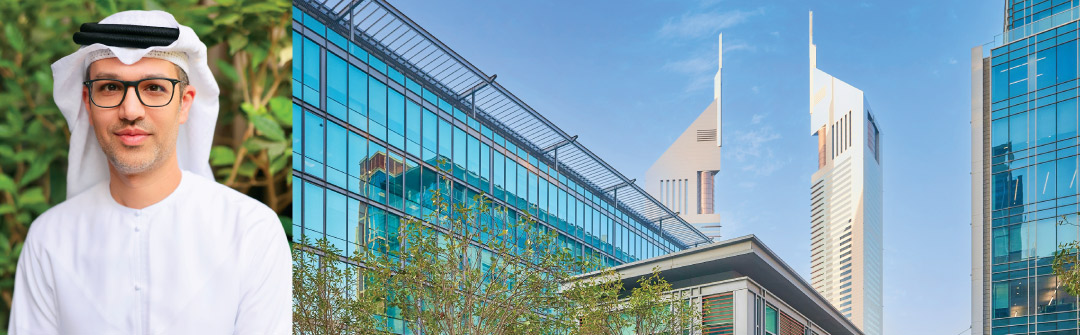 H.E Hadi Badri, CEO, Dubai Economic Development Corporation - Dubai Department of Economy and Tourism
Dubai’s economy is on an accelerated trajectory, serving as a symbol of resilience, optimism, and progress in an increasingly unpredictable global landscape. While many economies have faced headwinds over the past 24 months, Dubai’s visionary leadership, decisive action, and robust policies have cemented its position as a beacon of growth and opportunity.
Central to this success is the Dubai Economic Agenda, D33, launched in January 2023 by His Highness Sheikh Mohammed bin Rashid Al Maktoum, Vice President and Prime Minister of the UAE and Ruler of Dubai. D33 is an ambitious blueprint to position Dubai among the world’s top three global cities and double the size of its economy.
The agenda is built upon ten strategic pillars, serving as catalysts for accelerated economic growth. Key priorities include strengthening Dubai’s leadership in sectors such as logistics, manufacturing, finance, tourism, enhancing economic productivity through a highly skilled and multicultural workforce, and fostering a culture of innovation.
D33 also underscores Dubai’s commitment to reinforcing its status as a global hub for multinational corporations (MNCs), family offices, small and medium enterprises (SMEs), and local champions – ensuring a pro-business environment and maintaining global cost competitiveness.
D33 also outlines measurable targets, including:
Doubling Dubai’s foreign trade volume
Raising FDI to AED 60 billion (USD 16 billion) annually
Lifting private sector investments to AED 1 trillion (USD 272 billion)
Positioning Dubai as a Top 4 global financial hub
Above all, the agenda prioritizes preserving and advancing quality of life, tolerance, security and safety – values that continue to define Dubai’s identity as a modern, inclusive and future-ready city.
An Economy on the Move: Growth, Momentum and Opportunity
Two years since the announcement of D33, the implementation of the agenda has generated positive momentum and measurable results for Dubai.
Dubai’s economic growth reflects its dynamism and adaptability. With 3.2% GDP growth in the first half of 2024—double the OECD average—the emirate continues to outperform global benchmarks. Core economic engines such as foreign trade, investment flows, and tourism remain on a rapid trajectory, while emerging opportunities like artificial intelligence (AI) and virtual assets add further momentum, particularly in relation to attracting high skilled talent.
Dubai’s regulatory framework and visa reforms— including the Golden Visa, Five-Year Multi-Entry Visa, Virtual Working Program, Freelance Visa, Green Visa, and Retirement Visa — further enable business growth and attract global talent.
Gateway to Global Markets: Connecting East, West and Beyond
Trade remains a cornerstone of Dubai’s economy, achieving a milestone of AED 2 trillion (USD 544 billion) in trade value in 2023—an almost 10x increase in 20 years. With a trade value nearly five times its GDP, Dubai continues to punches well above its weight globally.
This performance underscores Dubai’s strategic role in connecting East and West, enabling businesses to access growth markets across the Middle East, Africa, Europe and Asia. Looking ahead through 2025 and beyond, Dubai’s trade sector is set to thrive, leveraging its geographic advantage, world-class logistics infrastructure, and a network of trade agreements (also known as Comprehensive Economic Partnership Agreements or CEPAs) covering more than 45 countries — with over 20 agreements in the pipeline, representing a significant share of global GDP and trade.
Logistics Unbound: Powering Global Trade and Connectivity
Dubai’s logistics sector is world-class, with seaports and airports connecting businesses to over 400 cities worldwide. Home to global logistics leaders like Emirates, DP World, Maersk and DHL among others, Dubai has cemented its position as a leading global logistics hub.
Plans to enhance connectivity to future economic corridors in Africa, Asia and Latin America will further solidify Dubai’s role as a super connector.

Advancements in smart logistics and sustainability will play a key role in strengthening Dubai’s logistics sector, supporting its ambition to rank among the top five global logistics hub under D33.
Advanced Manufacturing: Leading Innovation and Sustainability
Dubai’s manufacturing sector is evolving, with a focus on attracting investments in high-tech and green industries. A recent example is Eaton’s investment in a sustainable campus for advanced manufacturing and R&D in Dubai, announced in July 2024.
To accelerate growth, Dubai Economic Development Corporation (DEDC), in collaboration with government entities, has introduced a series of targeted policies to attract new investments, expand capacity and enhance competitiveness:
Manufacturing Incentives Program – Offers incentives such as competitive utility and land prices and access to loans and capital expenditure support for new and expanding factories.
Solar Power Policy – Allows factories to generate 100% of their energy needs from solar power, reducing costs and enhancing sustainability.
In-Country Value (ICV) Program – Boosts competitiveness of local manufacturers and SMEs through government procurement opportunities.
These initiatives underscore Dubai’s commitment to positioning itself as a global advanced manufacturing hub, aligned with the UAE’s net-zero carbon emissions target by 2050. Building on the success of hosting COP28 in 2023, Dubai is attracting companies to establish green manufacturing centers, reinforcing its leadership in sustainable industrial transformation.
Eaton set-up sustainable campus for advanced manufacturing and R&D in Dubai
Eaton is a global intelligent power management company with 2023 revenues in excess of USD 23 billion. In July 2024, Eaton signed an agreement with DP World to build a state-of-the-art sustainable campus in Dubai, integrating its local commercial, manufacturing, and support functions with room for future growth. The 500,000+ sqft facility will include a cutting-edge R&D centre focused on sustainable manufacturing, AI, and Industry 4.0 innovations.
The project, slated for completion in 2026, will create 700 jobs, including high-skilled engineering roles and advanced manufacturing positions. Eaton’s manufacturing centre will fully embrace Industry 4.0 principles through automation, analytics, and advanced robotics. According to Craig Arnold, Chairman and CEO of Eaton,’ This new partnership with DP World and Jafza underscores our commitment to growth in the region and supports Dubai’s D33 transformation to position the city as a leader in high-tech manufacturing and innovation.‘
Financial Powerhouse: Thriving Capital Markets
Dubai’s financial services sector continues to expand, supported by a robust capital market and increased wealth inflows.
The Dubai Financial Market (DFM) has been the best-performing regional index for two consecutive years, with international investors contributing half of the trading activity over the last year. Since 2022, Dubai has had 10 IPOs, generating over USD 300 billion in investor demand. Notably, Talabat’s USD 2 billion IPO in Q4 2024 was the largest tech IPO globally in 2024.
The Dubai International Financial Centre (DIFC) houses a diverse ecosystem of 400+ financial firms including banks, hedge funds, wealth managers, family offices, law firms and fintech companies. A growing base of high-skilled talent from global firms continues to strengthen this ecosystem. DIFC’s 2030 strategy aims to double its size and economic contribution to GDP, reinforcing Dubai as a financial innovation leader.
Innovation Unleashed: Embracing AI, Blockchain and the Future Economy
Dubai is advancing as a global innovation hub, home to two-thirds of the world’s most innovative companies, many of which have established AI and innovation centers in the city.
A highly skilled digital workforce—spanning 200 nationalities—has fueled growth in fields such as engineering and data science, with AI talent quadrupling between 2021 and 2023. The wider UAE is now ranked among the top three global hubs for AI talent, according to the AI Index Report by Stanford University.
Backed by world-class digital infrastructure and pro-innovation policies, Dubai leads in AI, blockchain, and R&D. Initiatives like Sandbox Dubai facilitate regulatory advancements, enabling innovation in sectors such as PropTech, the gig economy, and virtual assets.

Tourism Redefined: The World’s Most Desired Destination
Tourism has proven to be a major success story for Dubai. The city welcomed a record 17.2 million visitors in 2023, and is on track to deliver a new record milestone in 2024. Dubai has continuously solidified its position as the most popular global destination for three consecutive years, as ranked by TripAdvisor—a unique accolade achieved by no other city. Building on the success of Expo 2020, which attracted over 24 million visitors, Dubai has strengthened its position as a hub for MICE tourism. Dubai hosts a year-round calendar of major business, leisure, and sporting events that continue to draw international visitors. In 2024, GITEX Global welcomed 200,000 attendees, cementing its status as the world’s largest tech conference and Gulfood attracted 150,000 attendees, showcasing Dubai’s ability to host large-scale events across diverse industries. Similarly, the Dubai Fitness Challenge saw participation from 2.73 million people in 2024.
Infrastructure for Tomorrow: Building Prosperity and Growth
Infrastructure investment remains central to Dubai’s growth strategy. Government spending increased by 43% in 2024 compared to 2019, with plans for a 33% rise in 2025, reaching over USD 10 billion. Major projects include a USD 35 billion investment in Al Maktoum International Airport and the expansion of the Dubai Metro planned over the next few years, ensuring sustainable growth through efficient infrastructure. These investments highlight Dubai’s commitment to public-private partnerships and long term growth, ensuring sustained progress and competitiveness.
Investment Magnet: The World’s #1 Destination for FDI
Dubai’s position as a global investment destination is reinforced by its leadership in greenfield foreign direct investment (FDI). For the third consecutive year, Dubai ranks first globally in FDI projects, attracting investments from 88 countries—a 57% increase compared to pre-pandemic levels.
These investments, predominantly in medium- to high-tech sectors, bring advanced industrial and technical expertise to the emirate, further cementing its role as a hub for innovation and growth.
In real estate, while transaction values have grown by 75% year-on-year over the past two years, with 40% of investors entering the market for the first time, Dubai’s market remains one of the least at risk of a bubble globally, according to UBS.
Additionally, the UAE has welcomed 10,000 high-net-worth individuals over the past two years, drawn to Dubai’s robust financial ecosystem, stable economy and exceptional quality of life.
This diverse pool of investments and investors not only strengthens Dubai’s economic foundation but also enhances its resilience to global shocks. Dubai’s continued focus on diversification ensures that it remains insulated from volatility, while its pro-business policies continue to attract regional and global investors.
The Talent Magnet: Shaping the Workforce of Tomorrow
Dubai is not just a magnet for capital – it is also a destination of choice for highly skilled global talent. Recognized as the most sought-after city to live and work, Dubai continues to attract top-tier professionals who drive innovation and growth.
The number of new residents increased by 56% in Q3 2024, following a 50% rise the prior year. Notably, 75% of newly created jobs were filled by highly skilled professionals, reflecting Dubai’s transition to a knowledge-based economy.

Dubai’s commitment to attracting and retaining world-class talent remains a cornerstone of its vision, enabling businesses and industries to thrive in an increasingly globalized and knowledge-based economy.
Shaping the Future: Opportunities Without Limits
Dubai’s achievements and global standing are reflected in prestigious international rankings. In 2024, Brand Finance – the world’s leading independent brand valuation consultancy – ranked Dubai among the top five global cities in its Global City Index, up from #9 in 2023. Dubai is globally ranked #1 in the Business and Investment pillar, #1 globally for Future Growth Potential and #2 for its Strong and Stable Economy.
These accolades underscore Dubai’s status as a leading global business hub, supported by a sound regulatory framework, robust financial systems and resilience in an ever-evolving global landscape.
Dubai Economic Agenda, D33: Driving Growth, Excellence and Opportunity
Dubai is more than a city—it is proof that a vision of ambition, resilience, and excellence can be delivered. As we progress toward our 2033 goals, our focus remains on building a thriving ecosystem for businesses and individuals alike.
With sustained investments in infrastructure, pro-business policies, a commitment to innovation, and a focus on talent development, Dubai continues to lead as a global hub for growth and opportunity.
We invite corporates and individuals to partner with us, unlock new opportunities, and achieve their goals in Dubai.
At the Dubai Economic Development Corporation (DEDC), our dedicated teams stand ready to guide investors at every stage—from business setup and long-term residence visas to guided learning journeys and aftercare services—ensuring seamless operations and lasting success in Dubai.
Be part of Dubai’s ongoing success story, today.
investindubai.gov.ae

 Bhawana, Manager - Kreston ME Consulting
Valuing a Tech Company in the Middle East
Imagine you have built a successful tech company in the Middle East, offering technology solutions in the UAE and Saudi Arabia. Years of hard work have paid off, and now a big client, a multinational corporation, wants to buy your business.
But how do you decide the value of what you have achieved? This is the dilemma for the owners of this private tech company as they plan to sell the business they have built from scratch.
The Valuation Challenge
Valuing a private company in an emerging market is not easy. Without stock prices or market consensus, it’s a mix of growth potential, regional factors, and market competition. To navigate this dilemma, the owners enlisted KMEC, a trusted advisor for advisory services, to guide them through two contrasting valuation methods: the forward-looking Discounted Cash Flow (DCF) approach, which looks at the company’s future cash potential, and the EBITDA multiple method, which builds on current earnings strength.
With these valuations, the owners must negotiate with a savvy multinational buyer aiming to enhance its capabilities. Should they go with the optimistic DCF, the realistic EBITDA, or a mix of both? The multinational will examine every detail, but the tech company’s strategic advantage might influence the final price.
This case study explores valuation and negotiation in an emerging market, where ambition meets opportunity, and every decision impacts the outcome—a story of strategy, risk, and seeking fair value in a fast-changing tech world
Background
The technology company provided enterprise solutions focused on emerging sectors in the region. It had established a solid presence in the UAE and Saudi Arabia, benefiting from the region’s increasing demand for technology solutions. The firm served a diverse client base, including several large multinational companies.
One of these clients, a multinational corporation, had been a significant customer for years. Impressed by the technology company’s solutions and regional expertise, the multinational expressed interest in acquiring it to expand and build its own in-house capabilities. The owners considered this as a good opportunity to exit the business. However, they needed to establish a fair valuation of the business for negotiations.
The Challenge
Valuing a privately held technology company operating in an emerging market is complex. Unlike public companies with market-driven stock prices, these firms lack a clear benchmark. The valuation had to also take into account the organization’s growth potential in a region undergoing digital transformation, while also factoring the risks of a competitive and fast-changing industry.
To address this, the owners approached KMEC, a business consulting firm specializing in business valuations for companies in the Middle East. The firm was engaged to provide a range of valuations to support the owners in the negotiations it could have with the potential buyer.
 Kreston Menon
Best Accounting Software in UAE 2025

- GST Compliance.
- Accounting Across Devices.
- Connected Banking.
- Automation.
- Sell Globally.
- Customization.
- Collaboration.
- Easy to use platform when compared to other accounting software’s.
- Supports advanced functionality for small businesses.
- Customizable software.
- Having issues with privacy.
- Not good for large enterprises.
- In reporting, there are some limitations.
- Pricing is a bit much.

- Financial Reports.
- Multi-Device Access.
- Data Security.
- Invoicing.
- Easier Bookkeeping.
- Collaboration.
- Easy Setup.
- Inventory Tracking.
- Limitation in the number of users.
- Lack of advanced features.
- Sometimes shows instability.

- Invoice & Accounting.
- Inventory management.
- Business Reports.
- GST/Taxation.
- Multitask Capabilities.
- Banking Feature.
- Excel Import Function.
- Suitable for small and medium businesses.
- Flexible accounting software.
- User-friendly interface.
- Cost is low.
- Customization is limited.

- Automated follow-ups.
- Real-time reporting feature.
- Electronic invoicing.
- Dynamic taxes and accounts.
- Modular architecture.
- User-friendly interface.
- Cost-effective software.
- Flexible.
- Integration challenges.
- Support quality is poor.
- Complex customization.

- Online Invoicing.
- Bank Connections.
- Integrate apps.
- Track projects.
- Reporting and quotes.
- Inventory.
- Multi-currency accounting.
- The software can access anytime anywhere.
- Transactions are simplified.
- Cloud software is always updated.
- integration feature issues.
- Cost is high.
- Not suitable for large enterprises.

- Real-time visibility.
- Integrating.
- Advanced features for financial planning and analytics.
- Scalability feature.
- Cots are a bit high.
- Requires proper training to use it effectively.

- Smarter invoicing.
- Connect your bank account.
- Automated data entry.
- Sort self-assessment.
- Run detailed reports.
- Submit VAT returns easily.
- It consists of advanced functionality for accounting services.
- Customization is available.
- Suitable for all types of businesses of varying sizes.
- Not that much user friendly for beginners.
- For small businesses, it has limited suitability.

- Expand data usability.
- Unlimited attributes.
- Streamline sourcing and procurement.
- Advanced ERP capabilities.
- Customization is available.
- Cloud-based accounting software.
- Limited resources for small businesses.
- Subscription cost is high.

- SAP Financial Accounting.
- SAP Controlling.
- SAP materials management.
- SAP human capital management.
- SAP sales and distribution.
- Useful for large enterprise.
- Great reporting and data analytic feature.
- Expensive implementation costs.
- Not ideal for small or medium businesses.

- Bookkeeping.
- Invoicing.
- On-time and error-free billing.
- Automated Accounting.
- Payroll.
- Advisors.
- Invoicing is easy.
- User-friendly interface.
- Transaction is smooth.
- No time tracking feature.
- Challenging in link bank accounts.
Benefits of Using the Best ERP and Accounting Software in UAE
- Get Real-Time Data
The data will come from the right accounting software for your business. With real-time data you can view your performance, work, and all easily for business growth.
- VAT Filing and Compliance
The correct accounting software lets you easily pass the federal tax authority. This will assist in automatic VAT calculations so it will not lead to any mistakes and you can remain compliant without incurring penalties.
- Operational Efficiency
You will slow down if it is some kind of manual step. This cloud-based accounting software in UAE, therefore, can automate these and make you more productive. Invoice creation, Payroll, and Inventory can all be automated.
- Scalability
As your business expands, so will your cash flow needs. Now, having an accounting program manages all of this easily and with the features. So you save time by customizing your workflows.
Why Choose The Right Accounting Software in Dubai?
- The first important factor that you need to check when selecting accounting software is whether they are compliant with VAT regulations.
- Proper cloud-based accounting software is highly recommended for UAE businesses because of its flexibility and cost-effectiveness.
- Search if it will help you access your financial data from anywhere to get real-time insights.
- Perfect accounting software should be scalable so that you can make changes with more functionality as your business grows.
- Check if the software provides integration options. Accounting software with integration features helps in automating processes in your business, also reducing any manual entry of data and making sure all your data is consistent across platforms.
- Accounting software with an easy to manageable interface helps all your team members use that without any difficulties. So pick software with proper customer support and easy navigation.
- Get software that focuses on the value and return on investment that gives you.
- Don’t go for low-cost software so check all the features with the cost and select one that matches you.
Conclusion





