Get in Touch

We would love to hear from you!

Recent posts

After CEPA, Dirham-Rupee Trade Set To Be Next Big Thing
Gulf News

UAE AND INDIA MARK THE FIRST YEAR UNDER THE LANDMARK AGREEMENT

A year after the UAE-India Cepa deal came into effect, the stage is set for the next big bang in trade and investment flows between the countries – a dirham-rupee payment mechanism.

When that happens, multiple categories – and businesses within them – would benefit from the closing deals in the two currencies and not have to use US dollars to make it happen. What that does is cushion trade between the countries from foreign exchange volatility brought on by the dollar’s movements.

“India is looking to ways that can speed up and smoothen out trade with its biggest economic partners,” said a senior Indian government source. “We have learnt the processes well in using the rupee in financing imports from Russia, and it’s been a major factor in limiting inflationary pressures in the economy.”

“If India and UAE sign a deal confirming rupee-dirham, it will further expand the scope of Cepa.”

Meeting CEPA Targets

It was with India that the UAE entered into its first CEPA – or the Comprehensive Economic Partnership Agreement – that immediately brought down import duty across categories and opened up new investment possibilities for entities in these countries.

What UAE and India are looking for are to go in for immediate benefits from CEPA where possible and then work on those areas where they can make steady progress.

“I’m not aware of any UAE imports that are subject to 0 per cent import duty in India,” said Raju Menon, Chairman and Managing Partner at Kreston Menon, the audit consultancy.

“However, under CEPA, India has agreed to reduce or eliminate tariffs on a range of products imported from the UAE.”

“The UAE has agreed to provide tariff concessions to India on 60 per cent of items traded between the two, including on basmati rice, textiles, and pharmaceuticals.” (India last week reworked the processes involved for the country’s gold trade to source bullion from the UAE under CEPA. This could in the coming months see UAE provide up to 140 tonnes of bullion to India, and which will consolidate its status as the second biggest supplier of gold to that market after Switzerland.)

Trade Is On The Up

Trade gains have been there from the start of the CEPA becoming effective from May 1. Between April to November 2022, two-way movements totalled $57.8 billion from $45.3 billion a year prior to that. That’s a rise of $12.5 billion in value terms and 27.5 per cent in percentage terms.

India’s exports to the UAE went past $20 billion during this period, leveraging a 19.32 per cent increase.

“As per the CEPA agreement, there would be periodic reviews to assess progress and identify areas for further cooperation,” said Menon. “The UAE has set up a dedicated task force to ensure the smooth implementation of the agreement, while India has created a website to provide information about the CEPA and facilitate trade between the countries.”

Beyond $100b In Trade

Boosting two-way trade to $100 billion is the stated aim before the end of this decade, but there is also the greater emphasis on generating more from trade in services, with a target of $15 billion.

The cable-maker Ducab Group recently opened an office in the south Indian metropolis of Bengaluru, and its CEO Mohammed Abdul Rahman Al Mutawa was there on the ground. And he’s liking what’s showing up as possibilities post-CEPA.

“India is our new home market,” said Al Mutawa. “India has always been of interest to us and CEPA made the decision of opening an office in Bengaluru easier.”

“Ducab has been supplying to the Indian market since 1988, with its first project being the Nhava Sheva Port in Mumbai. Ducab has supplied 263,000 MT of of CuEq (copper equivalent) of metals to the market through the years. This is equal to powering approximately 3 million houses.

The other big investments or commitments made by UAE businesses are by the likes of Emaar, LuLu and the Sharaf Group, while DP World is expanding the scope of its already substantial interests in that market.

But business chiefs say it is still too early to fully realise the full possibilities that come with CEPA. “The impact of such agreements can take time to be felt, as businesses need to navigate through the legal and regulatory requirements of investing in a foreign country,” said Abdul Jebbar P. B., Group Managing Director at Dubai-based Hotpack Global, currently on a major expansion in the UAE and Saudi Arabia.

India is becoming one of the most desirable markets for businesses from all over the world due to its sheer size. And the government has been prudent in encouraging investment.”

With CEPA, UAE businesses with an India focus might have that extra edge.


Source: “After Cepa, dirham-rupee trade set to be next big thing” by Manoj Nair, Business Editor, UAE-INDIA CEPA ANNIVERSARY, Business Section, Gulf News newspaper, 1 May 2023 and online article here.

Read More
UAE’s Free Zone Companies Have Lots of Tax Planning to Do
Gulf News

Those with Mainland Operations Await Signal on Extent of their ‘QUALIFYING INCOME'


Businesses operating out of UAE free zones and with a considerable presence on the mainland are thinking of possible restructures to the organization to absorb the upcoming Corporate Tax.

But any such changes to the business must stay on the right side of the ‘anti-abuse rules’ that form part of the UAE CT regulations, top tax consultants add.

“Yes, restructuring existing operations (of free zone enterprises with mainland operations) needs serious consideration,” said Nimish Goel, Partner at Dubai-based WTS Dhriva Consultants. “However, any restructuring or hiving off (of mainland operations) needs to factor in operational and commercial realities.

“The general anti-abuse rules need to be suitably factored.”

The anti-abuse rules are clear enough – businesses in the UAE cannot make changes solely to gain a tax advantage and thus hope to pay less on their annual income.

Hiving Off Mainland Operations


In their consultations ahead of registering for the UAE CT regime, free zone businesses have talked of the possibility of hiving off their mainland operations to be standalone enterprises. Especially where these businesses operate separate licenses for their free zone and mainland operations.

Free zones represent one of the more significant contributors to the UAE GDP, and the UAE CT rules gives businesses there ample flexibility.

‘Qualifying Income’


Under these rules, pure-play free zone businesses/their owners are exempt from the 9 per cent tax payment commitment based on their ‘qualifying income’. And this is to be confirmed by a UAE Cabinet decision that is expected shortly. (The UAE Corporate Tax comes into effect June 1, 2023.)

Raju Menon, Chairman and Managing Partner at Dubai-based consultancy Kreston Menon, emphasizes the point about ‘qualifying income’. “The UAE federal decree stipulated that free zone ‘persons’ could benefit by incurring a 0 per cent corporate tax only on the ‘qualifying income’, which is still to be defined,” said Menon. “Based on available guidance from the UAE Ministry of Finance, the qualifying income should include offshore as well as onshore sources of income of free zone persons (but) subject to strict conditions.

“Hence, there should be detailed guidance forthcoming on this aspect.” (When the decision comes on qualifying income, tax specialists hope it will also address ‘transfer pricing’ issues, which is ‘relevant as entities restructure to have standalone operations between free zone and mainland enterprises’.)

Fairly Big Incentive For Free Zone Businesses


The ‘free zone person’ incentive is a substantial tax break for eligible businesses, according to Menon. (Apart from businesses engaged in extracting natural resources, government, and government-controlled entities also enjoy exemptions under the Federal Decree Law subject to eligibility criteria and conditions.)

Relief for Small Businesses

In addition, the Federal Decree Law does contain relief for small businesses ‘where a resident taxable person generating revenue up to a threshold – to be decided by the UAE Minister of Finance – may elect to be regarded as not having derived any taxable income for the relevant tax period,” said Menon. “Accordingly, there will not be any tax cost for such small businesses.

“Any new substantive legislation necessitates businesses to take cognizance of its applicability and plan for efficient change management. Businesses in the UAE should consider undertaking a deep review and documentation of revenue operations, assessing the impact of corporate tax, and completing requisite changes well in time of the effective date.” 


Source: “UAE’s free zone companies have lots of tax planning to do”, by Manoj Nair, Business Editor, Business Section, Gulf News newspaper, 4 April 2023 and online article here.

Read More
Think Big, Do Big, Execute Big
Gulf News

Raju Menon, founder, chairman, and managing partner of Kreston Menon talks to Pranitha Menon about dreaming big, his management principles, and his autobiography The View from My Perch

Rajagopalan Menon, better known as Raju Menon, was 29 years old when he boarded his first-ever flight– from Mumbai to Dubai in 1991. Armed with a degree in Chartered Accountancy and a year’s work experience, he arrived on a visit visa with hope and courage to seek a life and livelihood in the UAE. ‘I was unsure of what the future held even though I had very clear visions of what it should be. There was no apprehension, just excitement,’ says Raju, who hails from a tiny hamlet called Edavilangu in the southern Indian state of Kerala.

Over three decades in the UAE, he would go on to found and helm the Kreston Menon Group, a leading audit and business consulting firm with operations in UAE, India, Qatar, and Oman; gather a long list honours; be named one of top 100 Indian Leaders in the Arab world, and pen an autobiography that is eliciting rave reviews.

Released late last year at the Sharjah International Book Fair, The View From My Perch chronicles his story of consistency and perseverance. Neatly demarcating his life into different phases, each represents a struggle and a step towards his destination and dream.

What Led Him To Pen This Story?


‘I never thought of writing a book and I felt I was too young to be writing an autobiography,’ says Raju, with a smile. However, the seed of a book was first sown by Sudhir Kumar, his senior partner Kreston Menon. A book, Sudhir was sure, could inspire students and young entrepreneurs.

‘Whether that happens or not, the thought convinced me to give it a try,’ recalls Raju.

The pandemic acted as a catalyst. Keen to use the free time that he had productively, he decided to pen his memoir. ‘To compile my experiences, thoughts, and vision into this compendium of life, I remember spending hours and days in the office meeting room, aptly named Maydan, which became my haven for ferreting into the past to dig out nuggets buried in the deep recesses of my mind.’

Once he got going, he wanted to ensure that the book would be perfect in all senses of the term. To that end, he made a few trips to Kerala to relive and experience once again firsthand some elements that had shaped his personality, and meet a few key people who in some way had had a bearing on his life.

Insightful vignettes of all of these feature in his book giving it a deeply personal feel.

‘Like everything else I do, I just gave it my very best,’ says the man who started out life in the UAE as an audit manager in a modest firm in Dubai.

What motivated him to set up Kreston Menon, a company that has bagged the Super Brand status for nine consecutive years? I ask.

‘To excel and never to be content with the ordinary,’ says Raju, with a smile. It is a mantra that pushes him to make his choices. It is a lesson, he says, he learned the hard way.

Need To Think Big


Forced to pursue higher studies in a privately-owned educational institution after performing poorly in his Grade 10 board examination, Raju watched with envy his friends heading off to vibrant, exciting environs of reputed colleges.

Realizing that his lack of focus at a crucial juncture of his studies had cost him the opportunity to continue education in a well-known college, he resolved ‘never to settle for the mundane again.

‘Even today, I hold that character trait dear. Think big, do big, execute big. You can break beyond the limits by thinking big. Once you think big and set your goals high, it will widen the horizon of your life, and bring you greater opportunities and greater success,’ he asserts.

Pursuing academics with a vengeance of sorts, he cleared his Chartered Accountancy exams in the first attempt, an achievement that made his parents proud.

Encouraged, he decided to set up an entrepreneurial venture in Kozhikode, Kerala. However, it did not take off as planned.

Not one to give up, he decided to look beyond the boundaries of his state to realize his dream of making it big in life. Heading off to Mumbai, he landed a job in a multinational company and earned valuable experience.

However, Raju’s dreams were big.

‘People get comfortable in their little successes and trapped in them for eternity, unable to realize their full potential. To succeed and achieve the maximum, one has to take risks and venture out into the challenging world… outside their safe haven,’ says Raju. Practicing what he preaches, he decided to move out of his safe job and took a flight to Dubai.

Raju was aware that it is a new place where he would have to put in long and hard hours to make a mark in his field. But he was willing to do that and more.

‘Upskill yourself and stay competitive. A successful entrepreneur needs to be a constant learner,’ he advises before adding, ‘Hard work is the cardinal principle for me.’

Is it not – work smart, not hard? I ask.

Hard work is the base. It is that first step that you must take before you work smart.

It was Raju’s mother, Susheela Menon, a midwife, who had a strong influence in shaping him into who he is today. ‘She was hard-working, willing to help people at any hour of the day or night, and was empathetic.’

The first job he got was in a company named Mak&Partners, in Dubai. For close to a decade here, he worked 14 hours every day. ‘I was never a clock watcher but used the flexibility given to me by my boss, Khalid Bhai, as an opportunity to gain knowledge and experience.’

In 1995, he set up the Kreston Menon Group. From a small team of three people, the firm today has grown into an enterprise employing more than 400 Chartered Accountants, internal auditors, and accountancy professionals. Raju’s wife, Girija Menon, is a senior partner at Kreston Menon and a certified internal auditor.

Even today, he believes in working hard… and smart. ‘Now, I head an organization that is structured and runs like a well-oiled machine. All I must do is manage it well.’

Delegation, he believes, is the key to effective management. ‘I have learned that micromanagement of people and business is self-defeating. When given the freedom, people bloom,’ he points out.

Trusting, empowering, incentivizing, and giving employees the freedom to creatively develop the business in their own style could work wonders, he says.

As an entrepreneur, he stands by the management principle of the People First approach and values work-life balance for all employees. ‘If you do not empower your leaders (partners, directors, managers) and give the freedom to operate, you won’t be successful,’ he says. ‘I am supported by a great team that shares the same objectives and strives for a common goal.’

Raju believes that there are no shortcuts to success. ‘My success will definitely be counted on how effectively I am creating a unique experience for each of my clients by providing them with the right and timely business advice.’

He goes on to explain that in an ever-evolving business environment, his success also lies in how effectively he leads his team to stay relevant, updated, and ahead of the competition.

The going– and growing– however, was not easy.

A legal issue in 2011 threatened his firm’s survival but Raju fought the case and won it.

The pandemic too affected them, but that was a great teacher, says Raju. ‘The lesson that it left in its wake that had to be put into practice was to be prepared for unpredictability and rework on short-term and long-term planning and strategies.’

The First Break


Over the years, Raju says that he has witnessed and experienced that getting that first break is the most difficult task. He has noticed that once a person gets the right break, they move up very fast, provided they are willing to work hard.

‘Wiser by having undergone such ordeals, I believe in giving the first break to people who are known to me or have been referred even if they may not be up to par in their qualifications but have the fire in them to do well and succeed.’

One initiative that he is extremely proud of is partnering with the Expo 2020 team, as early as 2013, to support their bid to organize the world-renowned, unique, and historic event, the Expo, in Dubai.

A firm believer of women empowerment, the father of three mentions that 45 percent of the total workforce at Kreston Menon are women.

‘Life has been very kind and generous to me. Now, in turn, I try to spread happiness in people around me,’ he says.

To give focus to their philanthropic efforts, Raju and Girija have started the CA Girija & CA Raju Menon Foundation in Kozhikode, Kerala, providing support for education, marriage, and healthcare for individuals who approach them for help.

To empower women, they conduct training courses to enhance their communication and public speaking skills, which will give them the confidence to contribute to society.

‘Both of us wholeheartedly believe that all human beings are equal and equally capable of achieving and contributing to the community, society, and humanity,’ says Raju.

Source: “Think big, do big, execute big”, AuthorSpeak Section, Friday Magazine, Gulf News, 31 March 2023 and article here

Read More
Upskilling the Workforce – The Need of the Hour
Swati Arora, Partner at Kreston Menon and Hayford Integral Training Institute

TRENDS FOR TOMORROW


The Abu Dhabi Sustainability Week Future Skills 2030 Report identified the driving sources that will shape the future of jobs and skills in the world. The technological advancement is bound to open new horizons in the fields of automation, artificial intelligence and robotics, big data and data analysis, virtual reality and augmented reality. The global drive towards sustainability will create a new set of green jobs in alternative energy and waste management.

The current Fourth Industrial Revolution has forced every industry to undergo rapid changes and the existence of businesses will depend on how well they adapt to the new unique skills that do not exist today.

INVESTING IN YOUR PEOPLE


It is true that organizations are keeping pace with the market and technological advancements to capitalize on the business opportunities, but they can have a significant competitive advantage only if they have the ability to address the skill gaps and upskill their workforce.

Rapid advancements in technology have brought in the need of training existing employees on new technologies and tools, and upskilling existing workers who already know the organization, processes and clients will be much effective than bringing in new people. It is a universally proven fact that reskilling is a smaller investment than hiring and training a new worker. There will be a positive impact on the morale of the employees as they are given the opportunity to stay relevant, productive and effective in the competitive and constantly changing job market, where many industries are being disrupted by new technologies.

How to Upskill Your Workforce


Organizations should have a comprehensive upskilling strategy in order to cater to the requirements of the future. The strategy should lay down concrete plans and programs to provide the employees with the necessary knowledge and skills to adapt to changing technologies, work situations and job profiles. The various methods to Reskill and Upskill your workforce include:

Training Programs: Specific training programs that focus on developing the skills and knowledge relevant to the requirements and objectives of the organization. The cost the organization incurs for in-house training programs, or the financial support provided for the employees to attend external courses will prove as the right investment decision to stay competitive.

Cross Training and Job Rotation: Progressive companies train and develop their team members to take up totally different roles within the organization, allowing them to develop their career by equipping them to acquire new skills and gain new experiences.

E-Learning Programs: Organizations can encourage and support employees to enroll for specialized online learning programs which will help them learn new technologies and practices.

Conferences and Workshops: Providing opportunities for employees to attend industry specific conferences and workshops can provide them with opportunities to learn from industry experts.

INVESTING IN YOURSELF


It is critical for any professional to learn new skills or improve existing ones to increase their knowledge, expertise and value in the job market.

Professional upskilling opportunities are available to individuals at all levels of their careers in the UAE. Universities, colleges, and vocational training centers provide formal education. These institutions offer various courses, including short-term certificates and long-term diplomas.

Besides formal education, there are many other ways to upskill individuals. Professional training companies offer professional development programs ranging from professional degree preparation to leadership and management courses to technology courses. Individuals can also upskill themselves online through a variety of platforms and resources which can be accessed from anywhere.

Professional upskilling, and thereby remaining updated, is a critical factor for anyone looking to grow their career in the UAE’s rapidly evolving job market. Remember, upskilling is an ongoing process. Make it a habit to continuously learn and develop your skills to stay competitive in your industry.

SKILLS IN DEMAND IN UAE


The UAE job market is quite diverse and very futuristic. As the economy is seeing a surge in investments in technology, infrastructure and energy, there is a huge demand for highly skilled workforce.

Digital and Technology Skills – The UAE is rapidly moving towards digitalization, which has increased the demand for professionals with digital and technology skills such as data analysis, artificial intelligence, cybersecurity, digital marketing and software development.

Healthcare – Healthcare professionals especially doctors, nurses, pharmacists and researchers in pharmaceuticals are in high demand.

Digital Marketing – No longer a novel field, it has now evolved into a must-have function for organizations and skill for marketeers. Every organization need digital marketing professionals to help them connect with the world.

Blockchain – The understanding of this technology with huge multi-function application possibilities is still in the process of being probed and discovered. It has applications in Finance, HR, Procurement, Quality management, Contract management… the list is growing!

Cryptocurrency Management – This is a rapidly evolving and growing field. With greater exposure and greater number of players, its great flexibility and security in use, cryptocurrency is poised to become an indelible part of finance function in most companies.

Metaverse – Only a few institutions have the expertise to provide training in the Metaverse. This is touted as a parallel universe in the days ahead.

Finance and Accounting – Finance and accounting professionals, particularly those with qualifications such as Chartered Accountant (CA), Certified Public Accountant (CPA) or Certified Management Accountant (CMA) are in high demand in the UAE.

Hospitality and Tourism – Job opportunities for trained hospitality professionals are plenty, as the hospitality and tourism industry is a significant contributor to the country’s economy.

Human Resources – Employers in the UAE are looking for professionals with strong people management and recruitment skills to help them attract, manage and retain talent.

Sales and Marketing – We talk about bots taking away sales and customer care jobs, but professionals with strong communication, negotiation and customer relationship management skills are still sought after.

ENGAGE A PROFESSIONAL TRAINING COMPANY


Engaging a professional training company to upskill your workforce has its own benefits. Their expertise and experience give them the edge in designing and delivering effective training programs apt for your field. Many training companies design training programs designed for the specific needs of your workforce.

Efficiency and Effectiveness: Professional training companies can save your organization time and money by delivering training programs efficiently and effectively. They can ensure that the training programs align with your business objectives, are delivered on time and have a measurable impact on performance.

Such institutions having access to a range of resources, including industry-specific research, cutting-edge technologies and best trainers can help your organization stay up to date with the latest trends and advancements in your industry.

Read More
Extensive Reforms in the UAE Commercial Legislations and Regulatory System
Pushpakaran Parambath, Senior Partner - Kreston Menon Corporate Services

During these immediate past two years UAE witnessed a wide range of reforms, modifications, amendments in the country’s legal and regulatory framework aiming to bolster economic, investment and commercial prospects. The reforms intend to keep the momentum of the developmental achievements of the country and to reflect its impending aspirations. Over 40 laws are included in the changes, which together represent the largest legal reform in the young nation’s 50-year history. The repealing/amendments aim to develop the legislative and regulatory structure in various sectors, including investment, trade, industry, as well as commercial company, regulation and protection of industrial property, copyright, trademarks, commercial register, electronic transactions, trust services, factoring and residency. The new legislative changes came after intensive coordination at both the local and federal levels and adopting global best practices in the global legal system.


Here are some of the earlier laws and their revised versions:

Revised LawsAnnulled/Amended LawsSignificant Reform
Federal Decree Law No. 46 of 2021 on Electronic Transactions and Trust ServicesFederal Law No. 1 of 2006 on Electronic Commerce and Transactions.Keeping pace with technological development and enhance ongoing digital transformation. The law gives digital signatures the same weight as a handwritten signature, a step that obviates the need for personal presence to seal transactions.
Federal Law No. 11 of 2021 on the Regulation and Protection of Industrial Property RightsFederal Law No. 17 of 2002 on Regulation and Protection of Industrial Property of Patents, Industrial Drawings and DesignsDedicated to patents, industrial designs, integrated circuits, non-disclosure agreements and utility certificates. It applies across the UAE (including free zones).
Federal Decree Law No. 38 of 2021 on Copyrights And Neigbouring RightsFederal Law No. 7 of 2002 on CopyrightThe amendments offer special benefits for people of determination to enhance their benefit and participation in this vital sector.
Federal Decree Law No. 36 of 2021 on TrademarksFederal Law No. 37 of 1992 on TrademarksThe amendments offer protection to three-dimensional trademarks, holograms, sound trademarks such as musical tones associated with a company and that distinguish its products, and smell trademarks such as creating a distinctive scent for the company or brand. The updates also include registering geographical names of trademarks or products.
Federal Decree Law No. 37 of 2021 on the Commercial RegisterFederal Law No. 5 of 1975 on the Commercial RegisterAllowing local authorities in each emirate to retain the right to establish and manage their commercial records, including registration, data monitoring and change.
Federal Decre Law No. 32 of 2021 on Commercial CompaniesFederal Law No. 2 of 2015 on Commercial CompaniesThe law allows investors and entrepreneurs to establish and fully own onshore companies in all sectors, excluding a small number of reserved “strategic activities”.
Federal Decree Law No. 25 of 2022 – UAE Industrial LawFederal Law No. 1 of 1979 – Industrial LawThe law strengthens the UAE’s position as an industrial global hub that attracts quality investments through incentives and enablers, including the National In-Country Value program (ICV), Industry 4.0 and Technology Transformation Program.
Federal Law No. 42 of 2022 – UAE Civil CodeFederal Law No. 11 of 1992 – UAE Civil CodeWhilst the new law does not overhaul civil procedure in the UAE, it introduces some significant changes. In particular the New Law provides for a change to service outside the jurisdiction; a confirmation that cheques are “enforceable instruments” and changes in relation to appeals, including the manner in which the Court of Appeal will deal with appeals before it and changes to the period for appeals to the Court of Cassation.
Federal Decree Law No. 50 of 2022 –the Commercial Transactions LawFederal Law No. 18 of 1993 – the Commercial Transactions LawThe new law adopts advanced and flexible legislative mechanisms and keeps pace with the modern reality of real and virtual businesses.
Federal Decree Law No. 35 of 2021 on BankruptcyReplaces the Federal Law No. 9 of 2016 – Bankruptcy LawThis amendment seeks to clarify when a debtor’s directors and managers can be held personally liable for the company’s debts if they cannot be repaid.
Federal Decree Law No. 18 of 2022 (Amended Decree Law) relating to Value Added TaxFederal Decree Law No. 8 of 2017 relating to Value Added TaxAmended Decree Law to allow the FTA an additional four years to undertake an audit provided that it has issued a notice for audit or assessment before the expiration of the general statute of limitations of five years.
Federal Decree Law No. 33 of 2021 on Regulation of Employment RelationshipFederal Law No. 8 of 1980 – UAE Labour LawThe new Law abolished unlimited term contracts and replaced with fixed – term contracts.
Federal Law No. 3 of 2022 on Commercial AgenciesFederal Law No. 18 of 1981 – Commercial Agency LawThe New Commercial Agency Law adopts a more balanced approach between principal and agent such as i) the type of companies which can act as a registered commercial agent has been expanded; ii) the reasons for which a principal can terminate a registered commercial agency agreement have been expanded in certain circumstances; and iii) parties can agree to resolve agency disputes through arbitration, an option which was not permissible under the old Commercial Agency Law.


Read More
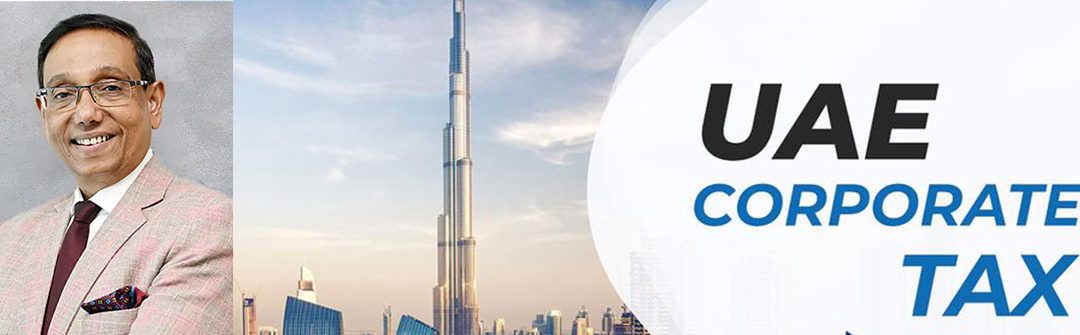
Federal Corporate Tax – A New Business Reality in UAE
Surandar Jesrani, CEO & Managing Partner - MMJS Consulting

Following an announcement on 31 January 2022, the UAE Government released Federal Decree Law No. 47 of 2022 on Taxation of Corporations and Businesses (UAE CT Law) on 9 December 2022. This follows a first of its kind public consultation drive which began on 28 April 2022 seeking feedback from stakeholders on key features and principles of the planned UAE CT regime. The UAE CT Law has been supplemented by 158 Frequently Asked Questions (FAQs) which provide further guidance regarding the intent and principles of the legislation.

Though largely in line with principles contained in the public consultation document, provisions contained in UAE CT Law have addressed issues on key aspects which is indicative of the positive approach of the UAE Government for implementing a cohesive, straightforward and transparent legislative framework.

UAE CT is applicable on taxable income of resident and non-resident persons for financial years beginning on or after 1 June 2023. UAE CT will be applied at a rate of 0 percent on taxable income upto AED 375,000 and a general rate of 9 percent for taxable income above AED 375,000. Resident entities are taxable on worldwide income whereas non-residents would be taxable on UAE sourced income which could include income from a resident in the UAE, income derived from the UAE or income from activities performed or benefitted in the UAE.

The personal income of natural persons has been kept outside the scope of UAE CT, however, business income of individuals is within the ambit of UAE CT. The meaning of business and commercial activities in respect of natural persons would be notified in a separate Cabinet Decision.

UAE CT Law provides for exemptions for businesses engaged in extraction of natural resources, Government and Government controlled entities, charities and public benefit entities, investment funds, pension and social security funds, subject to conditions. Certain exempted categories are required to claim the exemption through an application process to be notified.

Free Zones are a key economic driver for the UAE and this fact has been appropriately addressed in the UAE CT regime through an incentive to Free Zone registered persons being taxed at the rate of 0 percent on Qualifying Income. Qualifying Income would be detailed in a specific Cabinet Decision which is expected imminently at the time of going to press. However the Free Zone Person incentive carries stringent conditions including maintaining substance in the Free Zone License, satisfying transfer pricing requirements and other compliances. These conditions may not be straightforward for many businesses to comply given existing holding structures, business models and operations.

Provisions for taxable income and its computation largely follow internationally accepted best practices including exemptions to dividends from domestic companies and participation interests, a cap on net interest deduction at 30 percent of EBITDA and a cap on business entertainment expenses at 50 percent. Reliefs for small businesses, intra-group transactions and restructuring has been provided. It is important to note that UAE CT Law explicitly states that expenditure is deductible only if it is incurred exclusively for business purposes and accordingly, expenditure which is personal in nature, or incurred for exempt or incentivized income may not be deductible.

The parent entity of a resident group of companies can make an application to form a tax group with its UAE subsidiaries, subject to meeting strict conditions. These conditions include a 95 percent ownership requirement and neither the parent nor a subsidiary can be an exempt or a Qualifying Free Zone person. The parent company of a tax group is responsible for administrative mandates under law and would submit a single tax return.

The UAE CT Law has been generous in respect of tax losses providing for indefinite carry forward for setoff against future taxable income capped at 75 percent of such taxable income provided certain conditions are met. Tax losses may also be transferred between resident companies with 75 percent common shareholding subject to the specified cap for set-off.

Persons subject to UAE CT are mandated to register with the Federal Tax Authority (FTA) and obtain a Tax Registration Number. Early bird registrations have been activated by the FTA on the Emara Tax portal. However, it is understood from authorities that a registration should be obtained prior to filing of tax returns.

All Taxable Persons subject to UAE CT, including Qualifying Free Zone Persons, will be required to file a tax return and pay any due tax within 9 months from the end of a tax year (which is the current financial year followed by such taxpayers).

As per Law, transactions with associated enterprises (related parties) and connected persons are required to comply with the arm’s-length principle which would be in line with OECD Transfer Pricing (TP) Guidelines. However, the definitions of related parties and connected persons are customized to suit the socio-economic climate of UAE and include kinship up to the fourth degree which may trigger TP requirements. UAE CT Law requires UAE businesses to maintain TP documentation which will be prescribed under a Ministerial Decision. TP documentation must be submitted to the FTA within 30 days of a request. Further, all taxpayers would be required to submit a TP disclosure form along with the UAE CT return detailing the controlled transactions of a tax year.

As per UAE CT Law, documentary evidence supporting tax positions taken by the taxpayer should be maintained for at least 7 years from the end the relevant tax year.

Additionally, UAE business may be requested to submit financial statements and other documentary evidence including transfer pricing to the FTA.

UAE CT Law includes a detailed general anti-abuse rule (GAAR) intended to disregard transactions or arrangements undertaken with the purpose of obtaining a tax advantage. GAAR applies from the date of publication of UAE CT Law in the Official Gazette.

As part of transitional provisions, the UAE CT Law also provides that the opening tax balance sheet would be the closing accounting balance sheet for the financial year immediately before the first tax year and should conform to the arm’s length principle.

The impact of a new business law or regime are far-reaching for an economy and considering that tax legislation is relatively new for UAE businesses, additional care should be taken while assessing implications under UAE CT Law. As further details would be forthcoming over the coming months through a series of Ministerial and Cabinet Decisions, businesses should closely monitor developments and prepare for change management well in advance to mitigate the probability of unfavorable outcomes. As part of the run up to the effective date of UAE CT on business activities, investors and entrepreneurs alike may consider assessing the impact of UAE CT on as is basis, structural changes (keeping in mind GAAR), modelling cash flow implications, consider exemption regimes, and developing processes and related procedures to manage compliance.

Natural persons undertaking a business activity should assess whether income earned could be regarded as business or commercial in nature and take steps to structure such activities to be tax efficient.

Every change is an opportunity to become more efficient in the way we do things and I believe this is true even in the case of implementing UAE CT in your business activities.

Read More
whatsapp