Get in Touch

We would love to hear from you!

Recent posts

UAE Federal Law on Foreign Direct Investment – The Game Changer
Kreston Menon

As the Covid-19 pandemic continues to rip nations, governments are forced to impose strict public health measures, such as social distancing, to physically disrupt the conta- gion. By doing so, the flow of goods and people are halted, economies are stalled and many economists are predicting a global recession. But there is hope as many govern- ments are taking unprecedented steps to contain the economic damages caused by this pandemic.

Read More
FDI Law Update on 100% Foreign Ownership – Manufacturing Sector to be the Biggest Beneficiary
Kreston Menon
In the previous two articles, my colleagues elaborated on the recent FDI Law update allowing 100% foreign ownership in mainland companies. We are overwhelmed by the great response and we are excited that it has led to meaningful deliberations on how our clients can benefit from the new change in the Law.

The UAE has strategized to raise the industrial sector’s contribution to GDP and boost economic growth by building a diversified and sustainable economy. The country has set its goals to equip the economy for the Fourth Industrial Revolution post oil era through the UAE Vision of 2021 and UAE Centennial 2071 – the Five-Decade Government Plan. The reformed FDI regulations and the associated cabinet resolutions shall act as precursor to the sector.

Despite recent fluctuations in oil prices and the global slowdown caused by the Covid-19 pandemic, UAE’s economy is moving towards greater diversification and a future-based on leadership in non-oil sectors.

UAE understands that the advanced technology outputs are radically transforming the business models and investment climate across the globe even as companies struggle to address supply chain and additional manufacturing location issues. Strategically located, UAE ranks high in all the five key dimensions of manufacturing environment namely policies and regulations; energy and transportation; workforce quality; infrastructure and innovation; and unrestricted adaption to automation and AI facilitates. Increased productivity that results from such economic environment helps develop transformative technologies which are envisaged in the UAE national strategies created to guide development during the next phase in the fields of Advanced Innovation, Artificial Intelligence (AI), Fourth Industrial Revolution and so on.

While there are uncertainties on the prospects of growth in the near future, UAE is now focusing on completing the strategic and infrastructure projects which were on hold due to various reasons making UAE the preferred destination for new investment. Enough weightage is given to the manufacturing segments which complement these projects in all economic sectors such as renewable and nuclear energy, aluminium, military, food, engineering, plastics, medicine, aviation, space, robotics, artificial intelligence, self-propelled vehicles, biotechnology etc.

Current Contribution of Various Sectors to the GDP of UAE


Sectors and General Conditions

The positive list available to the foreign investor at 100% ownership


The Foreign Investors have to meet the general conditions which are applicable for all the three sectors:

  • Use of advanced technology;
  • Adding value to the UAE economy;
  • Contributing to Research and Development; and
  • Meeting the requirements of the licensed activities.

Status of National Industrial License

It is worth to be noted that “the Article (8) of the FDI Law clearly states Foreign Investment Companies licensed pursuant to the provisions of this Law shall be treated as national companies to the extent permitted by legislation in force in the State and international agreements to which the State is a party”.  ccordingly, the Foreign Investment Companies are also eligible to be treated as an industrial unit having National Industrial License and thus benefitted with:

  • Duty exemption to import raw materials and machines
  • Privilege to use “Made in UAE” mark on final product
  • Duty exemption to export products to GCC countries
  • Duty exemption to export products to member countries of Great Arab Free Trade Agreement

Current Contribution of Various Sectors to the GDP of UAE


The investors will still need clarity on certain requirements specified in the Law, such as:

  • How do you demonstrate high added value?
  • How will the contribution to research and development be measured?
  • What is the magnitude of Emiratization requirements?
  • What are the criteria to assess if the technology can be considered “modern”?
It is noteworthy that the Cabinet Resolution clearly mentions the mode of exit of UAE national partner enabling the foreign investor to acquire the entire shares and thus transforming the entity as a FDI Company. My advice to the existing manufacturing entities in UAE would be to explore this opportunity to strengthen and protect their investment.

Kreston Menon Corporate Services team will be happy to address your queries regarding the new FDI Law.
Read More
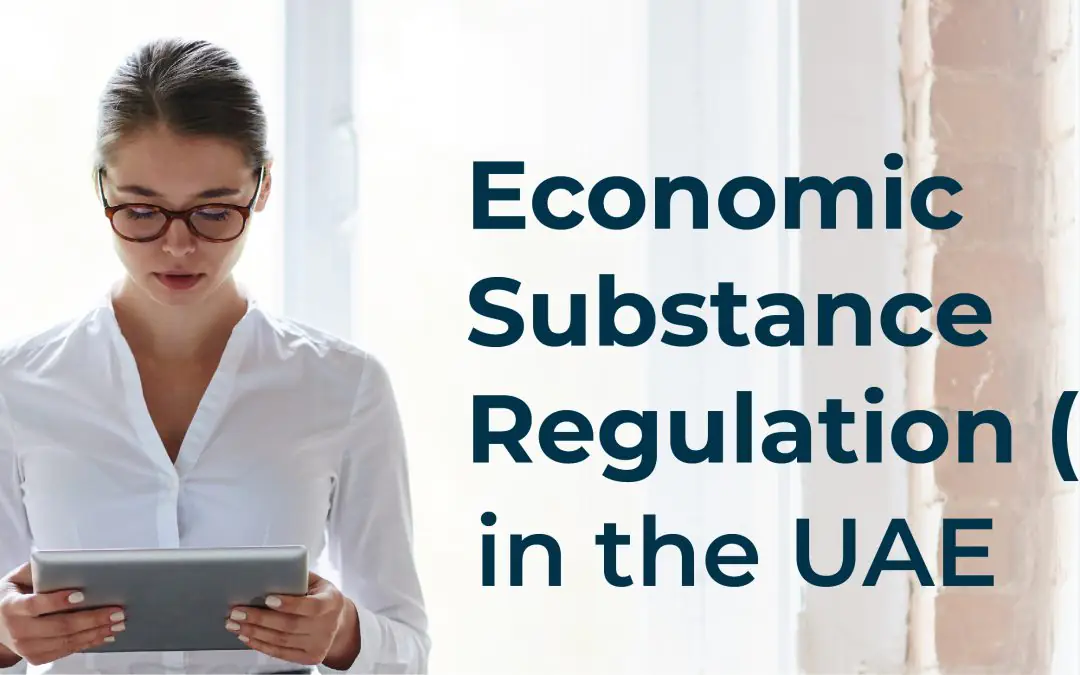
Economic Substance Regulation (ESR) in the UAE
Kreston Menon
Under the Organization for Economic Cooperation and Development – OECD/G20 Inclusive Framework on BEPS, over 135 countries are collaborating to put an end to tax avoidance strategies that exploit gaps and mismatches in tax rules to avoid paying tax.  On 30 April 2019, the UAE Cabinet issued the Cabinet of Ministers Resolution No. 31 of 2019 concerning Economic Substance Regulations (ESR) requiring all in-scope UAE entities to comply with the Inclusive Framework on Base Erosion and Profit Shifting (BEPS) to ensure that profits are accounted by the entities where the actual economic activities are conducted and value created.     The Ministry of Finance (MoF) of UAE released a Ministerial Note on the application of the regulations on 11 of September 2019 and another guidance note, the Relevant Activity Guide (RAG) on 15 April 2020 in their continued efforts to clarify the scope and coverage of listed economic activities and their associated Core Income Generating Activity test (CIGA).

Is ESR applicable to your company?
ESR requires all businesses having a commercial license, certificate of incorporation or similar permits issued by any regulatory authority in UAE (licensees) carrying out one or more Relevant Activity to substantiate adequate economic substance in the UAE.


ESR excludes UAE licensees with direct or indirect holding of at least 51% by any UAE Government, Governmental authority and/or body.

Action Points
Since the principles of economic substance are largely governed by international best practices (albeit tweaked for local market conditions) and recommendations by the OECD, UAE businesses should:


Penalties for non-compliance with ESR

Non-monetary penal consequences could include suspension, revocation or non-renewal of license in appropriate circumstances.

How Kreston Menon can help you?

Kreston Menon has a specialized team to provide an end to end solution for impact assessment, gap analysis and reporting obligations for ESR for your business.
Read More
Unified ICV Program Changing the Socio-Economic Landscape in UAE
Kreston Menon

For past many years, the GCC countries have been initiating localization drives, particularly in the oil and gas industry. The major localization initiatives in the region started with Oman Oils In-Country Value (ICV) program followed by Saudi ARAMCO’s IKtVa and Abu Dhabi National Oil Company (ADNOC) ICV program.

Read More
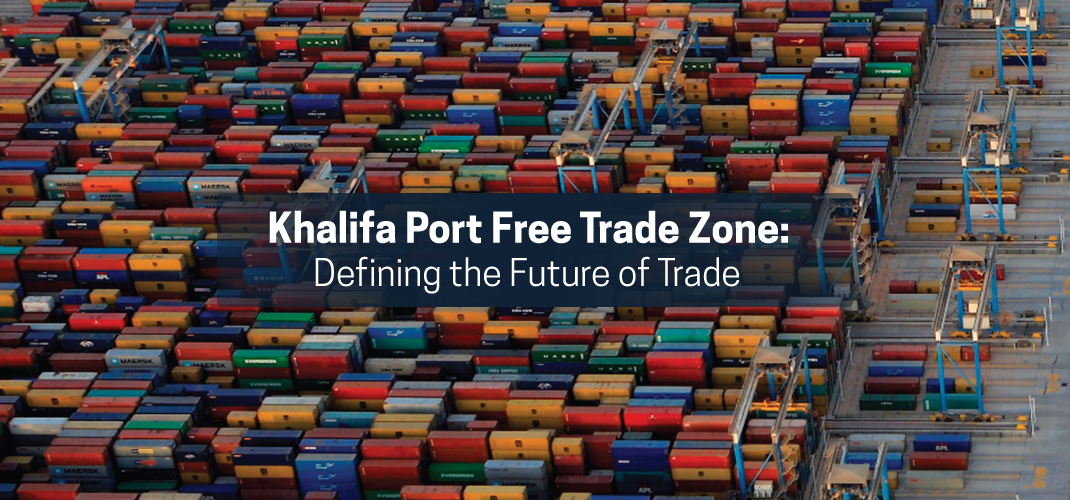
Khalifa Port Free Trade Zone: Defining the Future of Trade
Kreston Menon
Khalifa Port Free Trade Zone (Khalifa Port FTZ), part of Khalifa Industrial Zone (KIZAD), was introduced by Abu Dhabi Ports in November 2016 in a bid to meet the growing demand for free zones in Abu Dhabi – with the UAE capital emerging as one of the foremost industrial and trading destinations in the region.

Khalifa Port FTZ is located within KIZAD, the trade, logistics and industrial hub of Abu Dhabi, fully integrated with Khalifa Port, one of the world’s fastest-growing container ports and a leading hub for maritime trade in the Middle East, Africa, and South Asia (MEASA) region. Together with Khalifa Port and KIZAD, Khalifa Port FTZ adds significant value to investors, while strengthening Abu Dhabi’s position as a thriving maritime hub in the Middle East.

Captain Mohamed Juma Al-Shamisi, CEO of Abu Dhabi Ports, said: “The introduction of Khalifa Port FTZ marks an important milestone in the Abu Dhabi government’s efforts to diversify the economy away from hydrocarbon resources as envisaged by the Abu Dhabi Economic Vision 2030. At Abu Dhabi Ports, we seek to support Abu Dhabi in achieving its ambitious economic vision through enhancing its competitive advantages on a global scale. As part of this priority, we have built a world-class trade and industrial zone that is ably supported by state-of-the-art infrastructure.”

Mana Mohammed Saeed Al Mulla, CEO of KIZAD said: “Khalifa Port FTZ offers unprecedented value and convenience for investors given its unique location in the centre of the UAE, as well as the integrated services it offers, facilitating hassle-free licensing and approval procedures at government departments and licensing authorities.”

Leveraging the geographical benefits of Abu Dhabi’s central location at the cross roads of East and West, Khalifa Port FTZ offers importers and exporters convenient reach to more than 4.5 billion consumers within four of the world’s time zones. In addition, the free trade zone’s multimodal connectivity to roads, ports, air and future rail networks ensures easy accessibility to all of the region’s key logistics and trading destinations.

The free trade zone is served by the ultra-modern deep-water seaport of Khalifa Port that is being developed to accommodate the largest ships in order to ensure the easy import of bulk raw materials and export of finished goods. Shaping up in stages, Khalifa Port will eventually offer a capacity of 15 million TEUs (Twenty Foot Equivalent Units) and 35 million tonnes of bulk and breakbulk cargo per year.

Like KIZAD, Khalifa Port FTZ creates a wealth of opportunities for local, regional and international companies and investors. In addition to facilitating access to markets across the world, the free zone offers a competitive operating cost environment and a meticulously designed setting that makes doing business easier than ever before.
The ultra-modern facility also provides unparalleled advantages for businesses including competitive lease prices and some of the lowest utility costs in the world – all under a tax-free umbrella. Through doing business in the free zone, investors can enjoy 100 percent foreign ownership, 100 percent repatriation of capital and profits, competitively priced shipments and efficient customs procedures, among other value-added benefits.

Abu Dhabi’s strategic location as a business hub of choice offers Khalifa Port FTZ a unique opportunity to tap into huge regional and global markets. Furthermore, the emirate’s strong fiscal and monetary outlook, investor-friendly regulatory environment and openness to other cultures considerably benefit the free zone through attracting the world’s best talents and creating favourable conditions for foreign companies to thrive in. Importantly, Khalifa Port FTZ also supports the local Emirati workforce by providing them with sustainable job opportunities.

Within the gross area of 100 square kilometers (across Areas A and B), Khalifa Port FTZ now boasts a wide portfolio of investment sectors including aluminium, automotive, engineered metals, port logistics, food processing, pharmaceuticals, polymers, packaging and other industries that rely on Khalifa Port.

Poised to grow and compete on a global scale, 35 free zone warehouses will soon be available for lease. In addition, the nonfree zone Light Industrial Units (LIU) Cluster that comprises 75 units will also become a major attraction at KIZAD for the SME sector.
Occupying a prime location in KIZAD, non-free zone KIZAD Logistics Park offers a total of 105 units, many of which have already been leased to leading national and international logistics providers. Setting new benchmarks for trade hubs in the region, this hybrid model of free zone and non-free zone solutions lends KIZAD a unique proposition among regional logistics and warehousing centres.

With Abu Dhabi’s international trade continuing to register robust growth, Khalifa Port FTZ today provides the best destination for companies seeking to expand their business in one of the world’s most dynamic and high-potential markets
Read More
Functional Process Outsourcing – The Way Forward
Kreston Menon
Organizations, globally, have focused on outsourcing their non-core activities so as to invest further time on their core activities. One of the key processes which has seen a growing trend in outsourcing is Human Resource function. Outsourcing is a method where companies contract out a business process to an independent firm, which the firm provides as a service. In Outsourcing, the service provider is an expert in that area. This in turn gives an opportunity to the company to hire the best service provider and the organization can instead focus on other higher value-added and core activities. Studies have shown that HR Outsourcing has become a strategic decision which is taken to improve the bottom line of the company. As per Business Standards, 71% of CEOs believe human capital as their biggest contributor to sustained economic value, this statement signifies the importance of Human Resource, and hence it should be utilized to the maximum, resulting in the growth of the organization.

HR Outsourcing Trends

Human Resource Outsourcing is not a new phenomenon. Organizations have been outsourcing various components of human resource functions, such as payroll and benefits administration, for years. But off late it has become a point of discussion for one and all because, recently, giants like global Fortune 500 companies have chosen to outsource their entire HR function.

  • 50-60% of organizations view employee retention as a concern
  • Administrative duties & employee concerns take up as much as 70-80% of the time
  • Costs associated with employee turnover range from 30-150% of employee salary
  • In-house HR costs range from 20-30% higher than outsourcing
  • About 54-60% of all job applications contain inaccurate information
  • Analysts have forecasted the global HRO requirement to grow at a rate higher than 12%
Strategy for Outsourcing HR Functions

An organization can outsource its HR functions partially or completely. When it outsources partially, the company retains some control over the outsourced functions and may share access to information with the vendor. When the functions are outsourced completely, the organization relies upon the vendor to carry out the entire function. The strategy to outsource HR function completely or partially shall depend on the many parameters including, but not limited to, Employee strength.

Organizations with smaller employee strength (i.e. up to 150 employees) can completely outsource their HR function, since it shall reduce the cost for the organization to have HR experts of varied levels at a lower cost than hiring an FTE. On the other hand, organizations with huge employee strength, should focus on outsourcing part of the HR functions including strategic & operational HR like:

  • Background checks
  • Training & Management Development Programs
  • Executive Development & Coaching
  • Employee Benefits Administration
  • Payroll
  • Employee Re locations etc
Reasons for HR Outsourcing

Organizations are gradually migrating to HR Outsourcing as they have realized that if done so, there is a considerable reduction in operating costs which helps the company to save substantial money to invest in its core business. By outsourcing to service providers who have expertise in certain areas, companies are able to achieve improved legal compliance and control.

With HR functions in place, processes within the organization become more streamlined which helps the team to decide about allocation of employees to tasks. Once processes become organized, it helps to identify loopholes in resource planning and hence, reduce under utilization of resources and also develop a
suitable training plan for employees who require grooming and training. This automatically boosts the motivation of employees and increases team-work within the organization.

When there is a functional HR team in the organization, the employee performance management system is also designed appropriately for the employees. This includes proper succession plans, fair appraisal and feedback process and motivating rewards and recognition system. This motivates employees to strive harder and eventually increases the quality of work in the company.

Case In Point

One of our clients, who is a strong player in Warehouse & Logistics Management, UAE, with an employee strength of less than 100, decided to outsource its HR function, after the owners of the company were majorly involved in all the issues pertaining to employee management.

We, along with our team of experts, suggested the client to outsource its HR function to us so as to reduce their time involvement and enhance the overall HR management. In the process, we conducted a detailed HR Audit of the client to identify the areas of priorities to focus. We identified that the client did not have a proper structure for its HR functions. Functions like Payroll, Leave Management, Recruitment and Performance Management were taken care by the various divisions. For example, Payroll was managed by the Finance team, administration team took care of the Leave applications and approvals and there was no standard operating procedure followed for performance appraisals. The owners had to be involved in every decision, small or big, which took away their time to make strategic decisions.

Once we started as their HR advisors, we brought the focus on streamlining the process including implementing SOPs for leave management, financial assistance like loan and payroll, performance management, rewards and recognition process, and exit process. All these processes were performed following the UAE labor law. All HR functions included in the Employee Life Cycle were taken
care by our team; right from selecting the appropriate person for a role, on-boarding process, performance and leave management, succession plans and exit procedures. This proved beneficial for the company as when these functions were outsourced, it allowed the owners and senior management to focus on its core business and other strategic decisions. This also made up for the lack of in-house expertise.

As we took care of all HR functions within the organization, employees had a dedicated point of contact to communicate their issues. This helped employees to resolve their issues faster and better, which in turn helped them dedicate their time to their work and perform better and improve the company’s service delivery With

With this, the company could also save money on hiring a permanent full-time HR in the organization and hence, reduce operating expenses. Overall, the decision of outsourcing benefited the company to streamline its processes, to control legal risk and improve compliance and most importantly to reduce their operating cost associated with the hiring of full-time HR in the organization, to the tune of 25% of the budgeted cost were saved in the process.

Conclusion

A dysfunctional HR roadmap or ineffective HR management strategy has long-term consequences for an organization. It affects the performance of a business and the productivity levels of employees. Customer service on all fronts gets affected. The loss of customers and medium-term revenues is quite immediate.
Over a period of time, the free fall leads to an impact on the bottom line of an organization.

When human resource functions are outsourced to service providers with expertise, all processes in the organization become streamlined systematically. This automatically motivates employees to work and create a positive corporate ethos in the organization.
Read More
Countdown to VAT: What is its Impact on Your Business?
Kreston Menon
Value Added Tax (VAT) – A tax on transaction; the concept is quite simple in theory, yet from a business perspective, the changes that the tax entails are often huge. It is a fact that the introduction of VAT system in the UAE will not just affect the end-consumers, but will have a deep impact on businesses as well. It won’t be too long to the introduction of VAT in UAE; as of Jan-2018, the UAE will introduce VAT to 5%. So in this context, let us help you get certain important concerns on VAT cleared.

What is the impact of VAT on your business – positive or negative?

VAT, in an ideal scenario, is a mechanism in which the subject supplying goods or services, can deduct the tax paid on purchases from the tax charged to buyers. Hence, the difference between the tax applied to sales and that paid on purchases will be paid to the Government. Even though this is the actual case, there may be a context wherein there is loss in the margin of business due to VAT, if sales and purchase processes are not designed with required controls. Besides, this will certainly increase the pricing of the products to the end-customer. So, the whole business model needs to be carefully reassessed.

What are the business functions that will be impacted by VAT?

The impact of VAT can be felt across several business functions. As most of us might think, VAT implementation is not just an accounting task, but also a business strategy implications for CEO’s as the outcomes will be across pricing, IT systems, supply chain, processes, policies and contracts, and even HR.

How to implement VAT changes effectively in your organization?

In order to implement VAT changes effectively across your organization, it is quite essential that you should understand the new legislation and obligations quite well, and should review the daily activities of the company without fail. Most companies will have to make few changes to their core operations, financial management, and, probably their human resources. Particularly, organizations should:

  • Determine which all areas of the firm will be affected by the introduction of VAT
  • Process forms, templates and documents, in order to adapt them to the new rules
  • Partnering with an efficient IT Team to effectively implement changes in the IT System
  • Update the accounting section and adapt the financial records
  • Make sure that the incoming and outgoing invoices are compatible with the new regulations
  • Adequately train HR department so that everyone understands the changes and the new responsibilities, and prepare accordingly to these aspects within the company
  • Adjust the contracts with the regulations
  • Review the tax provisions that are already in place
Read More
What’s Audit Really Worth – Beyond a Legal Requirement?
Kreston Menon
As the aftermath of this rapacious age, where trust is at the rock bottom, investors are seeking for increased transparency and disclosure. In this context, quality audit derives a higher value, which is beyond just meeting legal and regulatory requirements. While financial statements remain as a linchpin of the prevailing reporting model, most of the information sources that investors are looking to discern an organization’s strategy, business risks and model, furthermore it’s medium as well as longer term prospects, are not captured in the present-day statements. The question here is – should it be? And in case, if more of this investor relevant information is encapsulated in the company’s annual report, the next question that arises is – should an auditor’s eye on this information be valuable to investors? In the frame of reference of audit upheaval, we will discuss here, how audits must evolve in a better way to serve investors.

Unveiling the Value of Audit

As we apparently head out to a period of global growth, auditors and audit firms are found to face a turbulent series of challenges and revises. With fingers pointed across the audit professionals for almost every issue – from the substandard anti competitive behavior – to excessively comfortable relationships with clients and regulators, it has become highly important for us to know the value of audit, and perceive how auditors form their opinions. In the auditing process, the auditor will scrutinize and verify the financial information provided by the organization, which may not necessarily depict a true and fair view of the company’s state of affairs. However, since scope of such an external audit does not cover each and every transactions of the company, the auditors use all the available information sources and subject it to a lot of inspection, analysis and judgment. They perform audit procedures and gather audit evidences to provide reasonable assurance whether such financial statements in question depicts a true and fair view altogether.

Yes, audits are obviously worthwhile – they are simply worth the paper they are printed on! But as we are in the period of global growth, it seems to be a sensible time to find how the limitations of audits can be vanquished, and how these processes and outcomes could be improved.

Enhancing Audit Quality

Improving the quality of audits has been, and continues to be the initial mission of all organizations. In order to accomplish this, it’s of paramount importance that audit regulatory bodies should engage more broadly with the whole investor community in order to explore what they actually expect from corporate reporting and assurance – whether inside or outside of the financial statements. Changes in the audit field are already in progress; however, along with any regulation, a better relationship is required between the audit committees, auditors, investors, and management, to ensure that audits dispense the most value. Apart from the discussions carried out between the audit committees, auditors, and management, there should involve more direct communications between investors and external auditors, because, this could allow to some extent, for better transparency on the audit process and corroborate that the key stakeholders and the audit reports readers comprehend the information that is been presented and ensure the corporate report meets their needs.

As we know, expanding new technological advancements are already impacting the way businesses are done. And of course, audit is of no exception from this! Hence, an additional area that demands consideration is innovation – new tools and technological advancements make data review and analysis more efficient and effective, assist auditors to identify risk areas and map potential exposure better, to rise with new insights and ultimately improve the audit quality.

The Future of Audits

The future of audits can be bright, if audit regulatory bodies take into account, the wider interest of investors and if auditors can successfully deploy innovation and communication into audit procedures. And, when it comes to evolving the audit, it is a fact that changes are essentially as valuable only in as much as they help, investors to make better and informed decisions, and organizations to adopt a more resilient business strategy.
Read More
A tailored approach to risk management processes and architecture
Kreston Menon
Risk management processes are a section of general business procedures. Procedures are utilized to oversee and screen the regularly changing risk situations.

The risk management process architecture is the outline of procedures, including their segments of sources of inputs, handling, and results. This design inventories and depicts risk management processes, each procedure’s segments and interactions, and how they work together and additionally with other processes in the enterprises.

Even though risk management processes can differ by organizations, there are some basic factors that every organization must have.

They are:

Identification of risks

This is the gathering of procedures focused at making a standard, target approach for distinguishing risk by knowing situations and surroundings. It is about the interior business context, the environment outside that business works in, and your technique as to where the business is heading. This likewise includes checking significant legal and regulatory environments in relating purviews to distinguish changes that could affect the business and its goals.

Evaluation of risks

Once an association recognizes risk, then it can distinguish what can be done to support or hinder the goals. An association needs to recognize the potential outcomes of results to what can affect it accomplishing destinations. This must include heat maps to incorporate a variety of risk evaluations and techniques (e.g., analyzing scenario, Bayesian modeling and bow-tie risk analysis).

Treating risks

After the potential conceivable outcomes are comprehended, the association needs to choose what to do. It should know what will be the best course to accomplish goals while limiting loss or harm. The objective is to optimize value and return while keeping risk inside within acceptable levels of risk tolerance.

Monitoring risks

This stage incorporates the variety of procedures to ceaselessly screen risks in the association. These exercises are the ones commonly done inside the association to screen and evaluate risks on a continuous basis.

Risk communications and attestations

Continuous procedures to deal with the communications and attestations with owners of risk all through the risk management cycle. These are done at intervals or when certain risk conditions are activated.

Successful risk management processes will offer:

Holistic consciousness of risk

This implies there is characterized risk categorization across the enterprise that structures and lists chance with regards to business and relegates accountability.

Establishment of risk culture

It must be imparted over the business to build up a risk administration culture. These are kept current, inspected, and evaluated all the time.

Decision making

This implies the business has what it needs to settle on business choices. Risk procedure is coordinated with business strategy.

Multidimensional risk strategizing

The organization needs risk examination, correlation, and situation investigation. Different subjective and quantitative risk analyzes strategies must be set up and the organization needs a comprehension of loss to impart into analysis.
Read More
Interpreneurial Campaign: Top Business Breakthroughs that Makes UAE the Best Investment Hotspot
Kreston Menon
Over the years, the UAE has evolved to prove more appealing to global investors. Owing to its potential business opportunities, Government support, streamlined business operations, and profitability, the destination has become highly attractive for international entrepreneurs, simply known as ‘interpreneurs’.

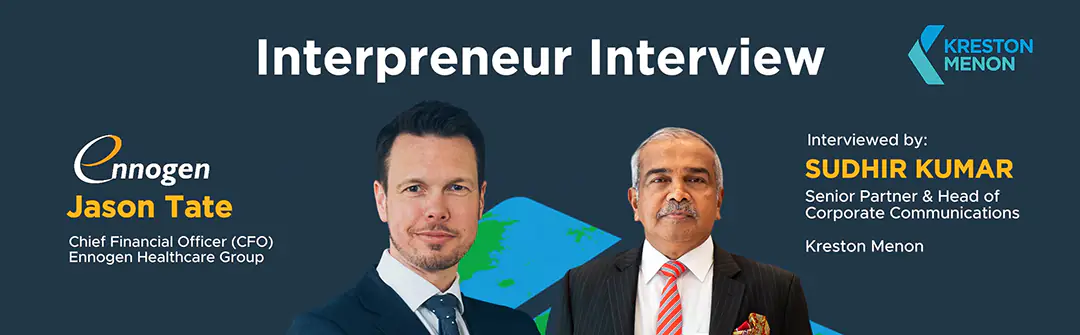
Ennogen Healthcare Group, based in the UK, has recently expanded its operations to the UAE. Here is an interview of Jason Tate, the Chief Financial Officer of Ennogen Healthcare, by Sudhir Kumar, Senior Partner and Head of Corporate Communications-Kreston Menon, Director-Kreston Global Board, and Chair-Kreston Middle East. The discussion ignited the perspectives and possibilities of interpreneurs in establishing the business in the UAE.

Jason emphasized why the UAE is a prime location for business and how Kreston Menon supported their company formation in the UAE. He has also shared insights on what makes the UAE attractive for international companies and offers tips for other interpreneurs planning to establish their business in the UAE.

Read further and watch the video of Jason Tate, Chief Financial Officer (CFO) at Ennogen Healthcare to learn about their successful expansion and their perspectives on doing business in the UAE.


Sudhir: I have Jason, the Chief Financial Officer for Ennogen Healthcare Group. Ennogen Healthcare is based in the UK and set up their operations in the UAE. Good afternoon, Jason.

Jason: Good afternoon, Sudhir.

Sudhir: I would like to go through you the phase of how you have moved to the UAE. What would you say about it?

What made you select UAE to have your base and how you met Kreston Menon and what Kreston Menon has done for you?

Jason: Well, Ennogen Healthcare is a pharmaceutical business, in a rapid phase of international growth and whilst we remain UK-focused, we wanted to attract investors and business partners from other parts of the world. The UAE is uniquely placed in being central for access to parts of Asia and also remains close to Europe and attracting good talent is a really important function for our business because it’s a regulated business and the UAE provides a unique lifestyle that attracts top talents to it from all parts of the world. And it’s a pro-business environment which helps us to drive forward our success.

Kreston Menon was introduced to me by a fellow professional. And we assessed their capability in the UAE compared to other firms, including the Big Four, and I considered that Kreston Menon was best placed in the UAE to give appropriate local advice for the region, which is important in the process of setting up and also expanding.

And I’ve been working closely with Kreston Menon for several months now, and we’ve had very good advice and also help through the administrative hurdles of setting up a company.

Sudhir: What are the top 3 important things you consider you love doing business in UAE?

Jason: So when assessing coming here to the UAE, there were three really important things for me:

1. The proximity of the UAE to other regions around the world, including Asia, the subcontinent, whilst remaining close to Europe.

2. The talent pool that’s available here is attracted by the lifestyle and the agglomeration of skills from around the world.

3. The pro-business environment which the government leads and helps us to drive forward our success.

Sudhir: These are the three main reasons for it. We also understand many foreign investors are looking for the UAE as a destination for investments.

I would like to know what with your experience in this market, there are a lot of Interpreneurs coming up and setting up businesses here, scaling up from going to the broader region, the whole lot of things they would like to know.

What is your advice and tips for Interpreneurs?

Jason: So the UAE provides a very dynamic environment for Interpreneurs, attracting Interpreneurs from all regions of the world. So it’s a really useful environment and serves agglomerating and skill sets. Yes, a sharing of knowledge. And my experience is that it’s good to try locate yourself in an area where you can quickly access.

Sudhir: How do you rate your success in business? If I may say 1 to 10?

Jason: So we’re at around 9 out of 10. We’ve arrived here, set up the business and we’ve begun to achieve some of our early goals. We’re on track, but also we’re beginning to identify new opportunities that we didn’t anticipate before we came here. And as a consequence, I’ll be moving larger parts of the business out to the UAE in the coming months.

Sudhir: 9 out of 10 is a very good ranking for UAE. I would love to say this to the Dubai business authorities, and they’d be more than happy to see investors saying 9 out of 10. But that’s what Dubai wants to be number one. It needs to reach the 10. That’s the ranking they are looking for.

Kreston Global spends a lot of effort, a lot of time, and a lot of people worked together to see that they produce the best of Interpreneur Survey.

What are your thoughts on the Interpreneurial Survey Report 2024?

Jason: The Interpreneur Survey is being really useful in assessing the climate for business that’s available here in the UAE, and it’s also been useful in order to try and understand the sense of direction as well. I was particularly pleased to see that there’s a strong emphasis on international growth, which is useful for Ennogen and Ennogen’s strategy. But also there is a leaning towards Europe which is very helpful to our business strategy as well.

Sudhir: Excellent. Thank you. These are very interesting words for our interpreneur campaign and I think we definitely attract many people to come up in the UAE.

And it’s good for the government of Dubai and UAE to hear good words about Interpreneurs like you and wish you all the best and good luck.

Jason: Thank you, Sudhir.

Intrepreneurial Attractiveness Drives Substantial Investments in the UAE
Being the foremost destination that stimulates intrepreneurship and offers numerous incentives to investors, the UAE has witnessed a surge in global investors over the past few years. With the capability of attracting a huge number of investments, the country has grown into one of the most preferred investment destinations worldwide.

Presently, the UAE looks to attract many investments, promoting the investment ecosystem and raising the international indices specific to the business economy and competitive market fundamentals. Interpreneurial Survey Report 2024 throws light on the close evaluation of the business climate in the UAE, alongside the factors that contribute to the ultimate business success.  To learn further and gather more insights from the interpreneurial survey report, click here.
Read More
whatsapp