.svg)


Get in Touch
We would love to hear from you!






Change Management – The Secret Weapon for a Volatile Business Landscape
 Kreston Menon
Artificial Intelligence and end-to-end automation seem to be the buzz word in business and technology circles these days. These are technologies that are bringing about radical changes to the way businesses are run on a day to day basis.The operational efficiency and customer experience thesetechnologies bring in are unparalleled and it is predicted that almost all organizations will significantly adopt AI and end-to end automation in several processes in the next few years.
While these technologies are brilliant in themselves it is far too utopian to think that they will replace humans completely in the organization. These technologies will simply replace repetitive work within a process pushing the employees into roles that require more cognitive thinking much like how the world doesn’t need ledger keepers or typists anymor. Technology used to change only once every 8-10 years until a decade ago, now it does every year and in some organizations much faster. If this change was not enough most sectors are governed by ever-changing regulatory compliance, employee role changes and attrition. Mergers and acquisitions bring about large scale changes which are driven by people, process and technology integration.
This leaves an obvious elephant in the room (or in the city office!) – Managing Change effectively and completely.
Like all good practices, Change Management too is a culturethat is inculcated within the organization. Change is the most difficult aspect of human behaviour to achieve and Employees need to be sensitized about the benefits change will bring about in their own job roles. This cultural shift is entirely driven by the stakeholders at the Board level ensuring that the Executive Management buys into the concepts and more importantly believes in it.
Another critical aspect is choosing the right methods and tools for business change. Employees make changes to technology, employees conduct impact analysis, employees make changes to processes, employees need to adhere to regulatory polices, employees need to use changed technology to deliver superior services to customers. Yet employees are provided with yesteryear’s change management methods and tools.
[Tweet “Change #Management – the secret weapon for a volatile #business landscape”]
While operations and regulatory compliance impact analysis tools are virtually non-existent out of the box, change related competency enhancements are carried out by outdated tools such as a learning management systems or e-learning tools. Change information related to the process itself is embedded inside complex BPM tools that can be decoded only by analysts or technology folks and documentation tools provide the repository of business information documents that runs into hundreds of pages, defeating the very purpose of easy change management.
Most organizations are using one or more of these tools to achieve change management, which in itself has a fundamental flaw. These are not integrated systems that target employee experience during change management. Change Management should be driven by simple visual process information that can be interpreted without ambiguity across the organization. It should integrate regulatory information, IT system information and documentation related only to the specific process that is being accessed. The employee should be able to only see the information pertaining to her everyday work, nothing more nothing less. She should be able to understand all of this in a couple of minutes and not need to spend hours trying to link and put together various pieces of information she is seeking by herself. Finally, the management must have superior tools to investigate the impact of any operational or regulatory change and have an easy way to broadcast, collect acknowledgement and test the knowledge about the change of the employees. All of these must work in one single system to make change truly effective.
Change Management is one of the most complex organizational challenges because it involves large set of people. It is imperative that the following steps are considered to make it potent:
Make employees the focus from the planning stage of any transformation or change management programme
Choose the right technology tools to engage the employees effectively. If their buy-in is subpar then the effectiveness of any initiative is limited.
Ensure that all elements of the organizations that need to be consumed viz. processes, regulations, documents, procedures and policies, technology system information,are completely integrated with one another.
Deliver only role specific information to each employee, this cuts the clutter and helps find the right information at the right time easier.
Each set of information need to be kept “bite-size” and contextual. This ensures that the information is easily digested.
Supervisors must analyze the inter-connectedness of each organization elements with one another. E.g. What processes and IT system functionality change because of a regulatory change, in turn how many locations and employee roles are affected?
Have a realistic approach to understand the employee awareness of the change. E.g. (a) Have a quick 2 min objective type online test about the change, 45 days after the change has been communicated. (b) analyze the number of hits a particular information gets from each employee role.
Build in effective feedback loop from the employees. This helps in fine tuning the method and tools.
Finally, one needs to be pragmatic and not over engineer the methods or the tools. Like most things in life, keeping it simple helps in making change management, manageable.
Read More
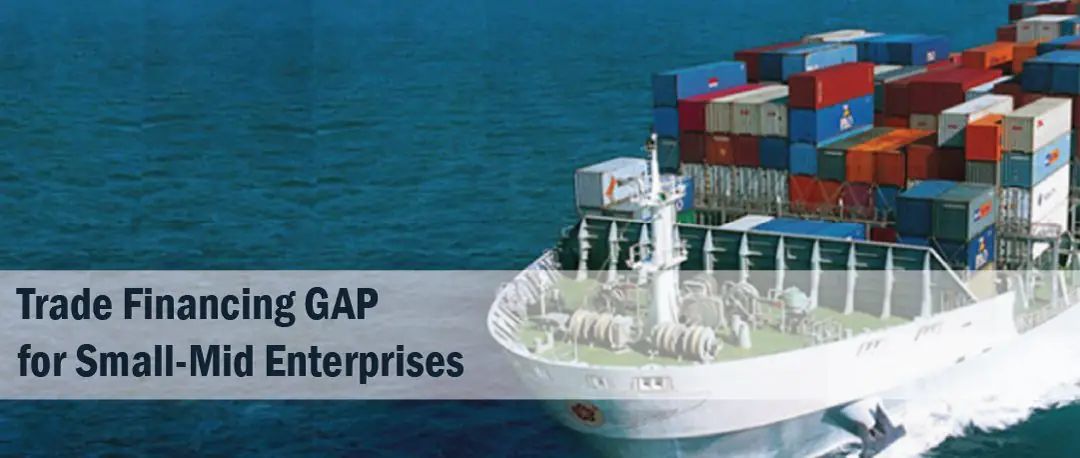
Trade Financing GAP for Small-Mid Enterprises
Kreston Menon
As governments around the world look to small and mid-size enterprises as engines of growth, trade and job creation, a significant challenge stands in the way: hundreds of billions of dollars of pent-up demand for trade finance. This financing can be used as export working capital that enables a company to purchase labor and inputs to fulfill a specific export order. Or it can be used as supply chain financing that helps the company get paid faster for its export shipment than its foreign buyer wants to pay, and thus get cash flow needed to process the next order.
International trade has been more or less sluggish since the global economic slowdown hit in 2008. World trade grew an average of 3 percent between 2010 and 2015, after 6 percent annual growth between 1983 and 2008. Demand for trade finance is growing fast. According to the International Chamber of Commerce, 63 percent of banks around the world said trade finance activity is growing, 61 percent increased their capacities to meet customer demand for trade finance and 72 percent experienced an increase in trade finance fee income. Requests most frequently came from SMEs, which are both more numerous and cash-strapped than large companies; however, banks rejected about half of all SME requests, as opposed to 21 percent for large corporations.
[Tweet “#Trade #Financing GAP for Small-Mid Enterprises”]
These findings are indicative of a global trade finance gap, now estimated at $1.4 trillion, $693 billion of which is in developing Asia, including India and China. The gap exists also in advanced economies: In surveys in the U.S., Europe and the OECD region, SMEs unfailingly see a lack of finance as the top obstacle for them to trade across borders.
A story recently in Reuters talked about how the biggest trading houses are filling the traditional banks (and mostly European banks role) of funding traders. Banks such as BNP Paribas and Societe Generale have cut funding of small and mid-sized companies with low credit ratings because of growing regulatory and political pressure, risk aversion and weaker profits. But banks still feel comfortable in providing large trading houses with billions of dollars in credit lines and then often watch this money being re-lent at higher rates to those they chose not to deal with directly.
The 2030 Agenda and Improving Access to Trade Finance – The Role of the WTO and other International Institutions
The availability of trade finance is a significant problem in emerging markets and developing economies. Surveys show that this is especially the case in Africa and Asia. The lack of development of the financial sector means simple, low-cost financing is often not easily available to small companies, which can pose a significant hurdle to developing economies integrating into the global trade system more effectively and taking advantage of the potential benefits of trade for employment and growth.
Also Read: VAT: Let’s Show the Way to Get Prepared..!
Trade finance can facilitate SMEs’ integration into global value chains in several specific ways. One promising tool is Supply Chain Finance (SCF). SCF can simplify the manner in which receivables and liabilities are handled, processed and subject to interim financing between suppliers, producers and buyers along a global value chain. Since SCF is based on the binding commitment by the buyer to purchase the primary and intermediary products, the financing conditions are related to the credit rating of the buyer, usually a larger company, which means they can be more beneficial for the supplier than if the supplier requests financing outside this fixed value chain context.
In developing economies, local financial markets are often not in the position to offer such SCF arrangements, making access to factoring and other financial instruments particularly challenging for small-mid enterprises. International institutions like Multilateral Development Banks (MDBs) are putting new programmes in place that can close these gaps. For example, the International Finance Corporation (IFC) has launched a Global Trade Supplier Finance Program to facilitate the integration of smaller manufacturing companies into international value chains. The programme brings together suppliers, buyers and banks, making it feasible for banks to offer pre-payment on claims from suppliers from emerging markets and developing economies through relevant refinancing or acceptance of guarantees. The suppliers, in turn, have to pre-finance less working capital and provide fewer liquid assets, making it easier for them to plan accordingly. It appears that the private sector has also discovered this business model as a promising growth market. According to a survey from the International Chamber of Commerce (ICC), two-thirds of the banks surveyed stated that the importance of SCF is growing and that growth rates in this business line in recent years are above 10%.
International institutions, in particular the WTO, also have a role in supporting trade finance effectively. The WTO is regarded as the initiator of international cooperation in the field of trade finance and serves as a discussion forum for relevant players. Since 2008, the Working Group on Trade, Debt and Finance has been the hub for WTO initiatives in support of trade finance, particularly in developing countries. In this role, the group continuously interacts with the regional development banks, the International Finance Corporation (IFC) and the national export credit agencies.
The WTO and other institutions could do several things to address the difficulties associated with trade finance in developing countries more effectively, including:
Putting a greater focus on trade finance for developing countries and for the integration of SMEs into value chains: IFC and MDB programmes focusing on SMEs could be further strengthened. The WTO’s working group on trade finance could support and evaluate efforts by MDBs in tackling the structural trade finance gap in developing countries.
Improved synergies in cooperation between the actors involved in trade finance: More intensive cooperation between the relevant institutions and actors could help to increase the availability of trade financing. MDBs and their programmes play a leading role here, but increased cooperation between MDBs and export credit agencies, the WTO, the Bank of International Settlements (BIS) and the private sector could improve the effectiveness of trade financing initiatives, for example by institutionalising cooperation between the WTO and BIS and ensuring developing country governments and stakeholders are sufficiently involved in decision-making. A good example is the Trade Finance Institute currently being created by the ICC, which is drawing on existing WTO and MDB e-learning materials.
Keeping trade finance on the public agenda: The WTO Working Group on Trade, Debt and Finance is in a good position to raise international awareness about financing gaps, to discuss whether proposals from stakeholders and institutions live up the demands of trade bankers and trade rules and, when needed, to convene debate among a range of relevant actors, including the G20 and the wider WTO membership.
Read More

Standards of Innovation in Auditing
Kreston Menon
The world of Auditors is becoming dramatically a competitive cutthroat that lead certification authorities of auditing to differentiate themselves by bringing out few added values. But, today most of the auditors in UAE keep their focal point on compliance rather than exploring real opportunities for improvement. Due to the global financial crisis and succeeding questions regarding the value of financial statement audit, it became mandatory to mold a management system, which can develop distinctive quality innovations for audits. This will demand a turnaround in thinking for auditors, however, it stays as an active opportunity to build added value for clients.
Auditing for innovations!
Innovative audits can lead to successful innovations! For every business to thrive, it needs to innovate. The very first thing that needs to be followed for successful innovation in an audit is to identify the opportunities, which most of the organizations miss out. This is most relevant in tough times,in order to recognize new products that ensure profitability and deliver new services to existing customers rather than searching for new customers. Scrutinizing non conforming products and services by diagnosing propensities of customers are to be carried out sufficiently to input another resource to audit innovations.
Next stage is to tack on to potential solutions by interpreting customer fulfillment and product-wise missteps. Finest data analysis will assist to extract out what failed to get done for customers and what prompted to process failure, availing management a clear-cut idea of where to focus on.
Subsequently, a simple problem-solving methodology can be adapted from amassing composite knowledge, which is a key for connecting to an innovative solution. In case if a business has developed a new product, there is 99% probability that it will have a new supplier and most organizations implement new supplier evaluation through internal audit capabilities.Auditors appraise supplier’s services to comprehend the soundness of suppliers in managing and mollifying any risk, in spite of their quality management systems.
[Tweet “Standards of Innovation in #Auditing – #MorisonMenon #Blog”]
The astounding need for molding a faster-working solution is that someone else might be working over the same issue at somewhere else. At the final stages, auditors usually forget the exact need for starting innovation, which was obviously to offer perks and value for customers by addressing their concerns and complaints.
The correct pace to innovation
A more common trend among experienced auditors is to accuse that auditing has become a regulated activity and try to dispute for a reaffirmation of professional acumen maintaining a shrewd approach to audits. The surveillance based reviews and control moves fomented by professional audit firms can themselves surpass the number linked with independent public inspections. Besides, the implementation standards and working procedures adapted by most audit firms are more copious and detailed than the standards that are set by authorized bodies such as IAASB. For innovations to succeed, majority rests with the business antecedences that the concerned firms attach to audits and the extent of participation and willingness to work for mutual agendas in setting perfect standards and regulations for future statutory financial audits.
If innovations fail to oversee the claims of existing business model and transit ruling mindsets of staff, it’s assuredly in trouble. In case of any industry that has been alive for years with the conception of an audit expectations gap and the proportional obscurity of good quality audit works, will be favored considerably from a statutorily defined audit function and have defensibly sound economic reasons for sticking on to the status quo.However, the ultimate challenge for innovation is that the auditing professionals needs to deliberately think over whether it has the certainty to revise its business models and to refurbish its traditional delivery and organizational modes regarding the provision of statutory financial audits.
Also Read : Capitalizing from Internal Audits
Sifting from BRA’s experience
The Business Risk Auditing (BRA) experience reveals that the scope for innovative notions is eminently dependent on interplays between drifting professional and regulatory concerns to have a generalized influence on audit practice. In fact, enduring innovations demands eagerness and commitments to improve various aspects of audits.
The bottom line is that innovation has greatest prospects of success if it is merged along with willingness to advance the scope of audit and to welcome the variations in facets of audit delivery, instead of accepting standardization as a legitimate requirement for innovation. The matter is all about exercising culpable professionalism and identifying values in audit beyond its codification, standardization and commoditization.
Read More

VAT: Let’s Show the Way to Get Prepared..!
Kreston Menon
The prospects of a federal corporate tax and value added tax (‘VAT’) regime is gaining momentum in UAE. The launch of the new VAT system will not only just affect consumers, but also will have a wider impact on businesses. While it’s still early for companies to make major alterations to their business structures and operating manner, there are manifold matters that need to be considered for settling and amending to make an effective transition from a tax-free environment into the new tax environment.
Primarily, what is the rate of VAT in UAE and how will it affect consumers..?
The Government has decided to charge 5% VAT in UAE, while exempting basic food items and certain services (medical and education etc.). VAT is supposed to be borne by the customers but the businesses are responsible for charging and collecting it. It’s fortunate that the incidence of tax is very minimal as compared to all the other countries. Further, companies need to evaluate the price elasticity for their products for example, in case of luxury items (watches or cars etc.) and need to adjust their margins accordingly. The economist forecast a one-time increase in the inflation rate of 1% to 2% for the region.
Certain Things to be Considered by Business…
Business should scrutinize various aspects covering the financial structure and systems to estimate their overall tax readiness. Besides, they should ensure to review the overall structure of organization to enact cross-charges, appraise contracts to review its present tax clauses, and ultimately reviewing the affect that tax will have on their operations and supply chain. It is recommended that Business should keep themselves updated on tax developments and incorporate VAT in their business plans accordingly. Special care should be given for carrying out effective internal communication and attentiveness with regards to the newer trends in tax, as the introduction of VAT will also influence all areas of the company such as its legal, finance, IT departments and as well as the business strategies.
[Tweet “#VAT: Let’s Show the Way to Get Prepared..!”]
How Should Businesses Prepare for VAT Implementation?
There are several measures that companies must address and evaluate in order to make a smooth transition to the tax environment, which is discussed below.
1. Identifying Personnel
- Creating awareness among senior people from the head office, representatives from tax, logistics, accounts and IT and forming an implementation team within the organization.
- Carry out training for staff members for VAT (Using experienced consultants etc.)
- Restructure your business to involve new talent who has the ability to multi-task.
- Hire professional CA firms who could do the groundwork for your business for effective implementation.
2. Impact Analysis
- Identify the effect of tax on profits, supply chain, Information technology, legal and other areas.
- Assess pricing of the products/ quote for contracts, top line, and bottom-line impact
- Derive specific business aspects and business plan.
- Review all legal agreements/ contracts related to supplies of goods and services, and include clauses to accommodate VAT.
- Reach specific implementation plan.
3.Identifying critical issues
- Identify critical issues for prioritization.
- Identify contracts that need a VAT action.
- Identify inter-company transactions and implications of VAT.
4. Implementation
- Businesses will now need to develop more efficient processes.
- Make the needed changes to IT systems.
- Implement pricing changes and also evaluating the cost of products/ services correctly.
- Negotiations with new and existing vendors for reduced prices.
- Communicate efficiently with existing vendors and customers.
- Get professional help for right ways to implement systems perfectly.
- Incorporate a robust accounting system that has VAT module.
Also Read : VAT DESIGN AND ROLLOUT – Series 2
5. Trainings
Take initiative to provide training for operational Staff.
6.Post Implementation
- Maintain accurate financial records in an orderly manner.
- VAT registrations in UAE
- collection, payments and returns need to be performed without lag.
- Resolve transition related issues.
VAT can add an extra cost to businesses if a business is not prepared. Moreover, non-compliance with the tax laws may attract severe penalties. With no doubt, we can say that the implementation of VAT would require a total revamp of all the present practices and would assert a higher degree of financial transparency as well as accounting discipline.
Read More

Administrative and Procedural Aspects of VAT
Kreston Menon
In the last couple of artilcle, I had covered about VAT rollout, the structure of VAT, VAT thresholds, likely impact of VAT on intra-GCC trade, exports to non-GCC countries and on inflation.
In this and subsequent issues,I plan to write about the administrative aspects of VAT in UAE, importance of documentation for VAT compliance, training for employees handling VAT within organization, structuring companies under VAT regime, refund of VAT to temporary visitors to GCC and the impact of VAT on gold and silver trade in GCC countries.
Administrative aspects of VAT
At this stage it is too early to predict what would be the administrative structure that would be rolled out by the GCC countries for VAT. Just to give a fair idea to the readers, I would outline the administrative procedure to be followed by a company seeking for VAT registration in the United Kingdom
In the UK, a business entity has to be first registered for charging VAT unless their annual turnover falls below the VAT exemption threshold. Once they register for VAT they must charge VAT on their goods and services and may reclaim VAT they have paid on business-related goods and services. In the UK one needs to file VAT return once every three months.
VAT has to be accounted on full value even if the entity receives goods or services instead of money or has not charged any VAT to the customer. In such case, the selling price is treated as including VAT. If the entity has charged more VAT than what it has paid, then it has to pay the difference to the government. If the entity has paid more VAT than what it has charged subsequently then it can reclaim the difference from the government.
VAT rates, record keeping and invoices
In the GCC member countries, we are still not sure about VAT rates that would be implemented. However, we can be certain of zero VAT rate for certain essential goods and services.
In the UK there are three rates for VAT, the standard rate, reduced rate and zero VAT rate. Most of the goods and services fall in standard VAT rate category in the UK. Reduced rates at 5% are typically applicable for people over sixty or people with special needs for certain mobility aids. Reduced VAT rate is also applicable for domestic power and fuel. Zero VAT rate items include books and newspaper, safety helmets and few more items for children. One should note that Zero VAT rate also needs to be charged and accounted in quarterly filing of return.
In the UK business must keep VAT records for at least six years. VAT records can be on paper, electronically or as part of a software program. I shall be covering on records that need to be kept for VAT compliance in detail in subsequent issues of article.
[Tweet “#Administrative and #Procedural Aspects of #VAT”]
Only VAT-registered businesses can issue VAT invoices and must issue and keep valid invoices which can be in paper or electronic form. It is important to keep copies of all the sales invoices issued even if it is cancelled or produced one by mistake besides keeping all purchase invoices for items that are bought.
In the UK full VAT invoice is required for most transactions. One can also generate a modified invoice for retail supplies over £250 or a simplified invoice for retails supplies under £250. Usually VAT invoices must be issued within 30 days of the date of supply or the date of payment.
International trade
In case of international trade, there is no need to show all amounts on invoices in sterling. If VAT invoice is issued in a foreign currency or language, then total VAT payable in sterling has to be shown on VAT invoice if the supply takes place in the UK.
There are certain exceptions to issuing of VAT invoice. One need not issue a VAT invoice if invoice is only for exempt or zero-rated sales within the UK or giving goods as a gift or selling goods under a VAT second-hand margin scheme.
VAT refund to visitors visiting GCC member countries
Dubai has lots of visitors coming in from non GCC countries for shopping and leisure. When they shop in Dubai these visitors would end up paying applicable VAT on purchase of goods. We can expect GCC countries to provide relief on VAT payment to such tourist who shops in in one of the GCC countries.
If we look at VAT charged on goods and services in EU, VAT at the appropriate rate is included in the price one pays for the goods purchased. As a visitor to the EU who is returning home or going on to another non-EU country, one may be eligible to buy goods free of VAT in special shops.
In EU, a ‘visitor’ is any person who permanently or habitually lives in a country outside the EU and address as shown in passport is taken as the place of permanent or habitual residence.
In some EU countries, one may also qualify as a ‘visitor’ if you are living in an EU country for a defined period of time for a specific purpose, but your permanent home is outside the EU and you are not intending to return to the EU in the immediate future. EU citizens permanently living in non-EU countries are also eligible for the VAT refund.
VAT-free shopping involves lot of documentation and it can be taxing for a tourist to claim refund on VAT paid. As a visitor to GCC country, it may not be a simple process to do VAT-free shopping. If one looks at procedure followed by EU member states, one cannot just do VAT-free shopping. One must pay the full, VAT-inclusive price for the goods in the shop and get the VAT refunded at the airport before departure, provided one has complied with the formalities and can show the proof of export. Also in EU the goods will be eligible for VAT refund for eligible visitors only if the goods are taken out within three months of the purchase.
Also Read: VAT DESIGN AND ROLLOUT – Series 2
In the EU, one can buy VAT-free goods even if one is going to be visiting other EU countries before finally returning home, as long as one actually leaves the EU with the goods within the time limit of three months. One needs to get documents stamped by a customs officer at the point of exit of the EU–not necessary in the same EU country where the goods are bought.
In EU member states in the great majority of cases, there is an administrative charge for the service provided at the airport to get applicable VAT refund and one can get the exact amount that will be charged from the shop where the purchase is carried out.
To avoid administrative hassles over small-value items, there is a minimum value of €175 for the total purchase. The threshold applies to the total amount of goods bought in a certain shop. Normally, one cannot cumulatively add purchases in different shops to reach the threshold.
To conclude, we can expect the administrative aspects of the VAT to be established in the UAE to adopt best practices from VAT implemented elsewhere. Impact of VAT on tourists spending in the UAE and GCC countries would depend upon the ease of refund on VAT paid by such tourists. Business entities will need to have team in place that is well trained on intricacies of applicable VAT rate, zero VAT and exemptions of VAT for product and services, documentation, invoicing and regulatory filings. The existing accounting packages would require modification to take VAT into account. For companies with adequate training, processes and automation in place, I would not expect compliance to VAT would be a challenge.
Read More

M&A Transaction in Retail and Consumer Sector
Kreston Menon
This review covers the mergers and acquisitions made between 1-Jul to 30-Sep-2016 in the global retail and consumer goods sector for transactions, for which the deal value has been disclosed. The M&A data have been collated from company press releases and regulatory filings. Only those transactions with deal value more than US$100 million are considered for the analysis.
Analysis of M&A transactions
In Q3-2016, there were 22 M&A transactions spread across 13 categories. The total value of the transactions was about US$36.41 billion. Of the 22 transactions, about 70% of the total transactions by value were from four categories – food & beverages, furniture & home decor, consulting & software and fuel retail. Food & beverages with aggregate deal value of $11.93 billion from four transactions topped the list. Food & beverage category accounted for one-third of the total deal value. In food & beverages category, Danone buying WhiteWave Goods topped the list with deal value of $10.4 billion which was about 29% of the total M&A transaction in Q3-2016.
M&A transactions
Food & Beverages
In the food and beverages category there were four M&A transactions totaling about $11.93 billion. The average deal size was $2.9 billion boosted by a single transaction of WhiteWave foods being acquired by France-based Danone for $10.4 billion. Through the acquisition of WhiteWave, Danone added to its portfolio, U.S. soy milk brand Silk and expanded its presence in the organic food category. The next large deal was the acquisition by Coca-Cola Femsa, Latin America’s largest Coke bottler. Coca-Cola’s Brazilian subsidiary Spal acquired Brazil-based Vonpar for $1.09 billion. Vonpar has three bottling facilities and five distribution centers in Brazil. In the semi-processed food category, Indonesia-based instant noodle maker Indofood divested its entire 83% stake in vegetable processor China Minzhong Food to Marvelous Glory Holdings for $484 million. In the beverages category, Toronto-based Cott Beverages acquired Florida-based S&D Coffee for $355 million. The acquisition of S&D was in line with Cott’s strategy of focusing on businesses with higher growth while continuing beverage diversification outside of carbonated soft drinks, shelf stable juices and large format retail.
Furniture and home decor
In the furniture and home décor category South Africa-based Steinhoff International Holding acquiring Mattress Firm was significant transaction. Steinhoff acquired Texas-based Mattress Firm for about $3.8 billion. This deal was besides Steinhoff acquiring UK-based discount chain Poundland Group for $787 million. Steinhoff with the acquisition intends to create a large mattress retail distribution network and facilitate its entry into the U.S. market. Home-improvement retailer, Home Depot acquired a direct marketer of repair products, Interline Brands for $1.63 billion, its biggest acquisition in nearly a decade. Interline sells maintenance and repair products to customers like property managers of housing complexes, and government and educational institutions. Home Depot with the acquisition aims to serve professional contractors.
Consulting & software
In the retail consulting and software space there were five M&A transactions totaling about $4.40 billion. Honeywell acquired Intelligrated which designs, manufactures, integrates and installs complete warehouse automation solutions and software. Honeywell paid $1.5 billion for Intelligrated which it bought from a company backed by Permira funds. The next deal was of Thoma Bravo acquiring automotive marketplace and software solutions provider Trader Corporation from Apax Partners for $1.22 billion. Trader Corporation offers digital advertising tools and marketing software solutions to automotive dealers. Mastercard increased its footprint in UK through acquisition of controlling stake in VocaLink Holdings, the payments processor that handles most payroll and household bill processing in the U.K. Mastercard paid $920 million for a 92.4% stake in VocaLink.
Also Read : Summary of M&A in Healthcare and Pharma Sector
Blackstone and New Mountain Capital (NMC) invested $570 million equity investment in JDA Software. The equity investment by Blackstone and JDA carried no interest costs for JDA and was used to retire existing debt by JDA. Voice and language solutions provider Nuance Communications acquired California-based TouchCommerce for $215 million in cash and stock.
Fuel retail
Alimentation Couche-Tard has been on acquisition spree in 2016. In 3rd Quarter Couche-Tard acquired gas-station chain CST Brands at a premium of 42% paying $4.4 billion. The acquisition expands Couche-Tard’s presence in Texas and eastern Canada. The earlier acquisition of Couche-Tard in 2016 included the purchase of Ireland-based Topaz Energy Group the biggest convenience and fuel retailer of Ireland and buying of A/S Dansk Shell’s downstream retail business in Denmark.
e-Commerce
Wal-Mart Stores bought e-Commerce startup Jet.com for about $3.3 billion. Walmart’s acquisition is one of the largest ever purchase of an e-commerce startup in the U.S. Walmart intends to narrow the gap with e-commerce player Amazon through the acquisition.
Fashion and lifestyle
French cosmetics firm L’Oreal acquired New Jersey-based IT Cosmetics for $1.2 billion. The acquisition was largest by L’Oreal in eight years and brings more than 300 skin-care and makeup products to its portfolio. IT Cosmetics was co-founded in 2008 by a former TV news anchor and a beauty-pageant winner. U.S.-based G-III Apparel Group acquired Donna Karan International for $650 million from LVMH the French luxury-goods maker and retailer. The sale possibly reflected LVMH’s inability to generate profitable growth from the fashion brand Donna Karan.
Hypermarket
In the Hypermarket section Britain’s second largest grocer, Sainsbury’s completed the takeover of Home Retail Group, the owner of Argos and Habitat brands for about $1.8 billion. The deal was announced after the South Africa-based Steinhoff withdrew from pitching for Home Retail Group.
[Tweet “M&A Transaction in Retail and Consumer Sector”]
Apparel & foot ware
Shanghai-listed fashion retailer, V-Grass Fashion acquired the Chinese business of E-Land Group’s Teenie Weenie for about $900 million. For V-Grass, the acquisition possibly will help to support its falling sales. As part of restructuring its business V-Grass plans to focus on Chinese middle-class customers who are willing to pay more for premium products. The Korean brand Teenie Weenie, known for casual-wear items has about 1,400 stores in China, compared with about 215 of V-Grass.
Discount Stores
South Africa-based Steinhoff International Holdings acquired British discount chain Poundland for $787 million. Poundland operates more than 900 stores across U.K., Ireland and Spain. Steinhoff expects to strengthen its foothold in Europe with acquisition of Pounland. For Poundland, the Steinhoff offer came at a time when business was on a downward slope due to surge in online shopping and a price war among the U.K.’s largest supermarket chains.
Restaurants
Primavera Capital and Ant Financial an affiliate of Alibaba Group Holding bought a stake in Yum China for $460 million. Primavera invested $410 million and Ant Financial invested $50 million. Yum which owns KFC and Pizza Hut plans listing in the New York Stock Exchange.
Logistics
Logistics provider C.H. Robinson acquired APC Logistics for $225 million. APC provides freight forwarding and customs brokerage services in Australia and New Zealand. APC will be integrated to Navisphere, C.H. Robinson’s Global Forwarding division and single global technology platform. The acquisition may enable C.H. Robinson to capture some shipments moving from Europe and Asia to Australia.
Consumer electronics and computers
Mill Road Capital Management acquired headphones maker Skullcandy for $197 million paying 43% premium. The agreement came after a two-month public takeover battle between Mill Road and Incipio, a maker of consumer-technology products. Skullcandy had to pay a termination fee to Incipio for exiting from the merger agreement it had signed.
Pets
In the Pets category, rural lifestyle retail store chain Tractor Supply Company (TSCO) acquired pet specialty retailer Petsense for $116 million. M&A activities so far in 2016 have been quite active in the global retail and consumer goods sector specially in the U.S., Europe and Asia region. One can expect more consolidation happening in the food and beverages sector and in the e-commerce space. One can also expect consolidation happening amongst IT consulting and product players providing niche products and services in the retail sector and e-commerce startups getting acquired at much lower valuation.
Read More

Business Setup in Dubai Technopark
Kreston Menon
Dubai is a flourishing, vibrant city and the most cosmopolitan of all of UAE’s Emirates. The city-state has been fortunate to have a liberal and progressive thinking government that realized from a nearly time, the importance of foreign investment to drive development. They dreamt of a Dubai that would rival Western cities like London and New York as far as business and industrialization was concerned. To realize this dream, the rulers ensured an open economy, and also set up Dubai freezones to entice foreign investment.
Also Read about: Company Formation in JAFZA
These special economic zones generally have rules and regulations that are more liberal than normal. Let’s take a look now at Technopark at Jebel Ali in Dubai.
Built on a sprawling 21 million square meters of land, this special economic zone was created to promote research and development in technology, and to some extent, water management. The facility can house 60,000 permanent residents and 133,000 employees. It began functioning in 1985, and is managed by the Economic Zones World. Entrepreneurs who want business setup in Dubai Technopark can do so in one of these three segments – Trading in specified items, Professional or Industrial Activities. The main activities are one of the following: mobility, logistics, engineering, health, water and energy.
The business setup in Dubai Technopark has to be as one of the below mentioned legal entities:
- Limited liability company ( in accordance with UAE commercial companies Law )
- GCC national owned sole proprietorship
- Civil partnership firm for investment in intellectual faculties (in accordance with Federal Civil Transactions Law)
- Branch of a free zone entity
- Branch of a foreign company
The Technopark special economic zone lays heavy emphasis on R&D in technology and managing the scare water resources of the Middle East. What with having access to the resources of the finest academic institutions and international organizations and interacting with the best brains in the fields, working in the Technopark is an unparalleled experience.
Company formation in Dubai Technopark requires less paperwork and minimal hassle, as the rules and regulations in special economic zones are far more liberal. Let’s examine the special advantages of the Technopark at a glance:
- Easier granting of visas: the number depends on the type of facility leased
- Authorities provide land and office space on easy and renewable lease terms
- Water and power connections are provided at reasonable rates
- Strategically located close to Jebel Ali port, Al Maktoum International Airport and the JAFZA, logistics and transportation is a breeze
- Easy access by road (8 entry points), metro rail and by sea port
- Excellent sea to air transshipment facilities
- The self-contained township hosts posh hotels, lavish living spaces, shopping malls, educational institutions, well maintained roads with smoothly moving traffic and manufacturing units that are located away from residences – making it an excellent place to work and live.
- Efficient management of environmental resources, sustainable industrial development communication and IT, life sciences, socio-economic knowledge – the Technopark focuses on these core areas.
By business setup in Dubai Technopark, you can rub shoulders with some of the world’s leading researchers and innovators, and work together to deliver innovative solutions to improve life on the Earth.
Here is an infographic that accompanies the article about Company formation in Dubai
(Click infographic to enlarge.)
Read More

Employee Engagement as Vital Customer Centric Innovation
Kreston Menon
It’s no revelation when one hears many an industry leaders pronounce they will be putting their money in innovation. The real revelation probably could be why such investments are not delivering returns. Conventional ethos of most organizations has a nursery that not only provides a below par environment for customer-centric innovation, but also totally dampen innovative thinking. One thing we often come across at super markets, shopping malls, conferences and seminars is how customers are not concerned about the company but are more concerned about the product they wish to buy. Customers don’t go about their daily lives with labels on their minds, irrespective of how great the company is. Customers interact and engage with a particular brand only when it is suitable for them, based on capabilities the product allows them to do and the emotional satisfaction they get from engaging.
But countless companies confuse themselves over the idea of innovation with the product in spotlight. What could be the USP when all are selling identical products?
Amazon delivers same books that are available in our neighborhood bookstore. For Amazon their products are commodities, but they have innovated to create unforgettable impression on customer mind. Amazon with their innovation for delivering cheerful experiences has turned the market to its advantage and today the pure online portal with fiscal revenue of over $75 billion is all set to be among the top 10 global retailers. Amazon’s success stems from the way it caters to customers’ ever evolving needs and expectations.
Also Read: The Seven Essentials of Successful Business Innovation
The success of Amazon made the top boss of Wal-Mart instruct his top executives to examine minutely as to what is that makes Amazon the top online retailer and Wal-Mart’s online division the distant No.2 with just over $10 billion revenue. Wal-Mart market intelligence team came out with an eye opener report detailing the short comings. Innovations built around customers will not succeed if one department is not precisely briefed about what another department is doing to serve the customers. In fact, it could prove detrimental because staff working in brick and mortar store will feel threatened that success of online portal will hurt them as customers would avoid visiting physical stores and thereby affect their turnover based incentives. Encouraging transparency and open communication needs to be part of a customer-centric innovation strategy in order for it to be unbeatable. If everyone of the employee doesn’t feel engaged with the customer, that’s a problem in waiting.
Human beings tend to pull together with other humans who are most like them. Leaders of large diverse organizations tend to enfold themselves with like-minded people, that buttress conventional approaches but then the downside is that the sparks that ignite innovation simply will not detonate, rather it will become an albatross for the company that is striving for innovation.
We are aware that real life is always changing to suit current needs and adapt to the environment, so why must the customer experience be stagnant and comatose? The customer experience should be dynamic. We often see and read executives advice youngsters don’t try to be smart with untested ideas, even seniors got fired for espousing bad ideas. It is pearls of wisdom like these set the stage for an environment where no new ideas would ever be brought forward. Innovation gets killed swiftly at that very moment. The problem is when decision-makers are unwilling to take risks and have tolerance for a few mistakes in the process. Innovation at times can be messy and entail some risk. If everyone in the organization feels like their job may be on the line of fire for these types of errors, innovation will be sluggish.
Any avid observer of consumer centric news in social media routinely would have come across about someone’s grievance as a customer at a bank and most of the time, it would be due to a branch employee or group of employees. Inaccurate billing of POS transactions, confusing customer service number for ATM related issues, are among a few other things which are frequent causes for customer complaints.
Organizations need to receive feedback in a constructive way to make course correction so as to enhance better offerings to the customer. Not receiving honest feedback from line staff can put company at the mercy of a bunch of sycophants who only tell their bosses what they believe will please the boss not the real feedback that will benefit company or customers. Employees at times lack in confidence about reaction of the top management maintain silence and therefore, disengaged. When organizations provide anonymous ways for employees to offer suggestions and ask questions it is seen to receive frank and constructive feedback. Organizations need to keep the employees informed about the goals and achievements shared. This has to be done frequently and repeatedly. Attributing an individual employee’s tiny role even to the smallest improvement, will give employees more and more confidence about the course the company is heading for. Employee engagement will play a crucial role in creating customer experience.
Finally, connect with customers. Engaging with customers will help employees truly understand what is desired in market. Costco, Kroger, Home Depot, Target and Wal-Mart all have similar offerings, but Wal-Mart continues to innovate in both what they have to offer and how they serve it to their customers. Customers notice the difference. Today customers make their choices based on what suits their needs and lifestyles.
Time and time again, companies suddenly decide to start focusing on innovation when they realize they have fallen behind, and by then it’s often way too late. It’s time to look at the world around you objectively and with confidence. Be your own Customer Experience Investigator and face the facts. Everyone has too much on their plates these days. Nobody loves your brand enough to stay with you when someone else is offering an experience that makes more sense.
Have you destroyed your most vital customer-centric innovation before it even had a chance to be considered? Make it your mission to think about ways to keep employees engaged. Employee retention is directly related to customer retention and everyone wins! With plethora of alternatives available to the customer, innovation becomes an all-important arsenal for company in facing competition. Employee engagement could be the vital customer centric innovation.
Read More
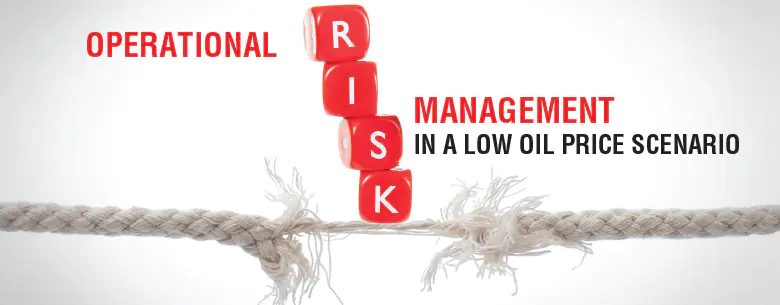
Operational Risk Management in a Low Oil Price Scenario
Kreston Menon
Operational Risk is the potential of loss arising due to failures in systems, people and / or operational processes which can result in an impact on People, Assets / Production, Environment or Reputation. Operation Risk Management (ORM) is the means and processes through which Operational Risks are managed through an asset’s operating lifecycle.
Traditionally many Organizations in the Oil & Gas and allied sectors have developed ORM Frameworks to manage Operational Risk utilizing a Hazard & Consequence Type Model associated with an Organization Specific Risk Assessment Matrix and other tools against a specific Risk Tolerability Criteria pending their risk appetite.
It is clear from an analysis of past major industrial accidents that Operational Risk needs to be managed in a coherent manner given their potential adverse impact,
But, is the industry focusing enough attention during an asset’s operating lifecycle which could be between 20 – 25 years, during which time organizations face the major operational risk exposure. Moreover, can operational risk be minimized or completely avoided.
In reality no organization can eliminate operational risk totally, however, this can be reduced to As Low As Reasonably Practicable (ALARP) by employing additional residual risk measures, protocols and Best Practices to the point at which the incremental benefit of level of risk reduction achieved is out weighted by the cost.
Key Benefits of ORM
The benefits of managing Operational Risk effectively during an asset’s operating lifecycle can be summarized as follows:
- Reduces the potential for Major Accident Incidents and / or other incident categories;
- Increases probability of maintaining and sustaining production at maximum / optimum levels required;
- Enables asset to maintain Safe Operations.
However, the above benefits can only be realized if asset Integrity management and maintenance programs are aligned to asset requirements through their lifecycle. It can also be argued that additional emphasis should also be placed on understanding more precisely the integrity of each asset, given stage in its life cycle, life extension / remnant life assessment , in an environment of ageing infrastructure particularly in the Middle East Region.
Why ORM should not be compromised in a low oil price scenario
The current scenario of a low Oil Price (from a peak of over 100 USD per Barrel in 2014/2015 to a low of just under 28 USD per Barrel in Q1 2016), has initiated a wave of capital rationing, new project cancellations or deferment, cost reduction measures and streamlining of operations and staffing in the Oil & Gas and allied sectors both in the Middle East Region and Worldwide.
This situation could have an impact on increasing operational risks of existing assets if not addressed.
This recent shift in focus of sector’s cost cutting activities, has further exacerbated the potential for major industrial accidents, pending the focus of cost cutting measures. If such cost reduction measures are too deep or not optimized, then this could lead to inefficient operations and increased operational risk along with not meeting the major goal of maximizing production in a safe manner.
[Tweet “Operational #Risk #Management in a Low Oil Price Scenario”]
Despite an oil price recovery to approximately 50 USD per Barrel in Q2 2016, there seems little evidence of this cost cutting trend reversing. This must also be viewed in the context of an ageing infrastructure and uncertainty in asset integrity particularly in the Middle East Region.
While the Oil & Gas and allied sectors continue to implement traditional measures of ORM as a basis for reducing operational risk (e.g. carrying out Task / Job Safety Analysis Risk Assessments, updating operation management, Permit To Work and Management of Change (MOC) Procedures as an asset is modified during its life cycle) incidents continue to occur. This seems to suggest that organizations in the sectors are missing something here?
It is further suggested that a new approach to and emphasis on ORM is required and embedded into an organisation’s Enterprise Risk Management (ERM) Strategy, processes, policies, procedures and decision making in order to reduce the likelihood of untoward events and incidents occurring.
How can companies not compromise on ORM in a low oil price scenario
Given what we know and understand, it can be concluded that:
- Operational risk exposures are further exacerbated in a low oil price scenario given current cost reduction measures undertaken in the sectors considered pending investment focus, which should be as a minimum relate to Safety Critical, Maintenance Critical and Asset Integrity aspects;
- Operational risks need to be managed more proactively with a new paradigm thinking approach, if assets are to be sustainable and organization goals of maintaining and maximizing production safely are to be achieved.
Also Read : Converging Organization’s Governance,Risk & Compliances
Such a paradigm shift in thinking and approach to operational risk management of an asset during its operation lifecycle should give due consideration to the following:
- Adopt a modern ERM approach to operational risk management whereupon operational risks are considered and embedded in Strategic planning, ERM processes and Decision making which includes a critical review of current practices, procedures, performance and Gap Analysis;
- Identification of all Operational Risks and their categorization including range of possible outcomes ;
- Being Proactive not Reactive in Risk Measurement with an emphasis on Detection( source Historical / Industry Data / Other ) ; expressed in terms of loss frequency and severity and development of Risk and Residual Risk mitigation strategies rather than traditional current models;
- Develop robust and systematic processes for making business decisions where the level of risk to be assumed net of controls is aligned with the risk appetite and risk tolerability criteria of the organization including stress testing;
- Build lessons Learned into operation risk Decision Making and control strategies and implement Asset Reference Plan, Asset Integrity planning and Best in Class Operational and Maintenance Practices;
- Revise / Align current policies, procedures ( e.g. Management of Change; Job Safety Analysis, Permit to Work etc ) operational management systems and risk / residual risk control measures in line with Best ORM Practices to ensure achievement of operational risk goals;
- Carry out independent risk based audits
Read More

VAT DESIGN AND ROLLOUT – Series 2
Kreston Menon
If we look at the international experience in VAT implementation, the VAT is paid on a net basis on the difference between sales and purchases (of inputs) and there should be no break in the VAT chain (through exemptions) to avoid tax cascading. Another notable feature of VAT implementation is the ‘destination principle’ which means that goods and services are taxed for VAT only in the jurisdiction where they are consumed.
Read More




