.svg)


Get in Touch
We would love to hear from you!




DIGITAL MARKETING FOR BETTER DEMAND GENERATION
 Kreston Menon
Majority of marketing and sales team members will agree that internet has changed the buying behavior and pattern of businesses as well as end consumers.
Read More

Investing in India – Opportunities, Trends and Challenges
Kreston Menon
This article coincides with the successful state visits of the Indian Prime Minister, Narendra Modi to France, Germany and Canada as well as the fruitful visit of Kerala Chief Minister, Oommen Chandy to the UAE, which included a high level meeting with His Highness Sheikh Mohammed Bin Rashid Al Maktoum, Vice President and Prime Minister of the UAE and the Ruler of Dubai. The ultimate aim of both the leaders were the same: Bring investments to India.
As I am trying to do a reality check on the ground realities related to Foreign Direct Investments in India, I would like to emphasize on the investment opportunities, trends and challenges for the potential investor. People may have divided opinion on the style of functioning of the Prime Minister, but I am sure everyone will agree with me that he has brought a positive change in the perception of investors. Any investor would like to have a strong leader, who stands for reforms, who talks straight and means business, who is hands on and demands results. Let the politicians discuss about the other side of it, but for the business community he is a leader who has a vision and plan for tomorrow.
The “Make in India” initiative of the Indian Government has been well received by investors. The Kerala Government has given the nod to go ahead to build the metro coaches at the Sri City manufacturing unit of the French Giant Alstom, rather than importing them from France. Responding to Modi’s Make in India initiative, Airbus says it is prepared to manufacture aircraft in India, and has plans to raise component outsourcing to $2 billion over the next five years from $400 million at present.
No one has doubts about India’s significant manufacturing expertise. The entry into Mars orbit of the ‘Made in India – Managed by India’ Mangalyaan satellite trumpeted to the world the country’s skills in high technology. Yet India’s manufacturing industry is significantly small, both as a proportion of the economy and in terms of its share of global exports. It requires robust and drastic action to modernize archaic employment laws, simplify taxes, redraft dysfunctional trade agreements and fix the country’s chaotic and inferior infrastructure.
Also Read: The Seven Essentials of Successful Business Innovation
But the positives weigh more. Exports as a percentage of Gross Domestic Product have more than doubled – from 6.9% to 17%, since 1992, when Dr. Manmohan Singh, the then Finance Minister and later Prime Minister, introduced a pioneering budget that opened the Indian economy to the world. India exported more than $313 billion in goods in the fiscal year to March 2014 compared to $18 billion in 1992.
The surge in exports reflects a broad diversification in both product range and destination markets, which has accelerated in the past decade, moving away from the traditional trends. The share of traditional exports such as textiles, ready-made garments, leather products and agricultural commodities has fallen significantly over the past two decades. Petroleum products and engineering goods such as machinery and parts, transport equipment and electronic goods now account for more than 40% of exports.
If we look at the sector wise contribution to GDP, India is doing pretty well in services sector (includes IT, tourism, retail, banking, finance) which contributes 53% to GDP and employs 27% of the work force. Manufacturing or Industry (petroleum, pharmaceuticals, gems, jewelry, textile, mining, engineering industry) contributes 27% and employs 22% of total workforce. Agriculture contributes 14% but employs 51% of the total workforce. or so and will continue to do so; thanks to the advantage we have in the Information Technology sector. Agriculture sector needs to be mechanized in such a way that the productivity goes up exponentially ensuring food security to the billion plus population.This high per-person productivity will help the surplus manpower to move from agriculture to the manufacturing and service sectors.
Long-term growth drivers for India
• Demographic dividend
Currently half of India’s 1.2-billion population is under the age of 25. By 2020, India will have the world’s youngest population, with a median age of 29 years, compared with a median age of 37 in China. This demographic dividend could potentially give India the biggest labor force and make it the largest consumer market in the world.
• Growing middle class
India’s educated, tech-savvy and relatively affluent middle class of 250 million already represents one of the biggest consumer markets in the world.
• Low penetration of goods and services
Despite the economy’s progress over the past quarter-century, the Indian market still has a relatively low penetration of goods and services, which translates into massive untapped potential. For example, in 2009, there were only 11 passenger cars per 1,000 people in India, compared with 34 in China, 179 in Brazil, 233 in Russia, and 440 in the U.S.
• India is a mature democracy with well established institutions
India has a thriving business sector with dynamic SMEs and large companies that are increasingly expanding overseas, educational institutions that are among the world’s best, and competent financial organizations. RBI plays a responsible role in regulating the banks and the Indian stock market is one of the most mature and vibrant financial market. The daily turnover in the Equity Cash segment of National Stock Exchange (NSE) is around $3 billion and that of Bombay Stock Exchange (BSE) is half a billion dollars.
• Reforms Matter
In India, these include foreign direct investment, the Land Acquisition Bill, the coal and power sector, direct transfer subsidies and streamlined tax regimes. The government will have to take bold steps like allowing foreign investments into the key sectors and even divesting the PSUs, even the profit making ones.
• China-style GDP Growth
India is expected to have the fastest GDP growth rate in emerging markets and will beat China by 2016 if it grows over 7.5% next year. The government is counting on 8%. But you also have to note that India began its economic reforms in 1991 where as China began in 1980. China is today a $10.4- trillion economy and India is just a $2-trillion economy.China successfully built ultra modern cities and the rural areas were transformed to major business hubs. Similarly, the Indian Government has announced the plan to build 100 smart cities across the country.
• India Vs China
Under pressure from USA, China had to appreciate its currency which is eroding its export competitiveness. Currently the wages in India’s organized manufacturing sector is $1.50 an hour unlike China’s which stands at $3 an hour which implies India has a competitive advantage in terms of labour costs. Sustained effort over the next 10 years can definitely make India a manufacturing hub.
The Challenges
Improve the ease of doing business. Present Government has kept the goal of attaining 50th rank from the present rank of 134 in the next two years. Time taken in registration of business from existing 27 days be reduced to only one day as in Canada and New Zealand is one of the targets. Decision making has to be rule based and not left to the discretion of the individual which is Crony capitalism.
Provide clarity on taxation issues, merger & acquisition process. The recent examples of Nokia shutting its plant in Chennai because of tax issue and the Vodafone retrospective tax issue definitely had a negative impact on International investors exploring investment opportunities in India and was keeping potential major players away from India. I appreciate the Finance Minister Mr. Arun Jaitley for bringing some clarity to the issue, which might allay the fears of foreign investors.
Focus on quality education and not just improving skills. Skills are transient and might become redundant with changes in technologies. Quality education will ensure that people will continuously learn new skills to meet the changing requirements of an economy. Labour reforms are the need of the hour. Incentivize good performance rather than making it tenure based. We have numerous examples of PSU in India who are struggling to stay afloat because of inflexible labour laws. BSNL is a prime example of this. Labour reform is about adopting practices linked with growth of the contributing employee along with the growth of the organization.
Increasing FDI by opening up various sectors on need basis. Present government having a majority of its own must conduct the economic reforms at a good pace. The initial signs are encouraging but can it be sustained is the big question which only time will answer.
India offers a great opportunity for investments. And the world is looking towards India. India is undoubtedly emerging as the leading Global Economic Power and an Emerging Market.
This article was originally published in Kreston Menon April-June Newsletter.
Read More

Company Setup in DMCC
Kreston Menon
Dubai is known as the business capital of the Middle East thanks to its liberal economy and a Government which is progressive in thought. Its cosmopolitan culture also makes Dubai attractive to foreign entrepreneurs for Company setup in DMCC.
To encourage more foreign investment which they realized would be the driving force for the economy, the government established several special economic zones in Dubai called freezones, with more liberal regulation and minimal taxation. Let us take a brief look at one of these special zones, the Dubai Multi Commodities Centre or DMCC.
Started in 2002, the DMCC was incorporated under the legislation passed by the Chairman of the PCFC on 01.05.2002. Company formation in DMCC can be in one of these segments: commodities, gold, pearls, diamonds, tea, cotton, minerals and metals. The business will be incorporated as a DMCC company, with the minimum capital specified at the time by the DMCC authorities.
Advantages of Company Setup in DMCC :
- You can start business with just one shareholder; no limit on maximum numbers, however, subscription needs to be AED 50,000 above the standard minimum capital.
- You can operate out of privately developed properties
- No income or corporate for a minimum of 50 years
- No restriction on ownership or capital repatriation
- Minimal paperwork
- Licenses granted for a comprehensive range of services
- Office space and land can be purchased or leased at very reasonable rates
- Versatile office solutions
- Provision of speedy immigration and other Government services
- Conducting events, workshops and sector specific clubs for networking opportunities
- Provision of training on latest trade regulation developments and standards of compliance
Company Setup in DMCC is easy, these are the steps
- Decide what type of company you want – branch of local or foreign company, limited liability company: either as a newly formed entity with single or several shareholders, or as a fully owned subsidiary of a foreign or local company.
- Select the business activities as per your business plan – whether you want to do trading, service or industrial activity.
- You can also consider additional customized license structures like the Single Family Office option which helps in managing the wealth of a family.
- Choose the company name.
- Submit application with required paperwork like passport copy, residence proof, business plan, and other documents as may be required according to your type of business.
- To make things even easier for businesses, online applications are also allowed.
Once your business setup in Dubai or Dubai Multi Commodities Centre, you gain access to a broad range of ancillary services from the Zone authorities like international courier services, commemorative certificates, insurance schemes for health, employee compensation and third party liability, exclusive credit cards for members of DMCC, and more.
The DMCC will also be starting a tech hub to help startups to function in a collaborative atmosphere among likeminded business people, with negligible upfront expenses. This round the clock tech hub will have offer training, workshops, a programmers’ ‘coding cave’, and more.
To provide easy access to the central registry of ownership for stored commodities in Dubai, an electronic system called the DMCC Tradeflow was started in 2012. Its main intention was to encourage commodities trade by providing more security to both warehouse owners and traders through various methods. The online platform also provides a secure platform for e-trading, accessible from anywhere in the world.
Any business consultants in Dubai will tell you that company formation in DMCC means being part of a vibrant and fast growing economy; so make full use of it!
Here is an infographic that accompanies the article about Company Setup in DMCC:
Read More

Why you Should Set up Your Company in JAFZA?
Kreston Menon
Dubai is a flourishing cosmopolitan city which offers excellent living conditions, making it an ideal location for starting a business and having a comfortable family life. Known as the business capital of the Middle East, Business setup in Dubai is relatively easy and hassle free. Its strategic location, liberal economy, presence of special economic zones, and solid financial infrastructure availability make it attractive as a business hub.
Dubai’s progressive thinking Government realized early on, the advantages of attracting foreign investment for the purpose of their own growth, and so they have always encouraged company setup in Dubai by foreign businesses. Towards this goal, they set up several free zones with special, easy rules – absence of taxation being the most attractive feature.
Let’s examine one of the first, most popular and flourishing free zones in this Emirate, the Jebel Ali Free Zone, or JAFZA. Setting up a business in JAFZA involves three simple steps:
- Submitting your application
- Selecting the products, registration, and payment of fees
- Receiving licences and products
Yes, that’s all it takes. The headaches connected to acquiring land, office space, warehousing, power connections, even visas – is all handled by the Zone authorities. Paperwork is minimal – no wonder that investors are keep to setup company in JAFZA.
Starting its operations way back in 1985, JAFZA allows businesses to be set up as one of the following legal entities – Free Zone Company, Free Zone Establishment, Branch of a Foreign Company, or as a Branch of a Local Company, in one of the following industry segments – logistics, service manufacturing, assembling or trading. Today, more than 7000 companies are successfully conducting their business within JAFZA.
The infrastructure facilities at JAFZA ensure that you get all that you need for a business set up Dubai might require, like land plots, office spaces, warehousing facilities, showrooms, on-site accommodation, tailor-made development solutions, and so on. Everything has been created to suit the precise requirements of manufacturing and trading businesses.
Let’s take a quick look at the advantages of company setup in JAFZA:
- 100% foreign ownership is possible
- Exemption from income and corporate tax payment up to 50 years, extendable
- 100% capital repatriation allowed
- Exemption from import and re-export duties
- No restriction on currencies
- Ability to hire 100% foreign employees
- Premises can be mortgaged to banks or finance companies
- Customs can be arranged onsite
- Authorities help in obtaining visas
- Banking, finance, insurance and other necessary services are easily accessible
- Opening corporate bank accounts is easy
- Convenient location near Jebel Ali port and Dubai airport allows convenient logistics to transport hubs
- Authorities provide water and electricity connections and supply at reasonable rates.
However there are a couple of drawbacks: JAFZA has one of the highest capital requirements of all company setup free zones in Dubai, and rentals and one time fees are also on the higher side. There is also a pretty long list of companies applying to do business in JAFZA, so you may have to plan well in advance, if you are interested.
It must be said though, that the solid infrastructure, liberal regulations, and ease of business setup in JAFZA, makes it a great place for Dubai company setup.
Here is the infographic that accompanies the article about Company Formation in JAFZA:
Read More

Offshore Company Formation in JAFZA
Kreston Menon
JAFZA is one of the fastest growing freezones of Dubai with its own set of regulations, and was created for the express purpose of attracting foreign investment. The Jebel Ali Free Zone (JAFZA) Offshore companies are non-resident companies with special status and are formed under the JAFZA Offshore Companies Regulations enacted on 15. 1.2003. Let’s take a look at the advantages and benefits offered for offshore company formation in JAFZA.
What you Should do for Offshore Company Formation in JAFZA?
At the outset, this freezone was set up to become a global business hub. With its solid infrastructure and strategic location, JAFZA is an attractive proposition for offshore company formation Dubai. Here entrepreneurs can register offshore company in Dubai and also free zone companies with licenses to operate. Though licenses are mandatory for doing business in UAE, offshore companies do not require an operating license as they cannot conduct trading, manufacturing or business within the Emirates.
So why are investors happy to setup offshore company in JAFZA? Let’s take a look at the special advantages offered by this special economic zone:
- A company registered in JAFZA has a legal status for carrying on bona fide business and makes it easy to conduct business within the Middle East
- JAFZA offshore has a reputation as a serious global hub for trading and manufacturing, which is advantageous for the company
- Only offshore companies registered in JAFZA can own property, either in their individual names or through UAE companies
- Offshore companies registered in JAFZA can easily open bank accounts in Dubai
- No taxation and no restriction on capital and profit repatriation
- Assistance with banking, insurance, visas, accounting, legal matters, feasibility studies and so on
These are the steps for offshore company formation in JAFZA:
- You need to contact a reliable JAFZA authorized agent for the registration process
- Get an official quote for the scope of work you need, like registration, nominee services, opening bank accounts, any specific attestations required
- Submit three names for the company out of which one will be finalized by the authorities
- Decide upon the activities of your business – property investment, consultancy, trade, or acting as a holding company
- Determine the share capital
- Finalize the list of shareholders, a minimum of 2 directors, and secretary
- Submit the mandatory documents, like passport copy, address proof, reference from bank and shareholders’ resume.
- The Memorandum, Share certificates, fees and application forms signed by the shareholders, secretary and directors is submitted in the presence of the shareholders.
- If the Registrar is satisfied that everything is in order, the company is registered in three days.
Offshore company incorporation JAFZA can be done as limited liability companies. The companies can be formed with a single shareholder, and there is no limit on the maximum number. The company should have ‘limited’ as a suffix to its name.
Companies have to pay a one-time registration fee of AED 10,000 and an annual fee of AED 2,500 to renew it. Land and office space is provided at reasonable rates and easy terms of renewal.
Offshore company setup in JAFZA can engage in the following activities apart from those mentioned before:
- Interacting professionally with legal consultants, lawyers, accountants and auditors
- Holding shareholders and directors’ meetings
- Opening branches or representative offices worldwide
- Holding shares of a limited liability company being formed in Dubai or elsewhere in UAE
- Holding shares in any other entity formed within the UAE, outside the UAE or within UAE Free Zones
Here is an infographic that accompanies the services about Business Setup Dubai
(Click infographic to enlarge.)
Read More
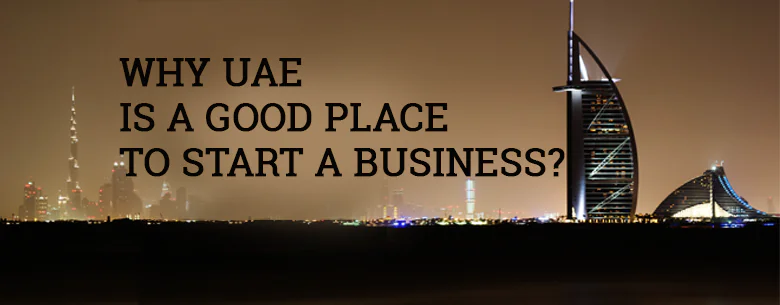
Doing Business in UAE, Why Dubai & Abu Dhabi Become Good Places?
Kreston Menon
Doing business in UAE is an uncomplicated and hassle-free. The visionary government has always had pro-investment and pro-business policies, and has encouraged foreign investment. In fact, in the UAE, those who setup business are even offered incentives. Redtape is minimal, procedures are simple, and is taxation is almost non-existent. The government of the UAE had the foresight to realise that backing new businesses will help sustain their economy in the long run. Due to all these reasons, Dubai and Adu Dhabi are ideal places for business setup UAE and open an offshore branch.
Let’s examine the reasons for Doing Business in Dubai & Abu Dhabi, UAE in some detail:
Growing and Diverse Economy: The economy of Dubai is a dynamic and constantly growing one, which is why it is so attractive to companies from all over the world who are interested in company formation in an offshore location. This wealthy Emirate has a stable financial climate which helps a wide range of businesses from start-ups to multimillion dollar conglomerates to operate successfully.
Legal Framework: Entirely different set of rules and regulations (except for criminal law) are applicable to foreign investors who want to set up business in Dubai. Paperwork is minimal and procedures are fast tracked so that it becomes extremely easy for company setup, licensing and registration and so on.
Physical Infrastructure: The governing bodies of the free zones provide excellent infrastructure and warehousing, office spaces, power supply, connectivity, and so on.
Availability of Manpower: There is no shortage of manpower in the UAE and especially so in Dubai. Both skilled and unskilled labour flock to the UAE in search of opportunity as wages are high and taxes low, or non-existent. It is therefore easy for a new company to find the requisite manpower for their operations.
Investment Support and Promotion by the Government: The government provides several pre-and post-support services to investors doing business in Dubai or elsewhere in the UAE, like help with documents, licenses, certificates, postcodes and so on.
There are several special areas within the UAE which have special tax customs and imports rules and regulations; these are called Free Zones. In the UAE are over 35 free zones which are spread across Dubai, Abu Dhabi, Sharjah, Ras Al Khaima, Fujaira, Ajman, and Um Al Quwain. These free zones are also spread across the mainland airports and seaports.
The special benefits of these free zones are:
- Complete exemption from import and export tax
- Possibility for complete foreign ownership of the company
- No corporate tax for up to 50 years
- Exemption from personal income taxes
- Possible to repatriate the entire capital and profits
- Support services like assistance with hiring, sponsorship, housing, and so on.
Generally a Free zone is meant for certain specific categories of industry and licenses are provided only to those companies functioning under those categories. Probably the most famous of these is the Dubai airport free zone.
Open Trading Hub: being a member of the World Trade Organisation, Dubai encourages open trade and has established stable trade relations with several countries in Asia and Europe and North America. In fact, it is a kind of meeting point between the east and west as far as international trade is concerned.
Quality Lifestyle and Culture of Excellence: Dubai is perhaps the most cosmopolitan of all the emirates within the UAE, thus making it a popular destination for tourism and business alike. Home to many of the world’s biggest brands, it is a shoppers’ paradise. Dubai also hosts several trade shows and exhibitions, allowing businesses to showcase their best to the world.
Visionary Leadership: early on itself, the rulers foresaw the potential this tiny island nation had to be a business hub and accordingly, introduced legislation’s that set the wheels in motion.
Let’s look at the best places for doing business in UAE:
Dubai: Probably the most popular destination for starting a company in UAE due to its liberal cultural atmosphere. The DAFZ, or Dubai Airport Free Zone, is the leading Free zone service provider in the UAE. Established in 1996, the governing body of the DAFZ provides organisations with a modern and inclusive base to conduct business. Other free zones in Dubai include the International Finance Center, Gold And Diamond Park, Industrial City, Internet city, and so on.
Abu Dhabi: The Khalifa Industrial zone, or KIZAD, is the largest and one of the best planned industrial free zones in Abu Dhabi. It supports manufacture, logistics, and trade. Companies can enjoy low operating costs and comprehensive and innovative infrastructure. The Abu Dhabi Airport Business City owns, operates, develops, and manages free zones around the airports.
Sharjah: The Airport International Free Zone is the premier Free Zone in Sharjah that encourages foreign investments.
Ras Al Khaima: This Emirate chiefly provides the RAK Investment Authority Free zone, the Ras Al Khaima Free Trade Zone, and the Ras Al Khaima Media Free Zone to foreign investors.
Jebel Ali: This Free Zone located at the western end of Dubai. Started in 1985, it provides ready-made facilities to customers, and has now expanded to include light industrial units.
Other convenient free zones in the UAE for business setup include Hamriyah, Jumeirah Lakes Towers free zone, Fujaira Creative City and so on.
How does Kreston Menon help for starting a company in UAE?
Before starting any business anywhere in the world, it is important to conduct a feasibility study to know what your prospects for success in that particular industry and geographical location are. This is the first step in the process of business setup Dubai. This is where we, Kreston Menon, step in as business consultants. We help by conducting market research and a feasibility study, and can offer expert advice throughout the way. This includes guidance and/or assistance with the following:
- Legal issues relating to the business structure
- Finding the appropriate location for the new venture
- The preparation and submission of the requisite documents
- Liaising with the authorities to obtain the requisite approvals and certificates
- Visa, immigration and labor card support services
- License renewal reminders and liaising with authorities for the same
- Provision of secretarial services for the new company
Our in-depth knowledge of offshore company formation UAE has enabled us to assist in the incorporation of over 500 companies in the UAE Free Trade Zones. We believe in delivering comprehensive service to our clients after understanding the exact requirements. We are happy to stay that with our professional and client centric approach we have been able to build long-lasting relationships with our clients. The expertise and dedication shown by our team will ensure that you have smooth sailing as far as your company incorporation in Dubai or elsewhere in the UAE is concerned. We take care of the nitty-gritty so that you can just focus on your core business and in growth. We are passionate about our work and take pride in delivering customised solutions that not just meet client expectations but exceed them.
Our expertise includes the following areas:
- Accountancy, analysis, financial consultancy, taxation, corporate finance, property and HR consultancy
- Turnkey solutions for clients requirements
- In-depth knowledge of the Middle East market especially the UAE, and regulations connected with company registration in the region
Our team is not only focused and professional, but is consistent in offering tailor-made solutions and getting results that are time bound and cost-effective. Kreston Menon also has excellent working relations with government agencies, decision-makers and others in power.
Read More

Inheritance in UAE – Way forward for expatriate investors
Kreston Menon
Matters of inheritance in the UAE are governed by Federal Law No. 5 of 1985 (amended in 1987) regarding the Civil Transactions in the UAE (“the Civil Code”), and by Federal Law No. 28 of 2005 regarding the UAE Personal Affairs Law (“The Personal Affairs Law”). However, as a general rule, inheritance issues for Muslims are dealt with in accordance with Sharia’h, whereas for non-Muslims, the law of the deceased’s home country may apply provided there is a Will or a corporate structure in place to address an eventuality. Accordingly, it is highly imperative for the investors or residents of UAE to have a Will in place absence of which directly attracts provisions of Sharia’h law with respect to the inheritance of their assets. Upon death, the personal assets of the deceased, including local bank accounts, shall be frozen (Article 379 (4) of the Commercial Transactions Law, UAE Federal Law No. 18 of 1993) till the local court releases the order of succession.
As a matter of reference, when Sharia’h law is applied to the properties of the deceased, the wife of the deceased receives one-eighth of the total estate, while the children receive one-sixth of the share. For every share received by the daughters, the sons receive twice as much. Amendments were made to the Civil Code in the year 1987 and the Article 17/1 further states that inheritance shall be subject to the law of the deceased’s home country at the time of death. This law was promulgated to curtain the confusion surrounding inheritance issues for expatriates. Therefore the law of the domicile country of the deceased would apply. However, as per Article 5 of the Code, provisions have been made to apply the law of the United Arab Emirates to the Wills made by aliens disposing of their real property located in the State. Further, the Personal Affairs Law (No 28 of 2005) made it clearer that, a non- Muslim expatriate who is resident in the UAE can opt for the law of their Domicile Home Country to be applied to the distribution of their UAE assets, provided they have a legally recognized Will.
Freehold Property & Corporate Structure
Though the freehold property is governed by the inheritance laws of Sharia’h and may not be distributed in accordance to the conditions of the Will, the recent practices show the local authorities treat the inheritance of ownership of the freehold property favorably in the case of non-Muslim investors provided there is a Will or corporate structure in place. However, the local fraternity is of the opinion to examine the application of Sharia’h closely in the case of real properties owned by the foreigners. Considering the possibility of application of Sharia’h laws, the investors may seek the option of corporate structure in place to own real estate properties in UAE in addition to have a Will.
Special Purpose Vehicles for holding shares in UAE registered companies (Limited Liability Company/Free Zone Company)
Similar treatment shall be applicable to the inheritance of ownership of shares in a locally registered limited liability company as well as a company registered in a Free Trade Zone. It may be considered to own the shares of a local mainland company or a free zone company by an offshore entity formed outside UAE. Among other basic advantages, bringing an offshore structure in the line of ownership of locally registered company offers convenience in inheritance since amendments in the documents of the local company is not warranted unless there is change in management.
The beneficial owner of an offshore entity formed outside UAE, may further opt for establishing a trust structure in place to ensure a smooth succession in case probating a Will at the court in an offshore jurisdiction is affected by the residence status of the deceased. In light of the above, considering British Virgin Islands as the preferred offshore jurisdiction for the time being, the trust may be established in accordance to the Virgin Islands Special Trust Act – Vista Trust – by which no probate is required and the director of underlying BVI Company has freedom to control the assets owned by the BVI Company.
It may also be considered the shares of the BVI Company be held in the joint name of the tenancy of the survivorship with the family members (wife/children) which will allow smooth succession from father to children. However, the other side is immediate ownership to the shares and thereby acquires rights.
Guardianship of Minor Children
It is worth noting and should consider in line with the inheritance, the custody and guardianship of minor children. The legal way to address this vital matter is to appoint individual(s) to care the children by naming them as testamentary guardian(s) in the Will. Accordingly guardian(s) can step in to the shoes and care the children till they become adults if they were minor at the time when the parent dies.
Conclusion:
The UAE Civil Code requires the immovable assets should be distributed to the legal heirs as per the provisions of Sharia’h law
Owning real estate is considered as owning an immovable asset and technically this should be distributed as per Sharia’h law
It is widely being debated and there are tested cases that foreign law applied and the real property distributed as per the deceased’s Will
The UAE Courts are likely to decide on the applicable law on a case by case basis.
It is always advisable to execute and register a Will in UAE which has been written under the laws of home country or have the corporate structure in place in an offshore jurisdiction outside UAE which ultimately owns UAE situs assets and properties.
Read More

The Seven Essentials of Successful Business Innovation
Kreston Menon
Need for organizations to be innovative is a critical requirement for organic growth. Organizations can run innovation programmes the same way they run their factories – with inputs, transformation processes and desired outputs. Of course there would be non-financial and financial measurements to verify the effectiveness of the innovation programme. Innovation no doubt is risky but like many other business risk can be quantified, calibrated and managed.
Many organizations think of innovation as limited to products, technology or services which is not the case. Innovation can be extended to other areas of the business such as procurement, supply chain, manufacturing, costing and business models. Innovation also need not be unsettling and big ticket, but can be incremental and less glamorous.
There are several examples of businesses successfully innovating not in product. US retailer Walmart’s claim to success is really their inventory management and Indian e-tailer Flipkart’s innovation is about delivery and payment options.
I don’t have geniuses, can I innovate is a question that haunts many leaders. Such thoughts are dangerous and fatal for creation of innovative organization. Innovation can happen by taking advantage of skills of ordinary knowledge workers. Leadership need to structure, manage, measure and improve innovative processes to produce stream of innovation.
Essentials required for organization to be successfully innovative:
First and foremost requirement for organization to be successfully innovative is inspiring leadership and customer centric approach. Other important aspects to consider would be, purpose, stretched goals, innovation culture and enabling structures, reliable systems and processes.
1. Inspiring Leadership
Inspiring leadership has to set organic growth goals which cannot be achieved without innovation. Leader has to ensure that consumer / customer is keenly observed and listened in the process of innovation. Leader has to tie-up teams across the organization into the innovation path. There has to be a structured mechanism to constantly review and assess the progress of innovation. Small experiments have to be carried out and experiments that fail have to be erased. Leader also has to mould diverse individuals into innovation team. Lastly leaders need to ensure a strong idea pipeline by encouraging idea flow though strong process.
2. Customer-led
Innovation to be successful has to be customer-led. Sales and marketing team has to make extraordinary efforts to constantly know the needs, expectations and desires of their customer- both stated and unstated. The focus should be to know the gaps consumers perceive in the product / service offering and what the customer want and the impact of the offering for the customer. Sales should also find out the reason for customer, many times, not buying their entire requirement from single supplier and why, many times, customer buys the product only first time.
3. Innovation culture
Organizations need to ensure that idea flow is not encouraged only from perceived geniuses within the organization or from R&D team. Idea flow has to be encouraged from ordinary knowledge workers with system of rewards and appreciation. The fear of failure is stumbling block for ordinary worker to participate actively in idea flow and pipeline. Organization culture should be such that fear of failure has to be eliminated. The organization culture should foster curiosity, openness, collaborative work and experimentation. Employees should be trained to become innovators.
4. Enabling structures
There should be a framework in the organization that makes innovation a routine affair. Idea flow can be from internal people or from customers, suppliers, JV partners and other stakeholders. Ideas can be incremental or disruptive. Idea flow has to be perpetual.
5. Short listing ideas for next stage
Ideas selected should have clear linkages to organization revenue and growth goals. The shortlisted ideas should be a mix of incremental and disruptive. The idea pipeline should have ideas, both low and high risk ideas and flowing from internal and external stakeholders. The ideas need to be prototyped passed through stage-gate process and finally tested at customer-end for feedback.
6. Idea ownership
Every idea needs to have an owner who will be responsible to identify the resources, arrange fund, allocate them, pilot the idea through stage-gate process, subject the idea to review, reward success and deal with failures.
7. Go to market
Go to market of an idea does not mean only sales and marketing team would be responsible. Such a step is sure way to kill an idea. Innovation team has to involve the manufacturing, applications and sales and marketing team together at every stage of the process to ensure successful transfer of idea to the customer. To conclude organizations need to understand that innovation is the best form of defence for organizations to maintain consistent growth trajectory. Growth through inorganic acquisitions can at best be short-term defence strategy. Innovation will help organization to enter new markets faster and deeper with better price margins. Innovation puts sales team in offensive mode in the market and provides them an edge against competitors. Lastly there is no choice if organizations don’t innovate. Failure due to non-innovation is a certainty and hence it is every leader’s priority to build an organization that supports and fosters innovation and delivers it.
This article was originally published in Kreston Menon April-June Newsletter.
Read More

Changing the Landscape of Internal Audit
Kreston Menon
Background
The inadequacy of system to cater to business needs, issues regarding integrity and robustness of data generation (MIS), the absence of management strategy for monitoring risks, lack of control over the operational process, ambiguity over policy and procedures and issues so galore.
The above situations appear familiar? Indeed, these are common challenges that plague many businesses regionally and globally. Conventional belief laid emphasis on achieving business results and cash inflows, relegating the need to address pressing issues. Mounting challenges of varied nature posed by new economic order have made compelling reasons for businesses to introspect, to improve efficiencies, identify and manage risks, control leakages, rationalize costs etc. With matters of risks, control and governance gaining priority, many businesses are viewing internal audit as an important tool to achieve its dynamic objectives.
This article is an effort to shed light on the new approach used in internal audits that has led to increasing acceptance of internal audit activity as an investment that provides a return to an entity and not just reflect as a cost on the income statement.
Internal Audit
Internal Audit as a concept is exhaustive, but broadly refers to an activity carried out by independent professionals to assess whether an entity’s process and controls are adequately designed and are operating effectively, business risks are effectively identified and managed, whether resources are efficiently utilized etc. Based on the observations and findings, solutions and suggestions for improvements are provided in the form of a report to the team entrusted with governance.
The process areas covered under internal audit activity can be extensive but generally includes inter-alia, review of operational and financial functions of an entity (Operations, Procurement, Finance and Accounts, Human Resources, Information Technology etc.). Depending on the size of the entity, complexity of operations and the objectives to be achieved, approach to internal audit could assume the form of review, by covering different functions over a period. Alternatively, it may involve review of the design of all the functions at a time, backed by follow-up reviews. Dividing the scope into various functions, covered over a period, facilitates specialized focus on the department’s efficiency in achieving functional objectives as well as entity’s objectives.
Evolving Internal Audit Approach
There has been a paradigm shift in the expectations of businesses from the internal audit activity. Growing business competition, disruptions caused by advancement in technology and the desire and vision to be the industry leader by clients have brought to the fore, key questions regarding value creation, effectiveness and relevance of internal audit. This entailed an objective response by the internal audit fraternity, transforming the activity from a typical checklist-based conventional approach to a more sophisticated, comprehensive and risk-based audit.
Erstwhile Approach
Traditional internal audit approach involved an overall review of process and controls for compliance to established procedures from financial accounting/ treatment perspective. Also, the earlier approaches had greater focus on transactional accuracy and compliance with approved procedures.
This, to a large degree, ignored any significant impact of risks arising from operational, market and regulatory factors of the business. As a result, the traditional approach educed the internal audit to a mere fault-finding activity drawing lesser participation from the client management.
New Approach to Internal Audit
With the advent of the renowned concept of Enterprise Risk Management (ERM) Framework, a model developed by Committee of Sponsoring Organization of the Treadway Commission (COSO) for evaluating the risk management practice of an entity, coverage under internal audit has evolved into a more holistic and objective-based approach.
One of the components of ERM framework calls for risk assessment at all levels of the business organization setup including Entity Level, Division, Operating Unit and Function. Risk Assessment is a process of identifying and appropriately managing any adverse event (risk) that may impede or pose a challenge to an entity in achieving its goals or objectives (long term or short term).
The relevance and importance of timely risk assessment were greatly felt by corporates across the globe when market leaders faced an overnight catastrophe or near business closure event. Famous examples are Yahoo not assessing risk related to consumer preferences and eventually losing out on user experience and search engine business (market risk), BlackBerry losing out its relevance as they did not focus on bigger touchscreen displays (product technology obsolescence risk). More recent example is when Imagination Technologies Group suffered a major setback when Apple, its single largest customer (customer concentration risk), discontinued using their product. This concept of risk assessment was adopted by internal auditors to develop a risk-based audit approach to help businesses achieve operational, reporting and compliance objectives by becoming agile, transparent and resource efficient.
A risk-based audit approach requires a complete understanding of the entity’s business, industry, market segments, customers, suppliers, operations and expectations of the stakeholders. This understanding is transformed into objective statements at all organizational levels of the entity and risks (events having an adverse impact) impeding achievement of such objectives are identified, assessed for their risk levels and mitigation strategy is implemented.
Outcome/Benefits of Risk Based Audit Approach
Some of the major benefits arising from risk-based internal audit approach are listed below:

Conclusion
The above internal audit approach and outcomes/benefits derived in recent times, has made internal audit activity pivotal to corporates looking to unlock their potential and be prepared to face any adversity.
Further, the advancement in data analytics has led the internal auditors to employ advanced technologies to effectively orrelate the performance of the controls over risk, which an organization might encounter.
Kreston M E Consulting (formerly Morison (UAE) Consulting) has been providing internal audit accounting services Dubai including, systems review, business process review, drafting of policy and procedure manuals etc., for many years creating considerable value to its clients from varied industries.
Read More

Business & Business Regulations-Update
Kreston Menon
The Freelancers permit launched by Dubai Internet City strives to give freelancers an affordable and secure option to work in Dubai, while also providing a feasible and attractive package of affordability and talent for businesses. The permit which was launched last year, helps freelancers to work in Dubai at a fee of AED 7,500 per year. With this permit, freelancers have the opportunity to freelance their skills and also have access to the TECOM Business Center along with a visa.
Read More




