.svg)


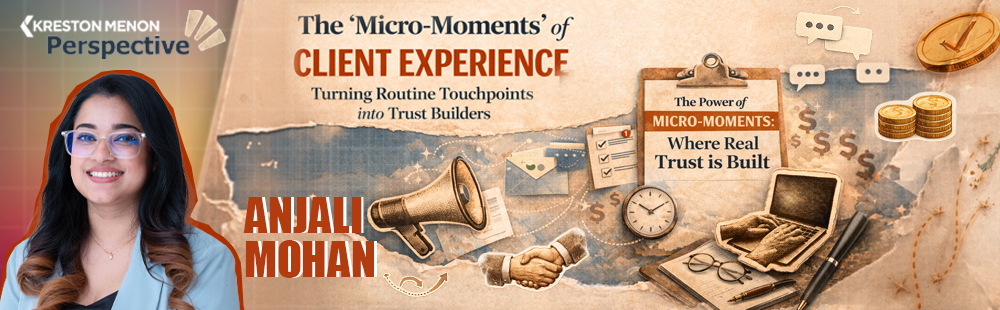
The “Micro-Moments” of Client Experience: Turning Routine Touchpoints into Trust Builders
 Anjali Mohan, Project Management Officer - Kreston ME Consulting
The Power of Micro-Moments: Where Real Trust is Built
Think back to the last time a partner or service provider truly impressed you. Chances are, it was not a grand, choreographed gesture. It was likely something small: a proactive message when you least expected it, a specific detail they remembered from a previous conversation, or the grace with which they handled an unexpected hurdle.
Trust does not arrive all at once. It accumulates quietly in the moments we often fail to notice. In the corporate world, we call them ‘micro-moments’, and they are far more influential than most businesses realize.
We Are Often Focused on the Wrong Milestones
Most businesses pour an enormous amount of energy into the big set pieces. The pitch deck is rehearsed to perfection, the final presentation is choreographed down to the last slide, the contract signing is celebrated with fanfare.
Then, we exhale. We move on to the next big thing.
But here is the truth: Our clients never stop watching. While we are focused on the milestones, they are forming opinions in the spaces between them. They are noticing how quickly we reply to a routine inquiry. They are observing whether an invoice is transparent or confusing. They are paying attention precisely when we think nothing important is happening.
Clients rarely judge a partnership in polished, rehearsed moments. They judge it in the quiet ones like the follow-up, the check-in, and the integrity shown during a delay.
The Signal in the Noise
A micro-moment is any routine touchpoint in the client journey that might seem like a simple admin task to a team, but to the client, it is a vital signal. It answers the silent question they are always asking "Do these people actually care about my success?"
In a dynamic and competitive market, this distinction is everything. Whether you provide hospitality, logistics, advisory or technology, your clients have options. Technical expertise is the baseline, what inspires long-term loyalty is the emotional experience of the partnership.
The Insight: According to a study conducted by McKinsey, 70% of buying experiences are based on how the customer feels they are being treated. A recent report by Deloitte reveals that 40% of perceived value comes from factors beyond price, including service and customer experience. Zendesk / CX studies states that over 50% of customers switch after a bad experience, showing how critical interactions are.
These findings highlight a clear reality: much of the value clients perceive is driven not by the final outcome, but by the way they are treated throughout the process.
The organizations that win long-term are those that make their clients feel seen, heard and genuinely valued through intentional, small actions.
5 Micro-Moments That Define Your Reputation
1. The Quick Response Speed is a message. A quick reply even if only to say, "I have received your query and will have an update for you by 4:00 PM" tells the client they are a priority. Silence, conversely, breeds anxiety.
2. The Unexpected Check-In A brief note to ask, "Are you facing any challenges during these uncertain times?" takes two minutes but leads to lasting goodwill. It proves you are thinking about their business, not just your next deliverable.
3. The Transparent Invoice Financial clarity is a cornerstone of trust. When every line item is clear and surprises are non-existent, you are not just being organized you are showing respect for your client’s peace of mind.
4. The Proactive Update If a timeline shifts, communicate it before the client must ask. An honest, early conversation about a challenge builds more loyalty than a dozen things going perfectly. Clients expect honesty and transparency over anything else.
5. The Thoughtful Conclusion How you close a project dictates the future of the relationship. A thoughtful wrap-up determines whether a client returns or refers your firm to others. A professional ending is simply the beginning of the next chapter.
Efficiency vs. Intimacy
In an era of AI-generated check-ins and automated workflows, efficiency is easy to come by. However, there is a profound difference between being efficient and being intentional.
A client might not feel valued just because a system pinged them on a schedule. They feel valued when you remember they are traveling for a family event and send a reassuring note regarding a deadline. This is not because a CRM prompted you, but because you were paying attention.
The Bottom Line
Today’s clients are not waiting for quarterly reviews to decide if they trust you moreover, they are deciding in real-time based on small signals.
Building a service-first culture does not require a larger budget or a new department. It simply requires treating every touchpoint as an opportunity to demonstrate value. When the ordinary is executed with intention, the partnership becomes extraordinary.