.svg)


Get in Touch
We would love to hear from you!
Recent posts




Combating Trade Based Money Laundering
 Kreston Menon
The FATF has defined “Money Laundering” as the processing of criminal proceeds to disguise their origin in order to legitimize the illegally-gained proceeds; and “Trade Based Money Laundering” (TBML)as the process of disguising the proceeds of crime and moving value through the use of trade transactions in an attempt to legitimize their illicit origins.
In recent years, global and regional regulators have implemented stringent measures pertaining to Anti-Money Laundering & Terrorist Financing, which has made it difficult to launder money through the traditional channels. Due to the same, the Money Launderers are using more sophisticated methods like TBML especially since it is very difficult to set red flags for detection of illicit funds. This can be supported by a report from International Narcotics Control Strategy Report (INCSR) of 2003 which states that hundreds of billions of dollars are laundered annually by way of Trade-Based Money Laundering (TBML).
How does TBML works
FATF, in its report on TBML in 2006, states that the international trade system is subject to a wide range of risks and vulnerabilities that can be exploited by criminal organizations and terrorist financiers. Some of the examples for carrying out TBML includes misrepresentation of price, quantity or quality of imports or exports or through fictitious trade activities or front companies etc. It also stated that the various techniques used for executing TBML are complex in nature and can be frequently used in parallel with other money laundering techniques. Some of the basic techniques have been highlighted below:
- Over- and under-invoicing of goods and services;
- Multiple invoicing of goods and services;
- Over- and under-shipments of goods and services; and
- Falsely described goods and services.
Steps to identify Trade Based Money Laundering
As highlighted above, TBML is one of the most supplicated tools which is difficult to identify due to complexity and possible layering of the transaction, hence it is important to highlight some of the key steps for identifying TBML related transactions, including but not limited to:
- Screen the parties – Banks and Finance Houses should check on true identity and beneficial ownership of customers, customer’s customer, suppliers, agents counter partiesrties.
- Review bill of lading, invoices, certificate of origin, packing list and such other documents to check on any mismatch in details.
- Examine cargo movements by checking bill of lading details in Shipping company tracker or raising for International Maritime Bureau reports.
- Compare export information with tax declarations to detect discrepancies.
- Pay particular attention to trade transactions that display known red flag indicators of TBML activity.
- Sanctions check on parties to the transaction.
- Conduct EDD for High Risk Clients at various intervals.
- Take appropriate follow-up action when anomalies and discrepancies in trade and financial transactions are identified.
TBML Process – Case in Point
Case study from APG Typology Report on Trade Based Money Laundering – 20th July 2012
ROUND TRIPPING OF FUND TRANSFERRED THROUGH HAWALA BY RECEIVING THE FUND BACK AS EXPORT EARNINGS.
Red flags
- Advance received for export without justifiable reason
- Diversion from existing line of business.
- Sudden increase in volume by new exporter.
- Export of goods without any corresponding purchase of raw materials or finished goods.
- Acceptance of trade related documents by Bank, which are not duly authenticated by export regulatory agencies.
Integrated Approach for Combating TBML
For combating the risk of TBML, we propose the FIs/Banks to focus on the following three area of priorities
Policy and Control Framework
As part of our integrated approach, the first step is to develop a robust risk and control framework for identification and monitoring of TBML related issued. Banks/FIs should focus on developing/updating the following areas to strengthen its policies against TBML:
Master Data Base
The second step of our solution focuses on creating an internal Master Data Base for all the clients based on Rule/Client/Hybrid approach. This process enables the Bank/FIs to facilitate quick turnaround on review and trade execution. The importance of this approach is that it enables the Banks to maintain the transaction history of the client, which can enable them to enhance the profiling of the customers at the time of renewal and also focuses on the trend analysis of the customer’s transaction.
Governance & Escalation
The last step entails to put governance and escalation matrix in place for ensuring compliance with the industry norms, regulatory requirements and internal policy. Periodic review of the process ensures that the control framework implemented is effective. As part of the third step, the key focus areas include:
- Map the Key requirements of the product requirements as per Industry norms, regulatory requirements and internal policies of the Bank/FIs
- Identify the key responsibilities of stakeholders within each of these process and bring transparency and accountability
- Formulate the approval authority matrix including limit setting
- Implement an exception, variances reporting including SAR to compliance team of the Bank/FIs
- Periodically assess the adequacy of the controls implemented
There are other controls like Monitoring Dual Usage Goods and Transaction Screening processes, which can be implemented at any stage during the review process.
Also Read : Trade Financing GAP for Small-Mid Enterprises
Conclusion
FATF stated that “Any strategy to prevent and combat TBML needs to be based on dismantling TBMLstructures, while allowing genuine trade to occur unfettered”. In this regards, we encourage organization to take a holistic view of setting up policy & framework while aligning the same with the existing CDD/ EDD process for client onboarding/ renewal. The focus for Banks/Fis should be to enhance the robustness of its control framework and monitor the red flags on an ongoing basis. This approach also enables the bank to enhance the profiling of the customers and ensure a robust approach is adopted for combating TBML.
[Tweet “Combating #Trade Based #Money #Laundering”]
Read More

#BeBoldforChanges – International Women’s Day
Kreston Menon
On March 8th we celebrate International Women’s Day. It’s a celebration of the social, economic, cultural and political achievements of women. The day also marks a call to action for fast-tracking gender equality – and this is according to the organization that actually conducts the event across the world. There have been many women who have broken barriers and dared to walk where others did not, or who espoused women’s causes passionately – like Florence Nightingale, Emilia Earhart, Billie Jean King, Diana Princess of Wales, Marie Stopes, Marie curie, Helena Rubenstein, George Sand, Emmeline Pankhurst, Indira Gandhi – to name but a handful .Today we will take inspiration from some of the highest achieving women in recent times, and hope, that more girls and young women are spurred to great heights. The theme for this year’s campaign, is Be Bold For Change.
Sunita Williams: This US Navy officer and astronaut holds the record for most total spacewalks by a woman (7) and the most spacewalk time for a woman (50 hours, 40 minutes). She spent several months at the International Space Station, travelling there on the Discovery Shuttle first, in December 2006 on space expeditions no 14 and 15. She became the first human being to run a marathon in Space – the Boston Marathon to be specific. A trend setter, she has truly reached into the sky and touched the stars.
Aung – San SuuKyi This Nobel laureate from Myanmar has been a relentless champion of democracy and peace in her country, which has seen years of military rule and suppressed freedom for common citizens. She remained in exile and then under house arrest for 15 years, but never gave up the fight for her people to have a more normal life. Her courage in the face of personal tragedies and discomfort is highly inspirational – yes, a woman can lead a nation against dictatorship.
Christine Amanpour: The Chief Consultant of CNN International is a daring investigative journalist and TV host who minces no words in her reporting. She fled her native country Iran as a little girl, and lives in England now. She reported on the Bosnian war, and has interviewed several world leaders, and hosts many talk shows, some of them controversial because of the topics. For her bold and courageous reporting, she has been the recipient of several honorary doctorates and awards for excellence in journalism.
Indira Nooyi : Smart, dynamic and electric; this is how most people would describe the current Chairperson and CEO of Pepsico. She has been ranked in the list of the World’s most Powerful Women for several years consecutively. She broke many barriers to head one of the world’s biggest food and beverage businesses – a seat considered to be male preserve. After joining the company in 1994, she was made the CFO in 2001 and then President and CEO in 2006. She has been at the helm of the company’s global strategy for over a decade, and was instrumental in several major happenings like takeover of Tropicana, divestiture into Tricon, merger with Quaker Oats and so on. Certainly a personality to be emulated!
Christine Lagarde : She is the current (and the first woman) head of the International Monetary Fund, a position she has held since July 2011. She was previously appointed as Minister for various departments in the French Government including Economic Affairs, Finance and Employment, Agriculture and Fishing,and Trade. A successful anti-trust and labour lawyer, Lagarde was the first female chairperson of the international law firm Baker &McKenzie between 1999 and 2004. She was ranked the best Minister of Finance in the Eurozone on 16 November 2009 by the Financial Times.
J.K. Rowling : Who doesn’t love Harry Potter? But not many know that the author, J. K Rowling, was on the verge of poverty when she wrote the first book. Harry Potter and the Philosopher’s Stone – a book rejected by 12 publishers before it was finally published. And the rest is history. She was going through the roughest patch in her life: she had just got divorced, her mother had passed away, and she had a little child to raise. But she did not stop believing in herself. She pulled herself out of the depths of despair to become an international sensation. From school kids to grandmas, from the UK to India and South America, Harry Potter gained immense popularity, making her one of the richest women in the UK.
This is hardly a comprehensive list – there are so many. I have tried to give examples of bold, successful women from varying professions, to highlight the fact that virtually nothing is impossible for us women today. When we see so many exemplary women who have already made a path for the rest of us, can we not follow in their footsteps – if we cannot carve new paths ourselves?
Go out there, and make your mark on the world. Be Bold. Be decisive. Don’t wait for the world to change – make the change yourself. A Very Happy International Women’s Day to my sisters all over the world!
Read More

M&A Transactions in Global E-Commerce Sector: Q1-2017
Kreston Menon
The global M&A transactions in the first quarter of 2017 in the e-commerce sector, has crossed $1 billion with top e-commerce and brick & mortar players such as Amazon, Alibaba and Walmart acquiring regional and niche e-commerce startups.
Description of Deal Buyer Target Value (US$ million)
Amazon buys Dubai-based Souq.Com Amazon.com Souq.Com Not disclosed
Walmart buys fashion retailer ModCloth Walmart ModCloth Not disclosed
Alibaba, SAIF invests in Paytm E-Commerce Alibaba Paytm E-Commerce 200
Ebates acquires ShopStyle from PopSugar Ebates PopSugar Not disclosed
Walmart acquires Moosejaw Walmart Moosejaw 51
Coty acquires stake in Younique Coty Younique 600
Walmart acquires online retailer ShoeBuy Jet.com Shoebuy.com 70
Table 1: e-commerce acquisitions in Q1-2017
In the first quarter of 2017, Walmart continued to battle against its e-commerce rival Amazon through a series of acquisitions including Shoe Buy, Moose jaw and Mod Cloth. The retail giant reported a solid finish to fiscal year 2017, with total revenues of about $497 billion, and an increase of 3.1%, compared to fiscal year 2016. Notably, the individual acquisitions of Walmart in Q1-2017 are much lower than the $3.3 billion it paid to acquire Jet.com in 2016.
Walmart kicked off the year 2017 with the acquisition of an online shoe retailer ShoeBuy.com, throughWalmart’s subsidiary Jet.com, for $70 million from IAC, thereby strengthening its online footwear business. ShoeBuyretails footwear, clothing and accessories for women, men and kids and carries more than 800 brands. The acquisition of ShoeBuy underlines Walmart’s continued push against Amazon, the owner of online shoe store Zappos, which was acquired by Amazon in the year 2009 for about $850 million. While ShoeBuy isn’t nearly as large as Zappos (considering the revenue), it still gives Wal-Mart a foot in the door to more robust clothing sales.
Apparel is the largest online sales category in the U.S. While Wal-Mart sells a good amount of clothing in its brick-and-mortar stores, it doesn’t crack the Amazon’s online apparel retail.Thus, in order to penetrate more into the vast apparel market, further acquisitionswere made by Wal-Mart. In Feb-2017, Wal-Mart acquired Michigan-based online outdoor clothing and gear retailer Moosejaw for $51 million in cash. The acquisition of Moosejaw has improved Wal-Mart’s competitive standing in the U.S. e-commerce space against its rivals.Teaming with Moosejaw is expected to allow Walmart to sell a complete assortment of apparel, including brands like Patagonia, The North Face, Marmot, and others.
In order to accomplish its goal of catching up with Amazon,Walmart has acquired the assets and operations of online apparel retailer ModCloth for an undisclosed sum, in Mar-2017. ModCloth offers clothing and accessory items, including independent designers, national brands and ModCloth-designed private label apparel. It’s very clear that the massive retailer’s M&A tactics have been very much focused on helping it beef up its e-commerce sales by expanding its online product portfolio and customer base.
Moving on to the fashion and beauty space, the New York-based beauty products maker Coty has acquired 60% stake in privately held online cosmetics retailer Younique for approximately $600 million in cash. Younique and Coty expect to combine Younique’s high growth e-commerce platform with Coty’s extensive manufacturing and supply chain capabilities to accelerate the product offering and geographical expansion of Younique. Younique actively makes use of the social media to sell its cosmetics through individuals, known as ‘presenters’.Younique’s sibling founders, Derek Maxfield and Melanie Huscroft, retain a 40% stake in the online cosmetics retailer, which they will continue to run as a separate business within Coty’s consumer beauty division. The acquisition of Younique by Coty was after it not doing any acquisitions since 2015, when Coty had paid $12.5 billion to acquire Proctor & Gamble’s specialty beauty business.
India’s fast growing e-commerce space, which has been witnessing battle between Flipkart and Amazon, has also seen Alibaba taking more interest to have its presence felt, in Q1-2017. The Chinese e-commerce major along with investment firm SAIF Partners has invested about $200 million in India-based Paytm’s online marketplace. Alibaba’s Singapore unit invested $177 million for about 36% stake and SAIF invested $23 million for 4.66% stake in Paytm E-Commerce.
Also Read: M&A Transaction in Retail and Consumer Sector(Between 1st-july to 30th-Sep,2016)
U.S.-based e-commerce leader Amazon which has been in India for past five years trying to displace India-based e-commerce unicorn Flipkart, has reached an agreement to buy Dubai-based internet retailer Souq.com, in Mar-2017. The transaction details were not disclosed by Amazon, though Reuters and other news agencies expect the deal value to be in the range of $600 to $750 million, much lower than the $1 billion valuation that Souq had in earlier rounds of funding in which it raised $275million from investors including Standard Chartered Bank. Souq.com sells consumer electronics, fashion, household items and other goods, claims to be the largest e-commerce site in the GCC. For Amazon, acquiring Souq.com provides a ready platform to expand quickly in the region with large, young and tech-savvy population.
In Feb-2017, Ebates which connects shoppers and retailers through digital content and provides cash back shopping, has acquired ShopStyle from PopSugar. ShopStyle is a fashion discovery and search platform that partners with brands, retailers, stylists and top bloggers to bring exclusive content and unique style perspectives. Ebates strengthens its position in product discovery space and enhances expertise in fashion vertical through the acquisition.
The competition among the major e-commerce players seems to be neck-to-neck in the Q1-2017. While Walmart tried to catch up with rival Amazon, Amazon’s fight against Flipkart was intensified in India. However, Chinese e-commerce heavyweight Alibaba was getting down having its presence felt in the promising e-commerce space India. Coty also strived to become a global industry leader by being aclear challenger in the fashion and beauty domain. We can expect more interesting acquisitions by established brick & mortar retail in the e-commerce space in the next three quarters of 2017.
Read More
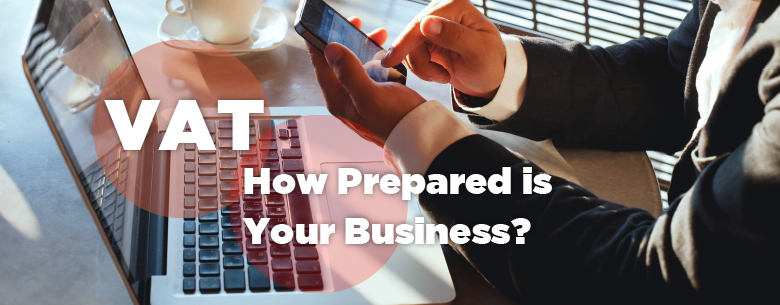
VAT – How Prepared is Your Business?
Kreston Menon
VAT is about to mark the beginning of a new era for the Gulf Cooperation Council (GCC) countries by bringing in a fundamental shift in the countries revenue collection. As the GCC member states are to adopt Value Added Tax (VAT) on 1 January 2018, companies are on a limited timeline to prepare for the first phase of VAT implementation. In this point of time, regional businesses are scrambling to determine exactly what they can do now to prepare for VAT. In the countdown to VAT implementation, companies should consider taking some simple steps now to keep abreast of their obligations, which are discussed over here.
VAT is not just a finance project! So, plan ahead…
VAT in UAE affects almost all the transactions and touches every aspect of the organization. It’ll possibly affect IT systems, finance, human resources, legal teams and even inter-organization transactions. So, prepare a detailed project plan and secure the necessary internal and external resources. Also, ensure the stakeholders in the business are well-informed on the same.
Carry out impact assessment
This is a key step to set the foundation for the VAT implementation. Businesses need to carry out an impact assessment to understand VAT and its commercial effects, prioritize issues and prepare in the best possible way for the implementation. Impact assessment would include assessing changes required to the ERP systems, product pricing, ongoing and long term contracts, supply chain, working capital etc.
Keep an eye on existing contracts and terms of business
Perform due diligence on your existing contracts. Continuous contracts which may be ongoing even after 1 January 2018 and also company’s standard long term contracts need to be analyzed if you need to consider making an amendment to any provisions in these contracts, and/or to any standard terms of your business.
Consider M&A / JV transactions
Due consideration should be given as to monitor if any relevant agreements now include specific warranties, obligations, and indemnities, in connection with VAT.
Read More

UNCTAD Ranked the UAE as the 12th Top Destination for FDIs
Kreston Menon
Recently, The World Investment Report 2017 by United Nations’ Conference on Trade and Development (UNCTAD) shows that the UAE is the 12th most earned foreign direct investment (FDI) with an impressive inflow of $9 billion in 2016. The report also reveals that other countries, such as Bahrain, Lebanon and Saudi Arabia surpassed the rest in the region. Unfortunately, it’s a whole different story for the investment market globally as its FDI is expected to decrease by 2% or $1.75 trillion, according to UNCTAD.
Furthermore, the Minister of Economy, Sultan Bin Saeed Al Mansouri, predicts that FDIs over the coming five years will surge following the launch of mega projects for renewal energy and retail industries. He also noted that growing FDIs to the UAE advanced from $109 billion by the end of 2015, to $117.9 billion by the end of 2016. With which an impressive 8.2% came from the escalating investments in transformational, aviation and tourism industries. “The country is developing well thought-out strategies in line with the National Agenda of the UAE Vision 2021 by aligning efforts and ensuring synergies across all sectors at the federal and local levels in alignment with the directives of our wise leadership,” the minister added.
Given such a significant data, the UAE ranked the second top recipient across west Asia with a 32.3% of total FDIs coming to the region last year 2016. This is a good news for the business Setup UAE and foreign investors as we can only expect to see further growth for the coming years.
Read More

Auditors In UAE : 3 Factors for Considering
Kreston Menon
Deciding which auditor to hire can be a bit tedious as it involves your company’s financial stability. Ideally, the relationship between a company and the auditor should be long and beneficial for both parties. Since the stakes are considerably high in choosing the right auditors from the best audit firms in UAE, we have shared the key factors that a company needs to consider in order to choose the ideal auditor that will match its goals.
Transparent Communication
The key to any long term relationship between businesses and its auditor is to build a strong foundation of trust. The auditing firm should be transparent in the process it employs and the quality control procedures it follows. Businesses should know that the work is accurate and complete, thus an open communication is likewise essential. Audit firms that practice openness is ideal as companies can expect that even the smallest inconsistency in the audit is communicated immediately before it escalates into a larger issue. Moreover, an enviable auditing firm should ensure that the company understood the auditing process and freely answer all their questions about it.
Industry Experience
A business’ financial statement should be handled by experts with experience similar to the organization’s field or industry. Companies should do a thorough research about the background experience of the auditors in UAE. Don’t just rely on their website’s portfolio and client’s page; it’s helpful to also look into their review pages on Google and other company review platforms. Another way is to ask them for a list of references and call at least five references. Furthermore, assess on how they keep up with the evolving trend in the accounting world. This way, companies will have an idea how the auditor can prepare and face the future changes that may occur. Likewise, the auditing firm employs a meticulous review of the client’s credentials before pursuing the deal. This way, the firm maintains their standards in taking only the credible clients.
Audit Fee internal-audit-services
There’s an old saying “you get what you pay for. ’’ Basically, the quality of services will conform on the cost. It’s a little doubtful if the auditing fee is lower than usual. This will lead a company to question whether the auditor is amateur and inexperienced, thus the low fee. Essentially, the fee shouldn’t matter much but still considerable to the process. Since both parties should benefit from each other, it’s expected that the audit fee is competitive and rational.
The financial statement establishes the financial condition of the company. It supports the efforts of the business development strategy of the company, whether their plan to risk investing in another venture is profitable or not. Auditing firms are expected to determine the downfall and effects of these efforts by doing a methodical audit process. Small discrepancies in the audit could cause a lot for the business, thus hiring the ideal auditor that fits your company needs is vital.
Read More




