.svg)


Get in Touch
Recent posts






 Pushpakaran Parambath, Senior Partner - Kreston Menon Corporate Services
The United Arab Emirates government published the Federal Decree No. 32 of 2021 concerning UAE Commercial Companies Law (CCL 2021) which came into force on 2nd January 2022, on which date the Federal Decree Law No. 2 of 2015 and its amendments (CCL 2020) were repealed.
Prominent provisions and amendments to the Law:
Public Joint Stock Companies (PJSC)
(a) Allows the establishment of companies for the purposes of acquisition or merger, and SPVs, and establishes a legal framework for these new legal forms and excludes them from some provisions of the Companies Law through a decision issued by the SCA to regulate the work of these forms of companies.
(b) Abolishes the maximum and minimum percentage of the founders’ contribution to the company’s capital at the time of the public offering as well as cancels the legal limitation of the subscription period and leaving the two matters to what is specified in the prospectus.
(c) Eliminates the requirement for the nationality of the members of the board of directors and upholds the organization shareholders’ decisions in the election of board members, in accordance with the terms and conditions set by the competent authority.
(d) Allows companies to transform into a Public Joint Stock Company and sell its shares or offer new shares in a public subscription without being restricted to a certain percentage by following the price-building mechanism of the security.
(e) Allows companies to divide and create legal rules governing division operations, thus contributing to diversifying the company’s activities and fields of work and increasing its projects and growth opportunities.
(f) Allows companies to determine the face value and to determine the percentage of the offering. The CCL 2021 allows shareholders to determine the nominal value of shares as specified in accordance with the PJSC’ Articles of Association thus removing the range of AED 1 to AED 100 prescribed by the CCL 2020.
(g) Finds financing solutions for companies through the issuance of other types of shares.
(h) Allow companies to issue discounted shares in case the market value of a company’s share price falls below the nominal value subject to (a) passing a special resolution; and (b) obtaining the approval of the Securities & Commodities Authority (SCA). However, the result of issuance of shares at a discount will cause a negative reserve, which must be settled from its future profits before any profit can be distributed amongst the shareholders.
Limited Liability Companies (LLC)
(a) Expiration of the Board of Managers’ term If the term of the Board of Managers expires, and a new Board of Managers is not appointed, then the existing board will continue to manage the LLC for a period of 6 months. At the end of this term a new board must be appointed by the LLC, and if not appointed, the Department of Economic Development (DED) can appoint a board whose term will not exceed one year, during which, the LLC must appoint a new Board of Managers. Therefore, the appointment of the Board of Managers by the DED is a stopgap arrangement that will be regularised if the LLC fails to appoint the board itself.
(b) Appointment of the Supervisory Board CCL 2020 obligated LLCs to appoint a Supervisory Board when the company consists of more than 7 shareholders. CCL 2021 has increased the number of required shareholders to 15. The Supervisory Board is appointed from at least three shareholders to supervise the company’s annual reports, budgets, distribution of profits and to also supervise the LLCs’ managers and submit a report in this regard to the General Assembly.
(c) Decrease in Legal Reserve CCL 2021 has decreased the extent of allocating a legal reserve from 10% to 5%, and as prescribed by the CCL 2020, the CCL 2021 emphasized that shareholders can stop this allocation if the legal reserve reaches 50% of the share capital.
Foreign Company Branches
Allows branches of foreign companies licensed in the country to transform into a commercial company with UAE citizenship.
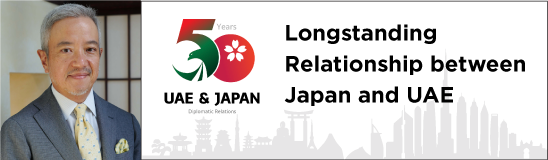 H.E. Noboru Sekiguchi, Consul-General of Japan in Dubai
In this year of 2022, Japan and the United Arab Emirates are celebrating the 50th anniversary of the diplomatic relations which was established on 4th May 1972. The two nations have been fostering strong and friendly relationships for the past 50 years.
The trade relationship between Japan and the UAE have been traditionally highlighted by the cooperation in the energy field. However, in recent years both the governments have worked together on expanding the scope of cooperation in various fields such as education, renewable energy and space explorations. Let me point out the importance of the “Comprehensive Strategic Partnership Initiative (CSPI)” between our two countries, which is designed as a new cooperation framework based on the Joint Statement issued on the occasion of the visit by the then Prime Minister, Mr. Shinzo ABE to the UAE in 2018. The CSPI framework covers 12 fields of cooperation, not only traditional fields such as energy and business but also advanced technologies and women empowerment.
The bilateral cooperation has now flourished beyond the earth to the space. The UAE became the first Arab country to reach Mars in February last year with its Mars Mission named Hope Probe, and this made the people in the UAE and Japan excited. The HOPE was launched from the Tanegashima Space Center in Japan with an H2A rocket which was made in Japan by the Mitsubishi Heavy Industries, a renowned Japanese company. This is one among many contributions by Japan to the UAE’s space explorations, and the achievement gives us literally a “hope” for the future of our bilateral cooperation.
When we turn our eyes to the Expo, we can find interesting links between the two countries. The Emirate of Abu Dhabi participated in an Expo for its first time, even before the founding of the UAE, when the City of Osaka in Japan hosted the Expo in 1970. Half a century later, the UAE hosted the Expo 2020 Dubai, the very first Expo in the MENA region which saw the largest global gathering since the start of the pandemic, came to an end on March 31, 2022. Then, the baton of the Expo-host was handed over from Dubai to Expo 2025 Osaka, Kansai.
Relations on Trade and Commerce

Let me give you an overview of the trade relations between Japan and the UAE. The total value of imports from Japan to the UAE was USD 7.1 billion and that of exports from the UAE to Japan was USD 26.2 billion in 2019, which was before the pandemic. While the total value of both imports from Japan and exports to Japan dropped to USD 5.5 billion and to USD 16.3 billion respectively in 2020, the UAE is still one of the ten biggest importing partners for Japan and maintains strong trade ties with Japan. Transportation equipments account for the majority of Japan’s exports to the UAE. For Japanese industrial products, the UAE is an important destination because it has always been a re-exporting base to the markets abroad for these products. The importance of the UAE for Japan as a close trading partner would remain unchanged in the foreseeable future.
As for business and commerce relationships between our two nations, approximately 290 Japanese companies are currently operating in Dubai and the Northern Emirates, which cover a wide range of industries including manufacturing, wholesale and retail and transportation services. Many Japanese enterprises have established their regional headquarters for business in the Middle East and Africa in Dubai, owing to business-friendly environment for foreign companies created and enhanced by the UAE over the past 30 to 40 years, which consists of the stable social and political situation, the well maintained public safety and security and excellent infrastructure such as electricity, water, telecommunications, medical care and educational system, to name a few.
Furthermore, there are many free zones with much less restrictions for foreign investors and English is widely spoken as a business language in the UAE. These are the factors that have contributed to the UAE ranking first in the MENA region and 16th in the world in the business environment ranking issued by the World Bank. However, I believe the most important reason is that Dubai has created a diverse and tolerant society where people from different cultures and backgrounds find it easy to reside. The expat business community finds it welcoming that they have access to non-halal food and alcoholic beverages at select places in the emirate.
In addition, Dubai has succeeded in mitigating socio-economic impact of the pandemic since the early 2020, by starting PCR tests widely in the emirate while strengthening its medical systems, by having resumed to accommodate travelers including tourists from abroad as early as July 2020 and by accelerating the vaccination process at the fastest pace possible. Then, the Expo 2020 Dubai opened doors to the world, adopting effective preventive measures against the COVID-19 in October 2021. The event which was forced to be postponed for a year due to the pandemic, came to the grand finale with a great success at the end of March 2022. This success proved that those preventive measures by Dubai were correct and appropriate.
The government of Dubai has been standing firm with its policy of managing society “with COVID-19” since the early stage of the pandemic. This policy has made it possible for Dubai to continue to be a valuable and attractive investment destination not only for Japan, but also for countries all over the world.
Contribution to FDI from both sides
We, Japanese, welcome the trend of revamping the regulations on foreign investments in the UAE over the past few years. The abolishment of the required majority shareholding ratio of the UAE nationals in the foreign investments with the amendment to the Commercial Companies Law in September 2020 could be a tailwind policy for Japanese corporations who generally prefer 100% capital investments. Even the Japanese companies who have established their offices in the free zones see the new policy as a positive development in the UAE as it allows them to operate their businesses not only inside but also outside of the free zones.
It is noteworthy that each emirate is very proactive in attracting start-up companies from abroad. In this context, I could mention a few examples in Dubai – the Dubai Silicon Oasis, the Dubai Start-up Hub, and the Dubai International Financial Centre. Moreover, events such as GITEX and the Sharjah Entrepreneurship Festival are being held at various locations in the UAE to bring together the latest technologies and ideas from around the globe and Japanese start-ups are also turning their attention to the UAE.
Furthermore, I would like to point out that there is a growing business relationship between Japan and the UAE, not only at the national level but also at the local level, for example between Dubai and the Osaka Prefecture or the City of Osaka, the next host city of the Expo and the sister city of Dubai. Last December, the Osaka Chamber of Commerce and Industry co-hosted an online event with the Dubai Chamber of Commerce and Industry for business exchanges including a pitch session by enterprises located in Dubai and the other Middle Eastern countries who are keen to entering the Japanese market. Also, the Osaka Prefecture hosted a symposium in February 2022 connecting Japan and Dubai to encourage Japanese corporations to expand their operations into overseas as part of the commemoration events of the 50th anniversary of the diplomatic relations between Japan and the UAE.
Future Vision
As aforementioned, this year marks the 50th anniversary of the establishment of the diplomatic relations between Japan and the UAE. I, as the Consul-General of Japan in Dubai and the Northern Emirates, would like to emphasize my efforts in the following areas to make our relationship more multilayered and multifaceted towards the 50 years to come.
First, let me take up the economic area. I would like to bring new Japanese companies, especially start-up companies to the UAE, in addition to supporting Japanese enterprises who have been already operating in the UAE. On one hand, I believe that there are many start-ups in Japan which could provide solutions to the needs of the governmental organizations as well as private companies in the UAE.
On the other hand, I strongly feel that efforts have to be taken to make Japanese start-ups aware of the attractiveness of the UAE as an operation base and the business opportunities which the UAE is offering to foreign entrepreneurs. I would, therefore, like to promote exchanges between companies including start-ups from both nations and contribute to further economic development of our countries.

Secondly, I would like to increase the number of inbound tourists from the UAE by introducing them to various charms of Japan, especially food related ones such as wide variety of culinary in Japan and high-quality Japanese ingredients. We offered Saroma Wagyu which is one of the premium beef produced in the Hokkaido prefecture, Anpogaki (persimmons) from the Fukushima prefecture, and Crown Melon from the Shizuoka prefecture, when I hosted our Emperor’s Birthday Reception on the occasion of the 62nd birthday of His Majesty the Emperor Naruhito in February. After witnessing the long queue and receiving positive feedback from the guests, I found once again the tremendous market potential our food products have.
Lastly, I would like to develop platforms for further exchanges between the youths of Japan and the UAE who will lead the next generation of our great nations. In this context, I am strongly interested in promoting exchanges in new areas such as e-sports and e-games. The UAE Olympic Committee has recently recognized e-sports as an official event, and this proves the growing popularity of e-sports in the UAE. I have high expectations for young people to play a key role for deepening mutual understanding between Japan and the UAE and for being the driving force to further enhance our existing harmonious relationship for the next 50 years.
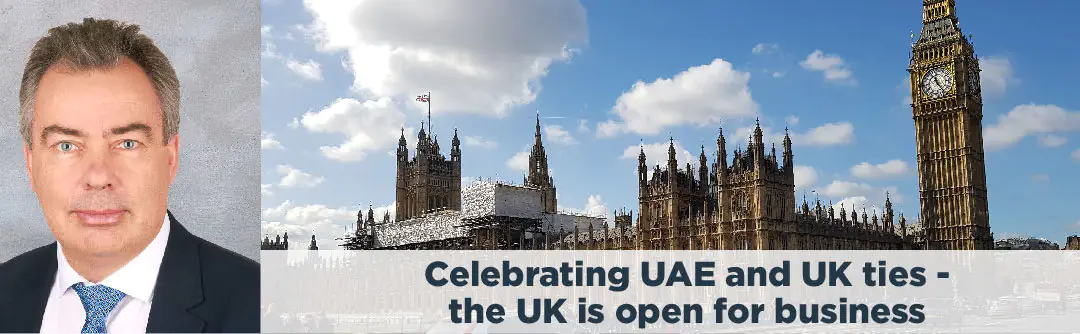 Andrew Griggs, Senior Partner of Kreston Reeves, Board member of Kreston Global
The UK and the UAE have long and deep ties that extend back 50 years. Those ties are built on friendship, cultural and economic relationships. At the heart of the current relationship is the initiative, known as the Partnership for the Future, announced earlier this year by the Prime Minister Boris Johnson and HH Sheikh Mohamed bin Zayed, Crown Prince of Abu Dhabi and Deputy Supreme Commander of the UAE Armed Forces. It is a partnership that embraces 10bn of investment in innovation-led sectors over the next five years that are of strategic importance to both countries.
Open for business
The UK boasts the world’s fifth largest economy and is predicted to continue to grow throughout 2022 and 2023. It is home to over 66 million people, to one of the world’s leading financial centres and Europe’s largest venture capital community, so it is perhaps not surprising that, on average, more than 600,000 new businesses are started in or relocate to the UK every year. Over 2bn has been invested in UK businesses to date, with the UAE accessing world-leading R&D. Companies in the UAE can look to the UK for opportunities to grow where we understand one another business culture. The UK, redefining its position on the world stage following its exit from the European Union and rebuilding post-Covid economy, is open for business.
Why should international businesses choose the UK?
The UAE and the UK has long enjoyed a flow of bilateral business relationships. Many of the cities in the UAE have a large UK expat community, and in turn many UAE citizens come to the UK to live, work and do business. The UK remains the most popular European country for foreign direct investment, attracting some 56.9bn of investment in 2018. Whilst that will have understandably fallen in 2020 due to the global pandemic, the post Covid picture is encouraging and for good reason. The UK offers UAE businesses a world-class legal and regulatory system and a leading financial services environment needed to support growth. It is also home to a strong and forward-thinking advisory community. It is easy to establish a business in the UK, taking on average, just four days yet can be achieved in as little as 24 hours. Businesses are attracted by the flexibility of company structures, low regulatory burdens and the UK’s competitive tax regime.
For many founders, the quality of the UK’s education system, its universities and its cultural pull, together with a highly educated workforce, a time zone that reaches across the globe and its proximity to Europe are all important factors. The UK government works hard to ensure the UK remains competitive on the world stage, offering incentives and grants for businesses looking to grow and expand internationally. Our dedicated grants and funding team at Kreston Reeves is on hand to help. A new visa programme is in place designed to encourage exceptional talent to relocate to the UK, with visa decisions often given in as little as 15 days. Visa routes are also available for business leaders in certain industry sectors, technology being one example, making it easier for founders and their families to establish a UK footprint.
London and the South East
The UK government is proactively encouraging international businesses to relocate across the UK regions, yet it is London and the South East that continue to have the strongest pull. Alongside its renowned financial centre, London is home to Europe’s largest tech hub, TechCity, with a mix of global technology giants and a community of more than 375,000 developers. Venture capital investment into the technology sector reached 7.9bn in 2018, with IPOs and mergers raising over 49bn. The South East is home to thriving life sciences, high value manufacturers, aerospace and IT clusters, naming just a few, attracted by first class infrastructure, a high quality of living and a ready pool of 21m people. Kreston Reeves, with a footprint across London and the South East, is perfectly placed to help relocating businesses find the ideal location.
Competitive tax and regulatory environment
While the UK does not have the same low tax levels as the UAE there is still a good story to tell. The UK Government has announced its intention to increase Corporation Tax rates from the current 19% to 25% from April 2023. Despite this increase, the UK continues to offer businesses a competitive and relatively low rate when compared to other G20 nations. There are generous tax reliefs on research and development (R&D), with Patent Box effectively lowering corporate tax to just 10% on qualifying patented innovations. R&D tax credits can offer up to 230% on allowable research and development for small businesses, and the research and development expenditure credit offers 13% on allowable costs for large businesses. Individuals looking to relocate to the UK can also benefit from significant tax reliefs through the non-domicile regime and with additional reliefs available for those seconded to the UK and apportionment of taxable income if their work is outside of the UK.
Sector strengths

London and the South East offers real strength and depth across many industry sectors that reflect the expertise at Kreston Reeves. London is home to world class financial services and technology businesses, with the city ranked as the most connected place for tech after Silicon Valley. It also boasts a creative industries sector that is valued over 101bn, with TV and film production companies attracted to the expertise offered. The gaming sector is recognised as a global leader. UK Healthcare and life sciences continue to lead the world. London and the South East home to both the largest pharmaceutical businesses and to entrepreneurial biotechnology businesses. The opportunity to partner with the NHS continues to remain a strong pull. The UK and the UAE are aligned in many ways and across many industry sectors. Both countries continue to define business on the world stage and increasingly in partnership.
Why choose Kreston Reeves and the UK
Kreston Reeves is the perfect partner for individuals and businesses in the UAE looking to invest or with business interests in the UK. Our team of highly experienced financial, tax and accounting specialists offer:
- International tax planning advice to avoid and resolve complex cross-border tax issues.
- Indirect tax and duty expertise, whether supplying services between countries or importing or exporting goods.
- Outsourcing all financial functions, offering a virtual office in the UK.
- Corporate finance expertise to help buyers and sellers with cross border deals.
We are proud to be appointed by the Department of International Trade, the government body that promotes trade overseas, as one of its champions to help overseas businesses grow. We have been included in the government’s UK Investment Support Directory as one of its chosen experts, in supporting the government’s aim to ensure the UK remains the number one destination for foreign direct investment in Europe.
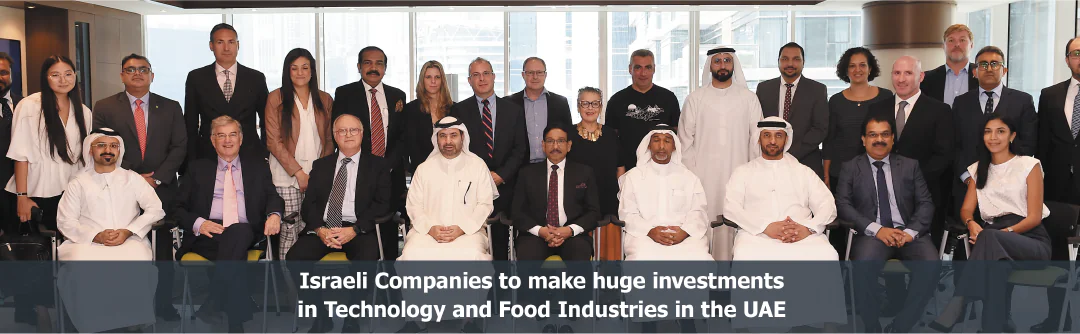 Kreston Menon
As the bilateral trade relations between the UAE and Israel are steadily growing, more Israeli companies are looking for major investments in the UAE. According to Prof. Ehud Menipaz, Chairman of International Advisory Committee, Israel Directors Union (IDU) the focus sectors would be Fintech and Digital Security, Food and Agriculture as well as in Energy. He was talking at the “UAE-Israel Business Meet 2021 – A Hybrid Event” hosted by Kreston Menon and Israeli Directors Union (IDU).
Ibrahim Ali, Director of the Investment Promotion Division of Dubai FDI presented the ‘Dubai Advantage’ and invited the Israeli investors to partner with Dubai to shape the future. He interacted with the visiting Israeli delegation of 26 investors in person and with over 200 delegates who attended this hybrid event online.
Jamal Bin Marghoob, Senior Director – Sales, Dubai Airport Free Zone (DAFZA), Faisal Jassim, Senior Manager – Sales, Jebel Ali Free Zone (JAFZA) and Rashid Al Mulla, Vice President – Marketing, Dubai Commercity presented the sector wise advantages that the Free Zones can offer to Israeli businesses. They reiterated rather than being a passive facility provider they are committed to be active partners to the growth and expansion plans of Israeli investors by being a gateway to the world markets.
Dr. Gritt Gur-Gershgoren, Chair of the Chairman Club IDU reiterated that the progress made in the first year of signing the Abraham Accords Peace Agreement, is bound to grow beyond expectations.
According to Shmulik Ben Tovim, President of the Fintech Community of Israel, major partnerships are in the pipeline in the Fintech sector, as Dubai is considered as the region’s hub for financial services and Israel as the tech capital of the world.
Speakers from diverse industry sectors including Banking, Taxation, Real Estate, Legal and Healthcare talked about the investment opportunities in the UAE. Pushpakaran Parambath gave an overview of 100% Foreign Ownership in the UAE while Surandar Jesrani, Managing Partner and CEO of MMJS Consulting made a presentation on the VAT Scenario in the UAE.
Other speakers included Ali Imran, Head of Transaction Banking & Digital Services, Comemrcial Bank of Dubai, Benjamin David Martin, Chief Commercial Officer of VPS Healthcare, Michael Ghaderi, CEO of Aaronz & Co Real Estate, Mohammad Maria, Managing Partner of Just Wills and Gilles Gamon, CEO of BioMeat FoodTech Ltd from Israel.
Doron Rozenblum, Managing Partner of Kreston IL expressed his confidence that more bilateral business partnerships will emerge and Israeli companies with global plans will be looking at UAE as a launching pad.
Raju Menon, Chairman and Managing Partner of Kreston Menon and Sudhir Kumar, Senior Partner and Head of Corporate Communications assured that Kreston Menon, who has supported and guided more than 8000 investors to setup operations in the UAE, will partner with IDU and Kreston IL to promote FDI in both the UAE and Israel.
 Surandar Jesrani, CEO & Managing Partner - MMJS Consulting
BACKGROUND
The Transfer Pricing landscape in the Middle East region has been continuously evolving in the last couple of years largely as a consequence of developments arising out of the OECD’s Base Erosion and Profit Shifting (‘BEPS’) project. Several countries in the ME have committed to implement minimum tax standards under the BEPS Implementation Framework (‘IF’), one of which includes Action 13 – TP documentation and Country by Country Reporting (‘CbCR’). As a result, countries such as Bahrain, Egypt, Jordan, Kingdom of Saudi Arabia (‘KSA’), Oman, Qatar and United Arab Emirates (‘UAE’) now have detailed TP and / or CbCR laws in place.
The complexity posed by new laws has meant that businesses operating in the region have more tax thinking to do. It has meant increased TP/CbCR related compliances, more scrutiny/disputes, need to create additional documentation and the need to remodel or do away with existing company structures and intercompany dealings which will no longer work.
The interplay of Transfer Pricing with the Economic Substance Regulations introduced in UAE and Bahrain under BEPS Action 5 – Addressing Harmful Tax Regimes is another factor that can’t be ignored. The more the substance housed in a particular location/entity, the more profits the entity needs to earn. Multinationals have all along made use of UAE & Bahrain’s zero tax regimes to have centralized hubs in terms of headquarter, procurement or intellectual property for their Middle East operations. With the introduction of the first set of BEPS reforms, multinationals in the region have already had to change their strategies but with the upcoming reforms expected as part of BEPS 2.0, their problems will be even more accentuated.
BEPS 2.0
On 1 July 2021, most of the BEPS IF member countries committed to a new overhaul tax reforms referred to as BEPS 2.0 which consist of two Pillars.
Pillar One is initially expected to be applicable only to multinationals with global turnover above EUR 20 billion. It calls for a certain pre-determined share of the consolidated profits of such multinationals to be allocated to markets where proportionate sales arise. Where consolidated profits exceed 10% of revenues, the profit to be reallocated (Amount A) will be 20 to 30% of the excess profit. This profit reallocation is expected to happen regardless of any intra-group Transfer Pricing mechanisms the group may have set in place. Another Amount B aims to set standard margins for group entities that perform low risk marketing and distribution functions.
Under Pillar Two, member countries agree a system whereby multinationals are to be taxed at a global minimum tax rate of 15%. This would apply to groups with global turnover above EUR 750 million (same threshold as for CbCR) but jurisdictions could decide to apply a lower threshold. Pillar Two reforms could manifest as:
- A top-up tax in the jurisdiction of the multinational’s parent entity in respect of any lower-taxed income of a group entity (i.e., where income has not been subject to an effective minimum tax of at least 15%).
- Where such top-up tax has not been applied, a secondary rule ensuring that lower-taxed group entities pay an effective minimum tax rate of at least that 15%.
- An additional tax on royalties, interest and other defined payments made to a member jurisdiction that applies a corporate tax rate lower than the minimum prescribed rate of between 7.5 – 9%.
The application of Pillar One and Pillar Two appears restricted to the largest multinationals initially however actual implementation needs to be awaited. In addition, certain exemptions areas have been factored under both Pillar Oneand Pillar Two. Initial indications are that both Pillars could become effective as early as 2023.
BEPS 2.0 – ME Impact
Middle East countries such as Bahrain, Egypt, Jordan, KSA, Oman, Qatar and UAE have expressed support for these proposals. UAE in particular issued an official statement issued on 26 July 2021 stating its support for Pillar Two.
- Through Pillar One, excess profits of multinationals based in Bahrain/UAE could be reallocated to jurisdictions with higher tax rates, resulting in increased group taxes.
- Through Pillar Two, there is higher potential impact for multinationals headquartered/operating in the ME. Profits of businesses in Bahrain/UAE, where statutory tax rates are currently below the proposed global minimum tax of 15% could become subject to the top-up tax in an overseas jurisdiction. ME countries will in all likelihood themselves introduce local legislation to ramp up tax rates in order to protect their tax base.
Conclusion
For large multinationals operating in the region, firstly we recommend that they track and address all the new country-specific tax compliance requirements that have arisen in the last couple of years and factor in the consequences of non-compliance i.e., adjustments and/or penalties into their tax planning. Secondly, we recommend that businesses be closely aware of the constant developments in the BEPS, TP and CbCR space so they are fore-warned and pre-prepared to develop appropriate future-oriented policies in response to these shifting variables.
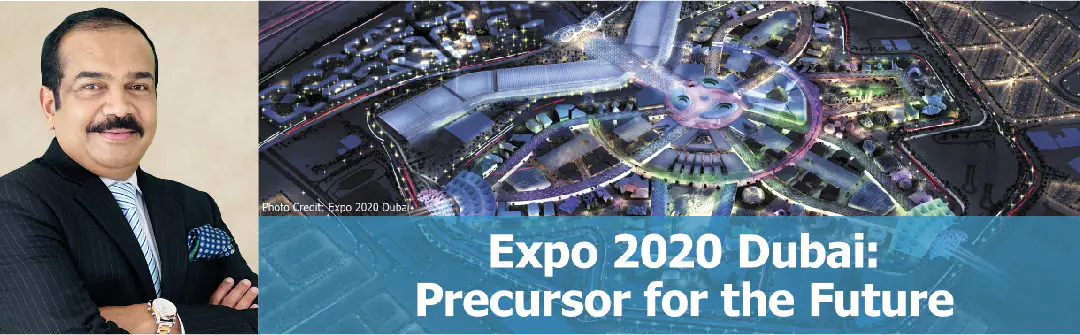 Sudhir Kumar, Senior Partner & Head of Corporate Communications - Kreston Menon and Director - Kreston Global Board
World’s Mega Event
The UAE has taken the global center stage with the opening of Expo 2020 Dubai which is termed rightly as the extravaganza of business, technology, connectivity, and culture. One may wonder on the long term objectivity of this mega event, but the policymakers of the UAE are confident about the long term economic legacy the Expo is bound to create.
With 191 country pavilions and themed exhibitions at the Opportunity, Mobility and Sustainability pavilions, the eagerly awaited Expo 2020 Dubai is expected to draw in more than 25 million visitors.
Many countries and large companies are looking to the expo, which is the first major global event open to visitors since the pandemic, to spur economic activity and boost investor confidence.
Expo 2020 Dubai will showcase the latest and boldest innovations across the globe and will be a platform to present solutions to the future for the world in quest for remedies.
UAE – Today and Future
UAE’s approach to future and progress are reflected in the words of His Highness Sheikh Mohammed Bin Rashid Al Maktoum, Prime Minister of the UAE and Ruler of Dubai, “The future belongs to those who can imagine it, design it, and execute it. It isn’t something you await, but rather create.”
The UAE has set its target high to be the numero uno in all the competitive indexes by the centennial anniversary of the Union in 2071. The aspiring national strategy “Towards the next 50” aims to represent the UAE’s next 50 years, building on the foundation of the progress made in the past 50 years.
The roadmap chartered by the UAE for the future includes visionary initiatives like the UAE Centennial Plan 2071, Food Security Strategy 2051, Dubai Clean Energy Strategy, Fujairah 2040 plan, National Advanced Sciences Agenda 2031, Abu Dhabi Economic Vision 2030, Environment Vision 2030, Dubai Industrial Strategy 2031, Plan Abu Dhabi 2030, Dubai 2040 Urban Master Plan, United Global Emirates and Make it in the Emirates and these programs will be guided by the recently announced ‘Principles of the 50′.
Currently, the UAE is placed very high on World Bank’s annual ease of doing business ranking and is always streamlining the processes to better the position. The UAE is the only Arab Country to be listed in the top 10 competitive countries for 4 consecutive years. Dubai has been ranked the fifth best city in the world and was hailed for its innovation, infrastructure, iconic landmarks and world class entertainment.
The credit of the UAE being ranked third among 27 emerging global economies goes to the leadership’s long term strategies on being a testbed for imagining, designing and executing future innovations.
The economic and political environments which are highly conducive for businesses to thrive make the nation a favourable destination for enterprises across the spectrum – from large multinational conglomerates, small and medium businesses to fleet-footed, innovative startups.
The decisive economic measures and new amendments to the residency and investment legislations initiated by the leadership of UAE has stimulated the flow of foreign investments into the country.
The word ‘futuristic’ has become synonymous with the UAE, as a country that not only embraces the future, but courageously create it!
Expo and the UAE Economy
The positive impact of Expo 2020 Dubai, which is arguably the world’s largest event is already visible in almost all the spheres of life, especially among businesses in the UAE. The local businesses are showing immense confidence and strong optimism and the immediate results are seen in key sectors such as travel and tourism and hospitality, with the influx of foreign visitors arriving for the mega event.
The global investment forums, investor pitching conferences and the networking opportunities at the Expo 2020 Dubai is set to create lot of investment interests from across the globe. Even if 0.5% of the visitors decide to invest in businesses in the UAE, we are talking about 125,000 new set ups!
The International Monetary Fund (IMF) has forecasted an economic growth of 3.1% this year for the country, which is higher than the Central Bank’s estimate which projected that the UAE economy will expand 2.1% this year.
The second-biggest Arab economy is expected to reap benefits of the Expo for the next nine years as the Expo legacy is going to drive more international investments. Expo 2020 is expected to give a significant boost of USD33 billion to the UAE economy and is estimated to add more than 900,000 jobs between 2013 (Expo awarded year) and 2031.
UAE’s banking assets are expected to grow by 10% next year, as the Expo has given a much needed impetus to the UAE economy, while other economies are still trying hard to recover from the pandemic-driven slowdown.
A diversified portfolio of public-private partnership (PPP) projects worth more than 25 billion Dirhams was recently announced by Dubai on the sidelines of Expo, which includes projects in the urban development, road and transport as well as health and safety sectors. It is noteworthy that the total value of Dubai’s existing and announced PPP projects now exceeds 65 billion Dirhams. In addition to the fiscal benefits, PPP is a way forward in involving private capital for economic diversification, attracting FDI and promoting local businesses and start-ups, thus help Dubai in creating a sustainable economic growth model.

As the stage is set with the 100% foreign ownership legislation, the visa reforms, ease of arbitration and excellent infrastructure, Dubai is set to see a transformation of industries from fintech to food production. Foreign investments are expected in key sectors particularly those associated with the knowledge economy and advanced technologies which includes Artificial Intelligence, the Internet of Things, Blockchain, innovative medical technologies, high-speed transportation, augmented virtual reality, self-driving cars and renewable energy.
The Expo 2020 will definitely attract more investment and talent to Dubai and the UAE, as this mega show will be showcasing the exciting opportunities not only for entrepreneurs and businesses but also for creative and innovative individuals.




