

Corporate tax audit UAE has already become a central part of compliance in the UAE. With the new tax regime now in place, businesses must be ready to show regulators that their financial records are accurate, complete, and in line with local rules. The thing is, preparation is not just about collecting papers at the last minute. It is, and should be about putting the right processes in place long before an inspection happens. This blog, ‘Preparing for Corporate Tax Audits: What Documents & Processes Businesses Should Have’ explains what you need to know, from the documents authorities may ask for, to the practical steps you can take to make sure your company is always audit-ready.
Table of Contents
Why Corporate Tax Audits are Significant
Tax audits are meant to confirm whether a business has reported income, expenses, and tax obligations correctly. In simple words, it is about proving that your company followed the law. In the UAE corporate tax audit, regulators will check if your reported numbers reflect the real financial situation of the business. For companies, the implications are serious. A well-prepared audit builds credibility with authorities and avoids penalties. A poorly prepared one can cause delays, disputes, or even fines.
Explore Next : Digital Transformation in Audit: Blockchain, Data Analytics, Real-Time Reporting
Key Triggers for an Audit
Not every company is selected for review, but some conditions raise the likelihood of it happening. Authorities may initiate a corporate tax audit i Dubai or other Emirates if they notice:
Inconsistent reporting
When the income you declare does not match the expenses or the tax you paid, it signals irregularities. Even small mismatches repeated over time can raise suspicion and prompt a closer look.
Unusual claims
Businesses that regularly report high deductions, repeated losses, or sudden declines in profitability may be flagged. Authorities want to confirm whether these claims are genuine or an attempt to reduce tax obligations.
Related-party transactions
Transactions with group companies, subsidiaries, or international affiliates often attract attention. These dealings must be priced at market value, and any deviation could lead to scrutiny of transfer pricing arrangements.
Industry risks
Some sectors are seen as higher risk than others due to the nature of their operations, cash flow patterns, or past history of non-compliance. Companies in such industries may face audits more often than others.
Random selection
Sometimes businesses are chosen simply as part of routine monitoring, without any warning signs in their filings. This makes sure the system remains fair and keeps all companies aware that audits can happen at any time.
This clearly shows that any business can be audited, even if it thinks everything looks fine. That is why preparation is non-negotiable.
Documents Required for Corporate Tax Audit
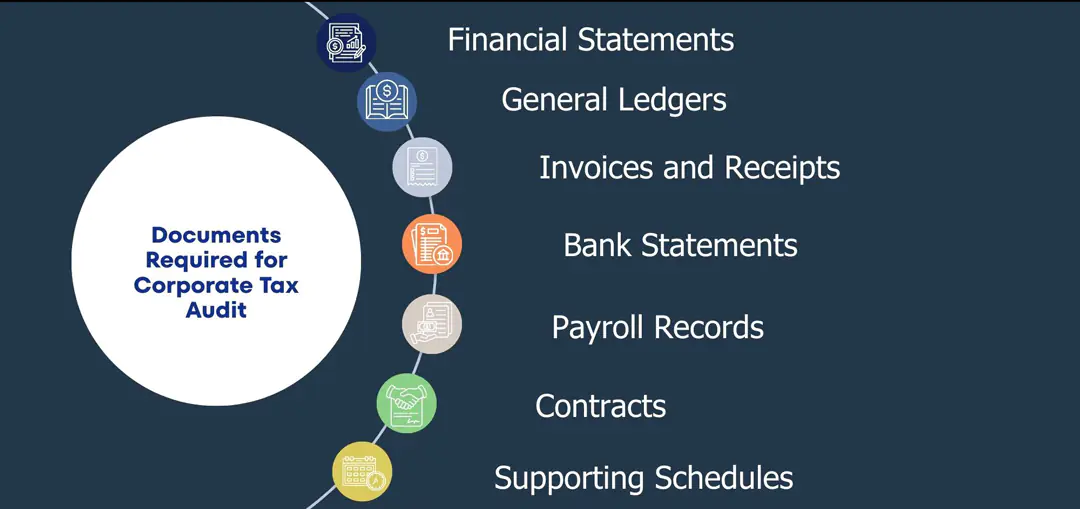
When an audit begins, the first step is to provide documents that back up your tax filings. These usually include:
- Financial statements: Profit and loss statements along with balance sheets, and cash flow reports.
- General ledgers: Detailed records of accounts to confirm entries.
- Invoices and receipts: Evidence of sales, purchases, and other transactions.
- Bank statements: Reconciliation with recorded income and expenses.
- Payroll records: Salaries, benefits, and related tax entries.
- Contracts: Agreements with suppliers, clients, or partners that affect taxable income.
- Supporting schedules: Calculations for depreciation, provisions, or allowances.
In addition, audited financial statements requirement UAE CT regulations makes it necessary for certain businesses to maintain reviewed or audited accounts to support tax filings. This is not just a formality but a requirement that can be checked at any stage.
How to Prepare for Tax Audit UAE
Preparation is less about reacting and more about creating systems. Here are the steps businesses should consider:
1. Organize records consistently
Keep all invoices, receipts, and contracts in a structured way. Digital storage with proper tagging works better than scattered paper files.
2. Close accounts on time
Late closures create gaps and increase the chances of mismatches. Stick to a monthly and yearly closing schedule.
3. Review financial statements regularly
Check whether reports align with actual business activity. This helps catch mistakes before an auditor does.
4. Train internal teams
Staff handling accounts and compliance should know the rules around corporate tax audit UAE requirement so they can maintain records properly.
5. Work with external advisors
Auditors and tax consultants bring expertise that helps avoid oversights. Regular external reviews reduce risks during an official inspection.
Corporate Tax Audit Process UAE
When regulators open an audit, the process often follows a structured sequence:
1. Notification
The company first receives an official notice from the authorities. This document outlines the purpose of the audit, the period under review, and the timelines within which the company must respond.
2. Document submission
After notification, businesses are required to submit all requested records within a specific deadline. Missing these timelines can raise further questions and may complicate the process.
3. Examination
Once documents are received, auditors carefully review the data provided. They compare it against filed tax returns, financial statements, and supporting evidence to spot any inconsistencies.
4. Queries
If auditors find unclear entries or gaps, they will ask the business for clarification. At this stage, companies may also be asked to submit additional documents that support the figures in their returns.
5. Preliminary findings
Based on the examination, the authorities may issue a draft report that highlights potential compliance issues. This is not the final outcome but an opportunity for the company to see where regulators believe adjustments may be needed.
6. Response period
The business is then given time to reply to the findings. This may involve providing explanations, additional documents, or legal interpretations to justify the reported numbers before the final decision is made.
7. Final report
Once all responses are considered, an audit report for corporate tax in UAE is issued. This document confirms whether compliance was achieved or if adjustments are needed.
Audit Documentation Requirements UAE
It is not enough to just collect financial statements. Authorities also want supporting documents that prove transactions were genuine. This can include:
- Sales and purchase orders.
- Supplier and customer agreements.
- Transfer pricing documentation for UAE audit when related parties are involved.
- Proof of inventory movement.
- Loan agreements and repayment schedules.
The more consistent the documentation, the easier it is to show compliance.
Staying Audit-Ready at All Times
Since audits may come with little notice, the best strategy is to stay prepared year-round. That means:
- Update records daily
Businesses should maintain accurate and up-to-date books on a day-to-day basis instead of waiting until the end of the year. This habit makes it easier to provide supporting evidence quickly and avoids last-minute confusion when an audit begins.
- Use accounting software
Digital tools help reduce calculation mistakes and ensure consistency in record-keeping. Automating reconciliations, expense tracking, and reporting also saves time and creates a reliable audit trail.
- Conduct quarterly checks
Carrying out regular internal reviews allows companies to catch discrepancies before regulators do. These checks provide management with early warnings and an opportunity to correct mistakes in real time.
- Review rules for new activities
Whenever a company adds new business activities, creates subsidiaries, or enters into cross-border deals, tax compliance should be re-evaluated. Reviewing rules at these points ensures that the business stays aligned with legal requirements at all times.
This way, an audit becomes a routine check rather than a stressful event.
How to Respond to an Audit
Even with preparation, being audited can feel demanding. The key is to handle the process calmly and systematically.
- Acknowledge the notice quickly
Respond to the audit notice as soon as you receive it, confirm that you will cooperate, and begin preparing the requested information without delay to set the right tone with the authorities. - Assign a point of contact
Appoint one responsible person to handle all communication so that information flows smoothly, and the company avoids giving mixed or inconsistent responses. - Provide complete responses
When submitting records, ensure that documents are full, accurate, and organized, since missing or partial files will only raise additional queries and slow down the process. - Keep explanations clear
If auditors ask for clarification, respond with straightforward explanations supported by records, avoiding overly technical or confusing justifications that can create more doubts. - Engage professionals when needed
Bring in tax advisors or legal experts if the audit involves technical matters, as their knowledge can help resolve complex issues efficiently and prevent compliance risks.
Handling an audit this way not only reduces risk but also shows regulators that the business takes compliance seriously.
Practical Benefits of Audit Readiness
Being prepared is not just about avoiding penalties. It creates tangible advantages too, such as:
- Better control over finances: Regular reviews of accounts and records improve accuracy, help spot errors early, and give management a clearer picture of the company’s actual financial position.
- Smoother business operations: When documentation is organized and updated, an official audit can be handled with minimal disruption, allowing day-to-day operations to continue without unnecessary delays.
- Improved investor confidence: Clear and reliable records send a strong signal to current and potential investors, showing that the company is financially disciplined and committed to transparency.
- Regulatory trust: Authorities are more likely to view the business as responsible and cooperative when records are well maintained, which can make future compliance interactions much smoother.
Common Mistakes to Avoid
Some businesses trip up because they underestimate the effort required. Typical errors include:
- Keeping incomplete or inconsistent records
When financial data is scattered or missing, it becomes difficult to prove the accuracy of tax filings, and auditors will quickly flag these gaps as a concern.
- Ignoring minor discrepancies
Even small mismatches between reported figures and supporting documents can raise questions, as auditors often view them as signs of larger underlying issues.
- Relying too much on manual entries
Manual bookkeeping without adequate checks increases the chance of errors, and these mistakes, even if unintentional, can create compliance risks during an audit.
- Waiting until an audit notice arrives before organizing files
Trying to prepare documents only after receiving a notice usually leads to rushed work, overlooked records, and added stress for both management and staff.
- Not updating transfer pricing policies
When rules change but related-party pricing policies remain outdated, it leaves the company exposed to compliance failures that could have been avoided with timely adjustments.
To sum up, corporate tax audit UAE is a key part of compliance, and, obviously, preparation is essential. Maintaining organized financial records, updating accounts regularly, and keeping proper documentation, including transfer pricing, helps businesses stay audit-ready. Responding clearly to queries, providing complete evidence, and involving professionals when needed promote a smooth process. Being prepared not just reduces the risk of penalties but also strengthens operational efficiency, builds investor confidence, and earns trust from regulators, turning audits into manageable and routine checks rather than stressful events.
Stay Ahead with Expert Guidance
With Kreston Menon’s experts by your side, you can stay updated in the business scene of Dubai and handle every stage of corporate tax compliance smoothly.